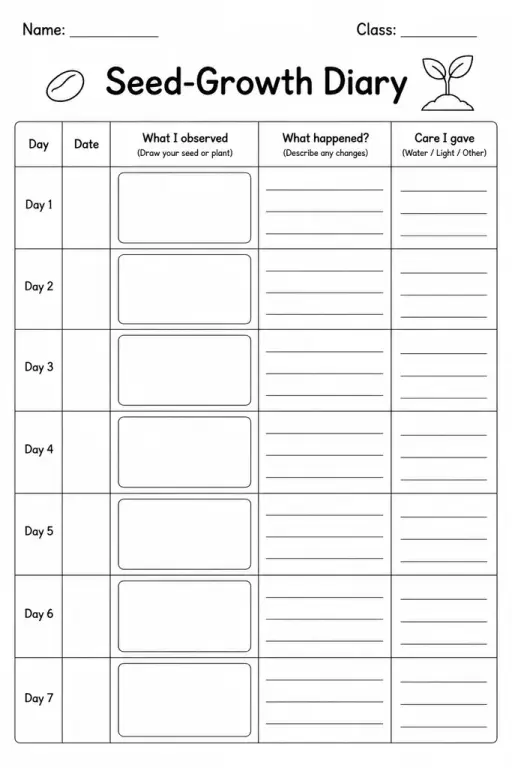
Seed-Growth Diary
Science Templates
Ages 4–11
——
KiwiBee uses optional Google Analytics, Google Ads, and Meta Pixel cookies to understand adult visitors, measure completed sign-ups, and improve campaigns. Essential cookies always stay on. OpenAI’s ChatGPT Ads Pixel also measures page views and completed enquiries after advertising consent, and may use hashed contact details for matching. Privacy policy

This variables table template gives students a structured, single-page organiser with clearly labelled columns for the independent variable, dependent variable, and controlled variables (constants). Blank rows beneath each heading let students define each variable, explain how it is measured or kept constant, and state the units involved. Designed for grades 4–8, it is the essential planning tool before any experiment and a core component of science fair project binders. Teachers use it at the hypothesis stage of the scientific method to help students sharpen vague experiment ideas into precise, testable designs. Because the table enforces the distinction between what changes, what is measured, and what stays fixed, students stop conflating variable types—one of the most common misconceptions in middle-school science. It fits any subject area where controlled experiments are conducted, from biology to chemistry to physics.
The template provides six blank rows for controlled variables—enough for most classroom experiments—plus space to add more if needed.
It is entirely subject-neutral. The same template works for chemistry experiments, physics investigations, environmental science projects, and social science fair experiments.
The variables table focuses on the three variable types. A separate hypothesis line is included at the top of the page so students state their prediction before filling in the table, keeping cause-and-effect thinking front and centre.
Yes. It is designed to slot directly into a science fair project binder as the experimental design section, and many science fair rubrics specifically require students to identify all three variable types.
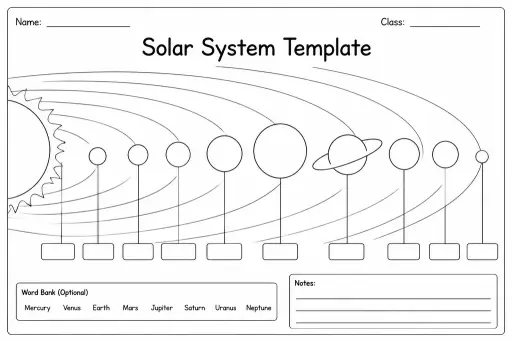
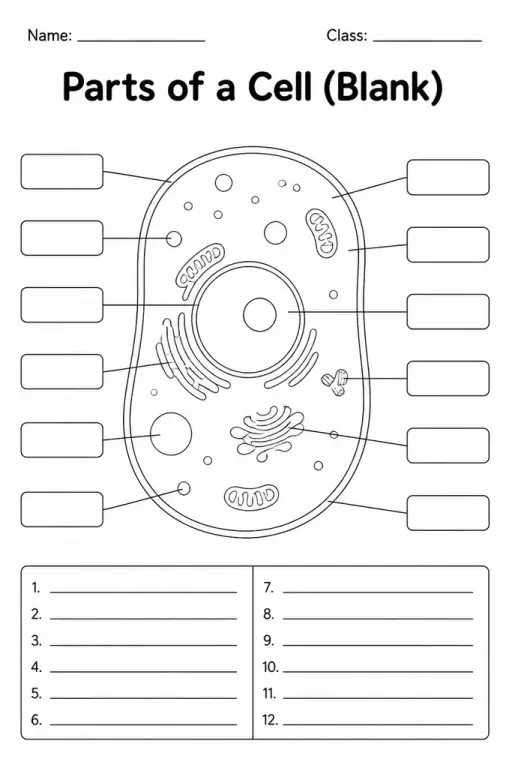
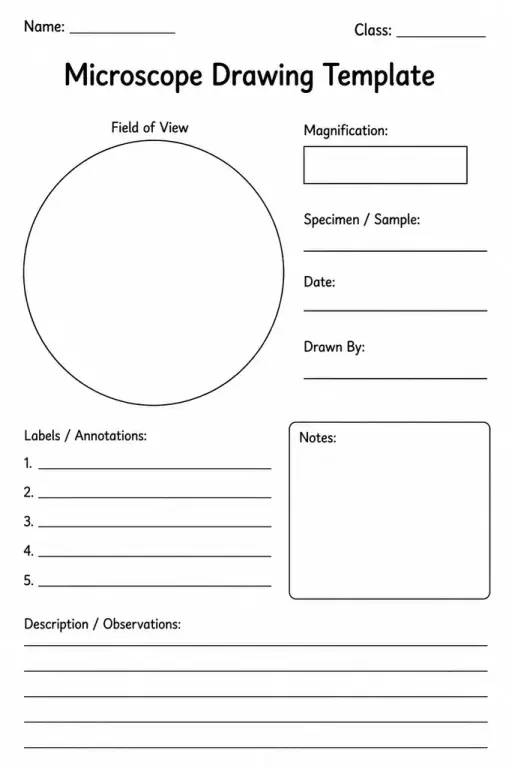
See what other teachers think and share a helpful note.
Generate a fresh worksheet for any grade, topic and language. Free.
 Home
Home All solutions
 Pricing
 About us
 KiwiBee for Non-profits
 Events & webinars
 For big organisations
 For schools
 For centers
 For team leaders
 For teachers
 AI and resources
 Resources
 Printable worksheets
 Lesson Packs
 Interactive simulations
 Teacher tools
 AI studio
 Ideas and research