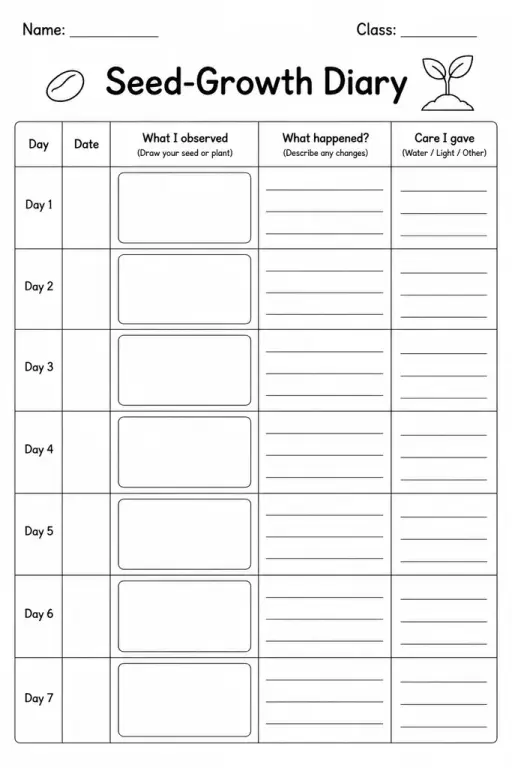
Seed-Growth Diary
Science Templates
Ages 4–11
——
KiwiBee uses optional Google Analytics, Google Ads, and Meta Pixel cookies to understand adult visitors, measure completed sign-ups, and improve campaigns. Essential cookies always stay on. OpenAI’s ChatGPT Ads Pixel also measures page views and completed enquiries after advertising consent, and may use hashed contact details for matching. Privacy policy

The Minibeast Hunt Recording Sheet is a tally-and-sketch field template built for early-years and lower-primary students investigating invertebrates in school gardens, leaf litter, logs, and flowerbeds. Each row provides space to name or draw a minibeast, make tally marks as specimens are spotted, and add a quick observational sketch. A simple habitat column lets students note where each creature was found — under a rock, on a leaf, in the soil — building a picture of microhabitats without heavy writing demands. Designed for grades K–4, the sheet suits whole-class hunts, small group rotations, and parent-led outdoor sessions. Because it is entirely blank within its structure, teachers can pre-fill the minibeast names for younger groups or leave rows open for student-led discovery.
The blank rows at the bottom of the sheet are deliberately included for unexpected finds. Encourage students to sketch first, then look up the name later.
No — all outdoor minibeast hunts should be adult-supervised. The template is a recording tool; supervision and safety rules are the teacher's responsibility.
Yes. Because the minibeast column is blank (or can be pre-filled), you choose the species relevant to your local environment.
Fifteen to twenty minutes is usually enough for grades K–4 to fill the sheet meaningfully. Longer sessions can lead to fatigue or distraction.
See what other teachers think and share a helpful note.
Generate a fresh worksheet for any grade, topic and language. Free.
 Home
Home All solutions
 Pricing
 About us
 KiwiBee for Non-profits
 Events & webinars
 For big organisations
 For schools
 For centers
 For team leaders
 For teachers
 AI and resources
 Resources
 Printable worksheets
 Lesson Packs
 Interactive simulations
 Teacher tools
 AI studio
 Ideas and research