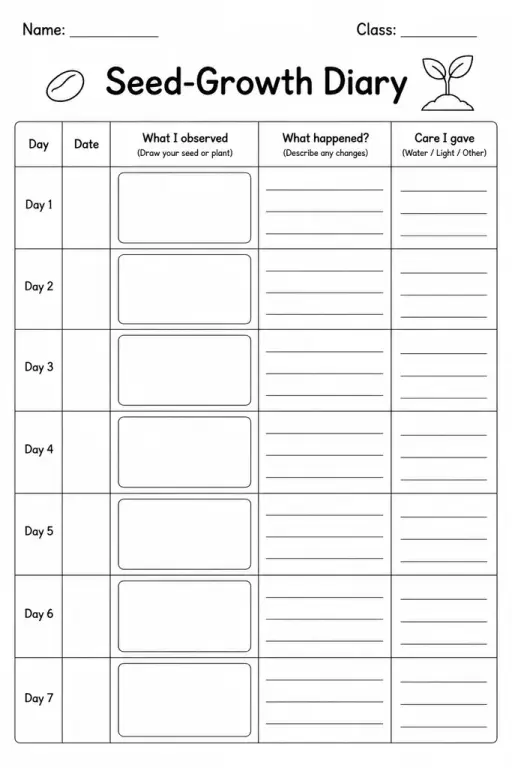
Seed-Growth Diary
Science Templates
Ages 4–11
——
KiwiBee uses optional Google Analytics, Google Ads, and Meta Pixel cookies to understand adult visitors, measure completed sign-ups, and improve campaigns. Essential cookies always stay on. OpenAI’s ChatGPT Ads Pixel also measures page views and completed enquiries after advertising consent, and may use hashed contact details for matching. Privacy policy

The Circuit Drawing Template provides students in grades 4–8 with a blank working space and a printed symbol key to draw and label electrical circuits using standard notation. The symbol key includes battery, bulb, switch, wire, motor, buzzer, and resistor symbols so students can reference correct notation without searching textbooks. The large blank drawing area above the key is sized for both simple series circuits and more complex parallel arrangements. Physics and STEM teachers use this template before, during, and after practical circuit-building lessons: students sketch a predicted circuit, compare it to the real build, and then draw the final verified version. Because the space is open-ended, the same sheet supports everything from a single-bulb loop in grade 4 to a multi-branch parallel circuit with switches in grade 8.
The key includes the most commonly taught symbols: cell, battery, bulb, switch (open and closed), wire, motor, buzzer, and fixed resistor. If your curriculum uses additional symbols, students can annotate the key margin.
Pencil is strongly recommended so students can erase and correct — neat, accurate circuit diagrams often require several attempts to get straight lines and correct symbols.
Yes. Load the PDF on a tablet or interactive whiteboard and students can annotate digitally, or the teacher can model a live circuit drawing for the class.
Yes — the built-in symbol key means no prior knowledge of notation is required. Walk through the key as a class and students can start drawing in the same session.
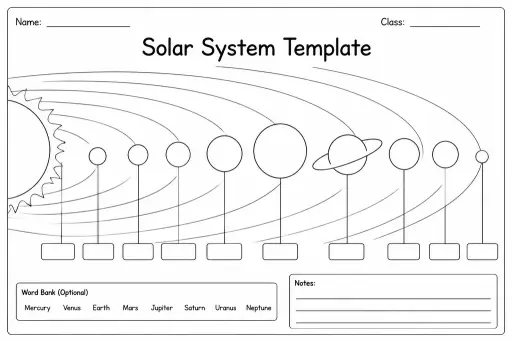
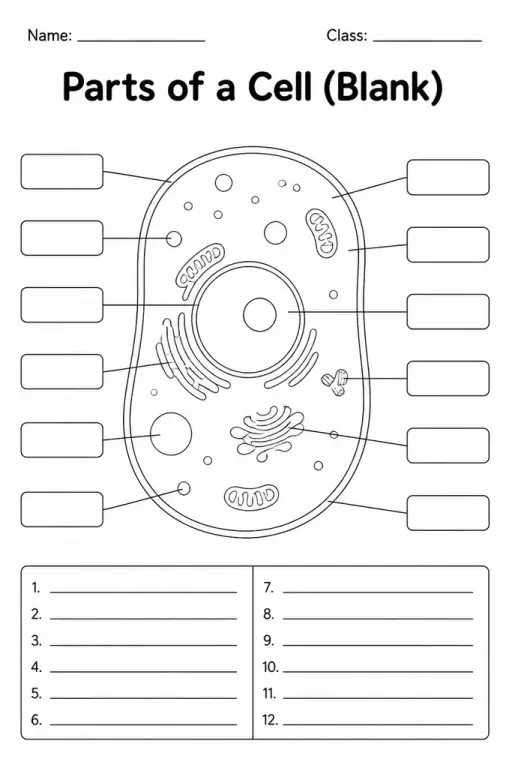
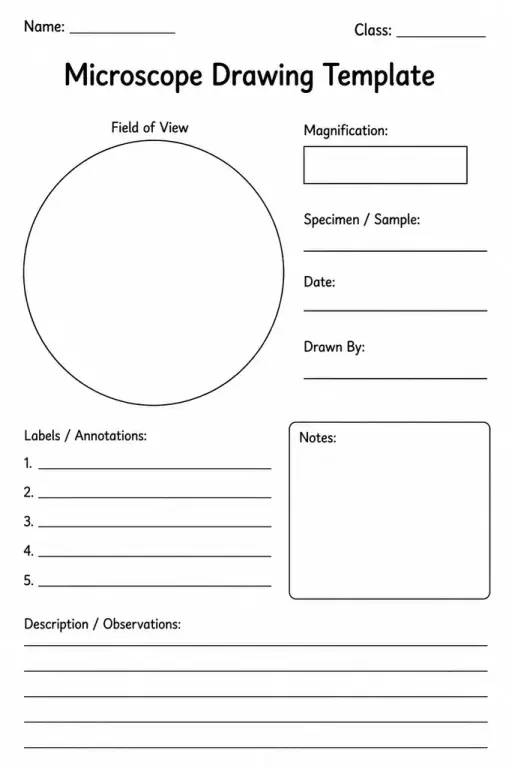
See what other teachers think and share a helpful note.
Generate a fresh worksheet for any grade, topic and language. Free.
 Home
Home All solutions
 Pricing
 About us
 KiwiBee for Non-profits
 Events & webinars
 For big organisations
 For schools
 For centers
 For team leaders
 For teachers
 AI and resources
 Resources
 Printable worksheets
 Lesson Packs
 Interactive simulations
 Teacher tools
 AI studio
 Ideas and research