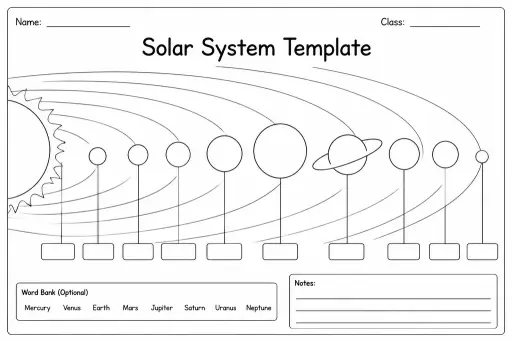
Solar System Template
Science Templates
Ages 4–11
——
KiwiBee uses optional Google Analytics, Google Ads, and Meta Pixel cookies to understand adult visitors, measure completed sign-ups, and improve campaigns. Essential cookies always stay on. OpenAI’s ChatGPT Ads Pixel also measures page views and completed enquiries after advertising consent, and may use hashed contact details for matching. Privacy policy

The Seed-Growth Diary is a day-by-day recording sheet that gives young scientists a structured way to track a seed from planting through germination and early growth. Each dated row includes space to sketch the current appearance of the seedling, measure height, note observations about colour and stem condition, and record care actions such as watering. The chronological layout makes it easy for grades K–4 students — and their parents or guardians at home — to see change unfolding over time without any adult prep beyond printing. Teachers use it for classic quick-germinating seeds like cress, beans, or sunflowers, but the blank structure adapts to any plant. Completing a full diary across two to four weeks gives children concrete evidence for discussions about what plants need to grow.
Cress, radish, and mung beans show visible changes within three to five days and are ideal for short classroom units. Sunflowers and beans suit a four-week diary.
Students should still record 'no change visible' — this models accurate scientific recording and teaches that waiting and observing is part of the process.
Yes. Kindergarten students can skip the measurement column and focus on the sketch and observation boxes. A teacher or parent can measure and scribe the number for them.
The sheet has 14 dated rows by default, covering two weeks of daily observation. For longer-growing plants, print additional sheets and staple them together.
See what other teachers think and share a helpful note.
Generate a fresh worksheet for any grade, topic and language. Free.
 Home
Home All solutions
 Pricing
 About us
 KiwiBee for Non-profits
 Events & webinars
 For big organisations
 For schools
 For centers
 For team leaders
 For teachers
 AI and resources
 Resources
 Printable worksheets
 Lesson Packs
 Interactive simulations
 Teacher tools
 AI studio
 Ideas and research