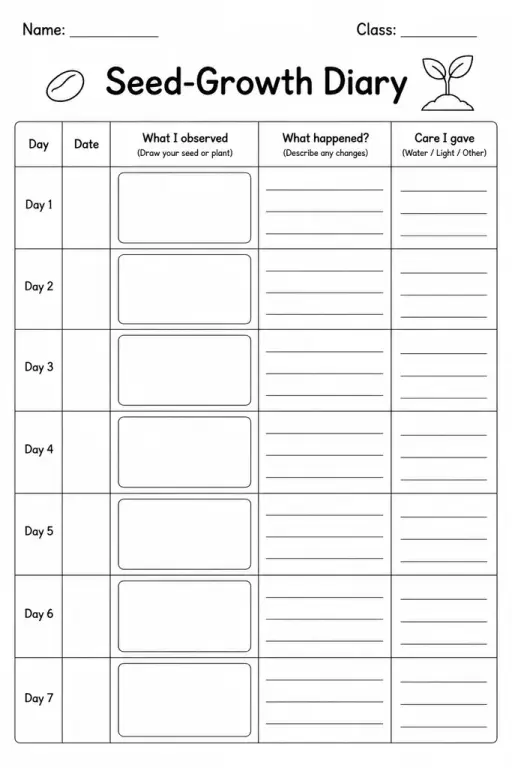
Seed-Growth Diary
Science Templates
Ages 4–11
——
KiwiBee uses optional Google Analytics, Google Ads, and Meta Pixel cookies to understand adult visitors, measure completed sign-ups, and improve campaigns. Essential cookies always stay on. OpenAI’s ChatGPT Ads Pixel also measures page views and completed enquiries after advertising consent, and may use hashed contact details for matching. Privacy policy

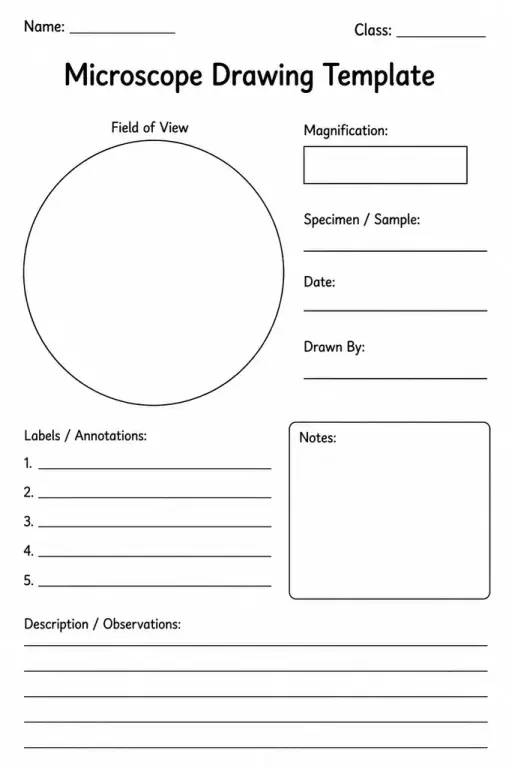
The Observation Drawing Template provides a large blank sketch box paired with a labelling area, giving students from kindergarten through grade 6 a dedicated space to draw exactly what they see and annotate it with their own words or teacher-supplied vocabulary. Unlike a plain blank page, the structured frame signals that this is a scientific record, not an art activity — prompting students to look closely, draw accurately, and use arrows or lines to indicate specific features. Teachers reach for this template during nature study, microscope work, specimen observation, and life-science units. It is just as useful in a home-school setting when a child is observing a garden snail or a cut apple. Because nothing is pre-printed inside the box, the same template serves a kindergartner sketching a leaf and a sixth-grader drawing a cell diagram.
Yes. Kindergartners can draw their observation and a teacher or aide can scribe the label words for them, or students can use invented spelling. The drawing itself is the primary record at this stage.
The sketch box takes up roughly two-thirds of the page, leaving a dedicated label/notes strip below it. The generous size encourages detailed drawing rather than a small thumbnail sketch.
Absolutely — colour is encouraged when it is part of the observation (e.g., noting that a leaf has red and green patches). Remind students that accuracy matters more than artistic presentation.
The template includes a titled frame, a structured label area, and a date/title field. This scaffolding signals the purpose of the activity and makes it easy to file, compare, or display the completed records.
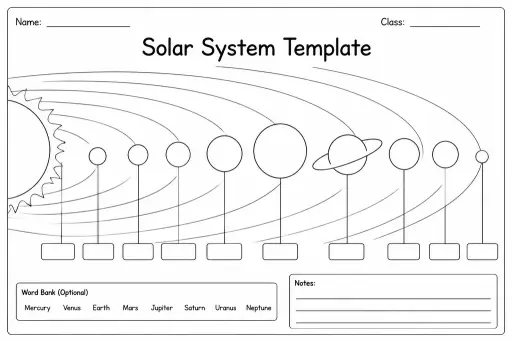
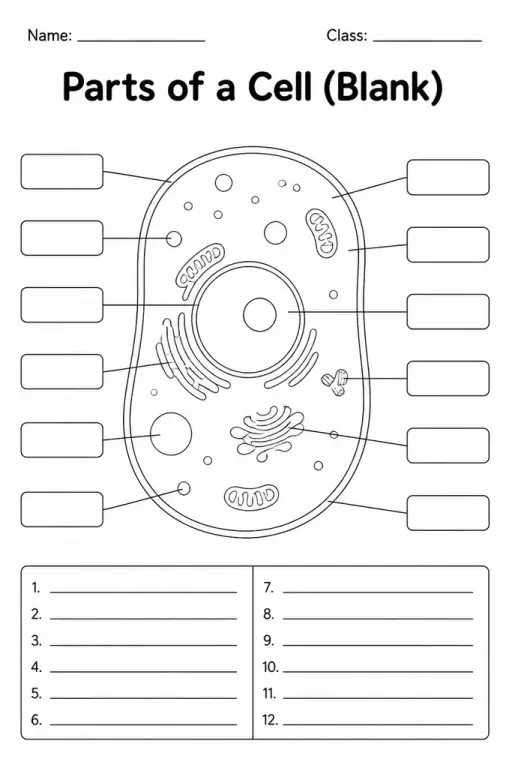
See what other teachers think and share a helpful note.
Generate a fresh worksheet for any grade, topic and language. Free.
 Home
Home All solutions
 Pricing
 About us
 KiwiBee for Non-profits
 Events & webinars
 For big organisations
 For schools
 For centers
 For team leaders
 For teachers
 AI and resources
 Resources
 Printable worksheets
 Lesson Packs
 Interactive simulations
 Teacher tools
 AI studio
 Ideas and research