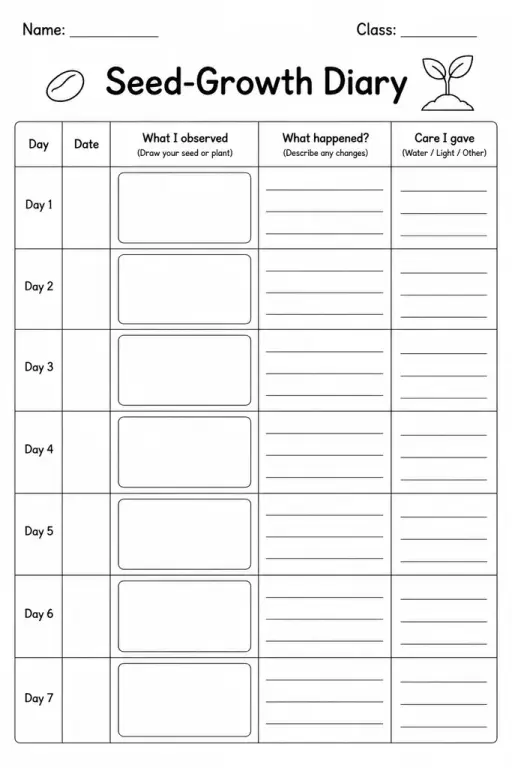
Seed-Growth Diary
Science Templates
Ages 4–11
——
KiwiBee uses optional Google Analytics, Google Ads, and Meta Pixel cookies to understand adult visitors, measure completed sign-ups, and improve campaigns. Essential cookies always stay on. OpenAI’s ChatGPT Ads Pixel also measures page views and completed enquiries after advertising consent, and may use hashed contact details for matching. Privacy policy

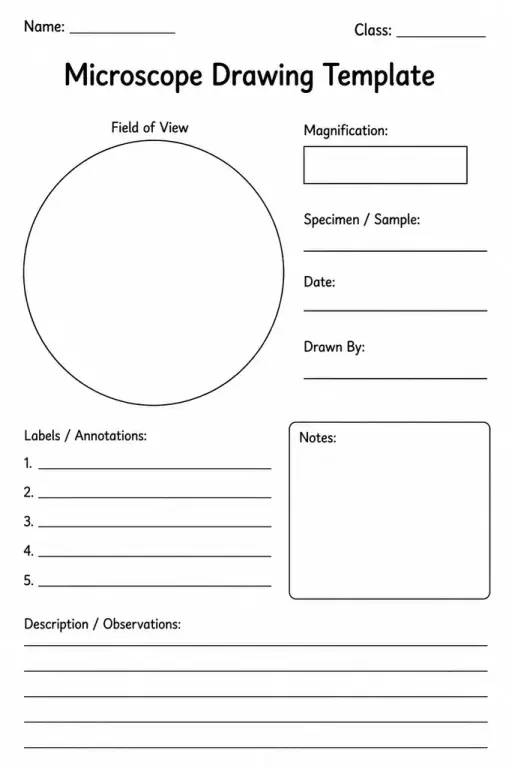
The Nature Journal Page is a single-sheet field-note template designed for outdoor science from kindergarten through grade 6. A large sketch box dominates the upper half, giving young naturalists space to draw the plant, animal, weather, or habitat they are studying. Ruled field-note lines below invite descriptive writing about colour, texture, smell, sound, and behaviour. A small header area captures the date, location, and weather conditions so entries build into a meaningful seasonal record. Teachers use it on schoolyard nature walks, dedicated forest school sessions, and garden science blocks. Students who fill pages across a term can look back and notice patterns — which birds appeared in which month, how a tree changed through the seasons — turning a stack of pages into a genuine personal field guide.
No. Kindergarten and grade 1 students can use the sketch box independently and dictate notes to a teacher or parent who scribes on the lines.
Absolutely. It works equally well at a classroom windowsill nature table, a terrarium observation station, or a plant-growing experiment on a desk.
Emphasis is on accuracy rather than beauty — encourage students to notice specific shapes, colours, and features rather than drawing from memory.
For a standard 20-minute nature walk, one page per student is typical. For longer field trips or detailed habitats, you may want two pages.
See what other teachers think and share a helpful note.
Generate a fresh worksheet for any grade, topic and language. Free.
 Home
Home All solutions
 Pricing
 About us
 KiwiBee for Non-profits
 Events & webinars
 For big organisations
 For schools
 For centers
 For team leaders
 For teachers
 AI and resources
 Resources
 Printable worksheets
 Lesson Packs
 Interactive simulations
 Teacher tools
 AI studio
 Ideas and research