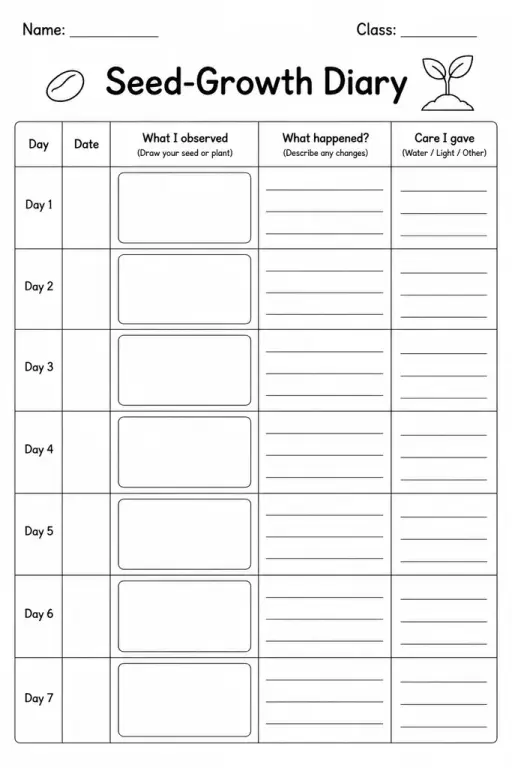
Seed-Growth Diary
Science Templates
Ages 4–11
——
KiwiBee uses optional Google Analytics, Google Ads, and Meta Pixel cookies to understand adult visitors, measure completed sign-ups, and improve campaigns. Essential cookies always stay on. OpenAI’s ChatGPT Ads Pixel also measures page views and completed enquiries after advertising consent, and may use hashed contact details for matching. Privacy policy

This moon-phases recording template is a month-long calendar grid where students sketch the shape of the moon they observe—or research—each night. Each cell contains the date and a small blank circle; students shade or draw the visible portion of the moon to capture the phase. Designed for grades 2–7, it turns a month of sky watching into a tangible, hand-drawn data set that makes the lunar cycle visible at a glance. Teachers use it for citizen-science-style homework projects, indoor research tasks using NASA moon-phase data, or as a hands-on supplement to textbook diagrams. After 28–30 days the completed calendar clearly shows the waxing and waning pattern, giving students concrete evidence for class discussions about the moon's cycle, tides, and the relationship between Earth, moon, and sun.
The calendar grid covers 30 days, accommodating a full synodic lunar cycle of approximately 29.5 days with one or two buffer cells.
Students can note 'cloudy' in the cell and look up the official phase for that date on NASA's moon-phase calendar, then sketch and label the phase from the reference—this still builds pattern recognition.
For accuracy, observing around the same time each evening (ideally after sunset) is ideal, but the template works even with varied observation times. Any discrepancies make for a great class discussion.
Yes. Students can use a moon-phase website or app to find each night's phase and draw it. The template is designed to function as a research-recording tool as well as a direct-observation journal.
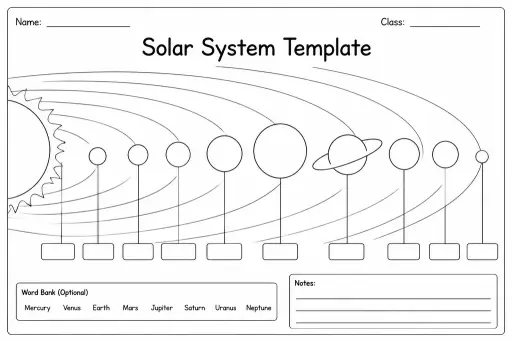
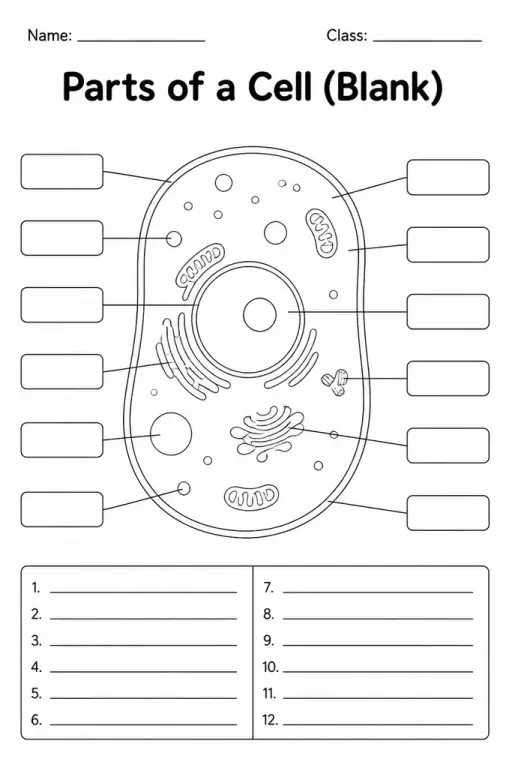
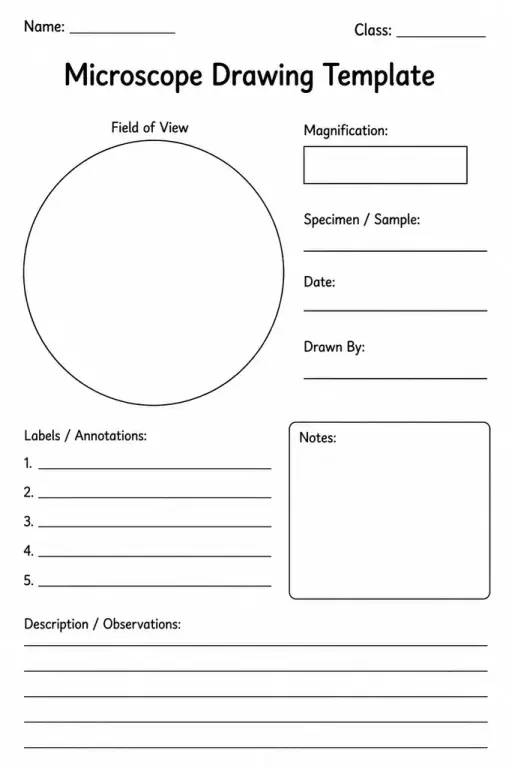
See what other teachers think and share a helpful note.
Generate a fresh worksheet for any grade, topic and language. Free.
 Home
Home All solutions
 Pricing
 About us
 KiwiBee for Non-profits
 Events & webinars
 For big organisations
 For schools
 For centers
 For team leaders
 For teachers
 AI and resources
 Resources
 Printable worksheets
 Lesson Packs
 Interactive simulations
 Teacher tools
 AI studio
 Ideas and research