Printable template
Maths Journal Page
Prompt plus working space.
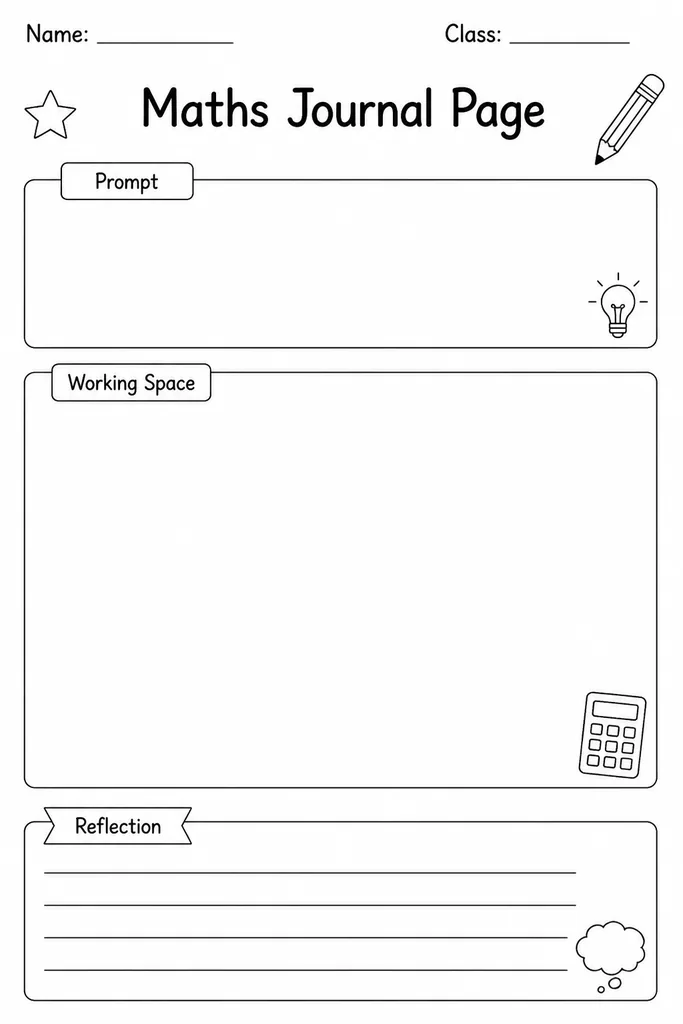
The Maths Journal Page template gives students a single structured page with a short prompt area at the top and a generous open working space below, designed to capture their mathematical thinking, questions, and discoveries in their own words. Unlike a worksheet with a fixed answer, this blank frame encourages writing, sketching diagrams, trying multiple approaches, and explaining reasoning — the habits of a reflective mathematician. It suits grades 2–8, from early number sense journaling ('I notice that...') through algebraic thinking and proof writing. Teachers build a set of completed pages into a running maths journal over the term, while parents use individual pages to spark conversation about what their child is learning and wondering about in class.
Learning objectives
- Develop mathematical communication through writing and drawing
- Encourage reflection on strategies, mistakes, and discoveries
- Build vocabulary for explaining mathematical ideas in context
- Promote growth mindset by valuing process over a single answer
- Document mathematical thinking as evidence of conceptual understanding
- Bridge classroom learning and personal sense-making
How to use this template
- Download and print individual pages, or pre-bind a set into a booklet to create a term-long maths journal.
- Write a teacher-chosen prompt, open question, or today's 'big idea' in the prompt box at the top.
- Give students time to respond freely — words, diagrams, calculations, questions, and doodles are all welcome.
- Encourage students to date each page and keep entries in order so they can look back at earlier thinking.
- Use completed pages as discussion starters in one-on-one conferencing or small-group maths talks.
Classroom & home ideas
- Start each lesson with a five-minute 'free write' using the prompt 'What do I already know about...?' before introducing new content.
- After an investigation, use the journal page for a written reflection: 'What surprised me? What would I try differently?'
- Collect pages mid-unit as a formative check — common misconceptions visible in student writing can shape the next lesson.
- At the end of a unit, ask students to write a 'teaching entry' explaining the key concept as if writing for a younger student.
- Use the blank working space for annotated diagrams during geometry or measurement lessons, adding written labels alongside sketches.
Skills practised
Frequently asked questions
Is there a specific prompt printed on the template?
No — the prompt area is completely blank so teachers can write or type any question that fits the current lesson, unit, or student need. This makes the page reusable across every topic throughout the year.
How much writing space does the template provide?
The working area occupies roughly three-quarters of the page and is unlined, giving students freedom to write, draw diagrams, set out calculations, or combine all three without the constraint of ruled lines.
Can younger students in grade 2 use this?
Yes. For grade 2, teachers can pre-write a simple sentence starter (e.g. 'I see... I think... I wonder...') in the prompt area, and students respond with drawings and a few words. The unlined space actually helps early writers.
How is a maths journal different from a regular exercise book?
A maths journal is for thinking out loud — it welcomes messy working, questions, and reflections rather than just neat answers. The structured prompt box and open space on this template reinforce that distinction.
Likes & comments
See what other teachers think and share a helpful note.
Create more worksheets in our Worksheet Studio
Generate fresh worksheets for any grade, topic, and language — free.
Open the Worksheet StudioRelated worksheets
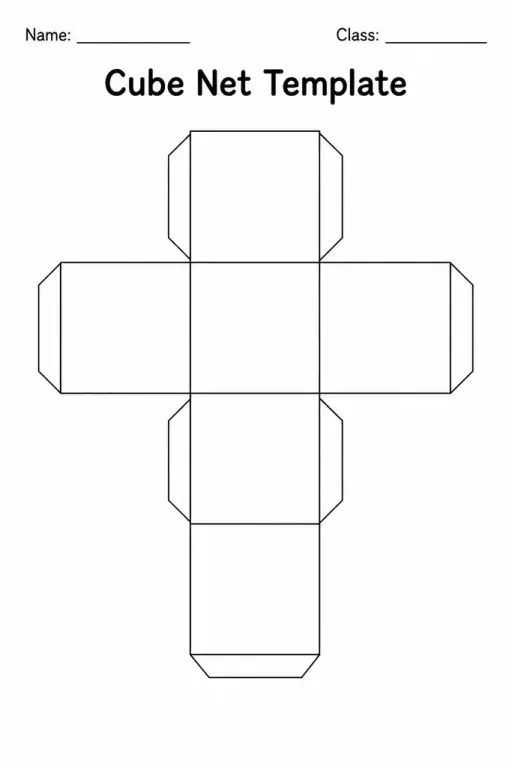
Cube Net Template
Triangular / Tessellation Grid
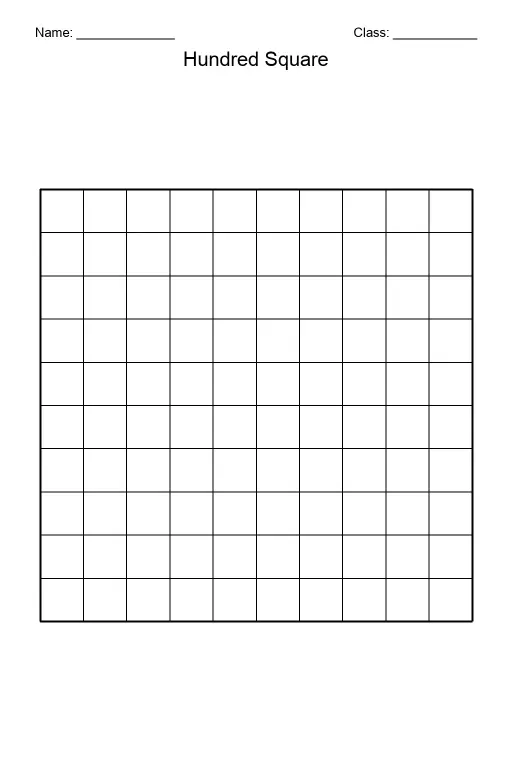
Hundred Square (Blank)
Twenty Frame
Times-Table Practice Template
Column Addition Grid
Maths Investigation Recording Sheet
 For big organisations
 For schools
 For centers
 For team leaders
 For teachers
 AI and resources
 Printable worksheets
 Interactive simulations
 Teacher tools
 AI studio
 Ideas and research