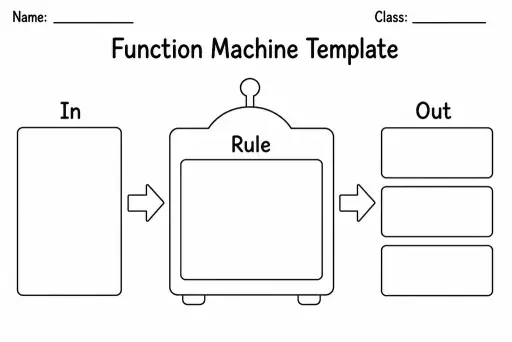
Function Machine Template
Math Templates
Ages 4–11
——
KiwiBee uses optional Google Analytics, Google Ads, and Meta Pixel cookies to understand adult visitors, measure completed sign-ups, and improve campaigns. Essential cookies always stay on. OpenAI’s ChatGPT Ads Pixel also measures page views and completed enquiries after advertising consent, and may use hashed contact details for matching. Privacy policy

A fraction wall (blank) arranges a stack of same-width horizontal rows, each representing one whole, in a layered 'brick wall' format. Unlike fraction strips that students cut apart, the wall stays as a single connected chart so learners can scan vertically to compare pieces across rows instantly. Grades 3–6 students fill in each row with the correct number of equal sections, label every brick, and color rows to distinguish denominators—producing a personalized reference tool they built themselves. The self-constructed aspect is a deliberate learning feature: drawing the dividing lines by hand reinforces why each part must be equal and helps students notice that larger denominators create smaller bricks. Teachers display a completed class version on the board while students work on their own copies, making it easy to point to specific fractions mid-lesson. Parents appreciate the wall as a ready homework reference once it is completed and slipped into a plastic sleeve.
Grades 3–4 typically build walls through eighths or tenths (whole, halves, thirds, fourths, sixths, eighths). Grades 5–6 often extend to twelfths or even sixteenths to support work with equivalent fractions and LCM.
Pre-mark the total row width on the template, or provide rulers and have students measure. Some teachers use a dotted guide row printed at the top so students can transfer measurements down.
A fraction wall is a single connected chart—rows stay joined—so vertical alignment is immediate. Fraction strips are cut apart for physical manipulation. Both models are valuable; the wall is better for comparison, strips for hands-on ordering.
Yes. Cover the labels with small sticky notes, show students only the colored bricks, and ask them to name the fractions represented—turning the reference chart into a low-stakes self-quiz.
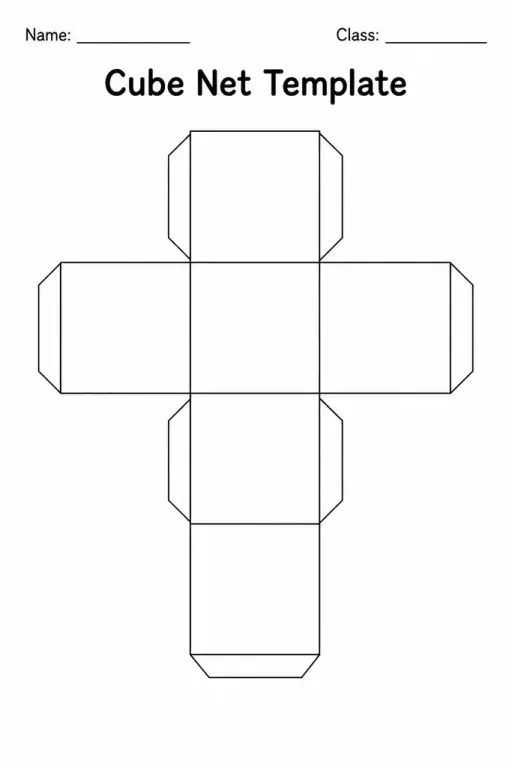
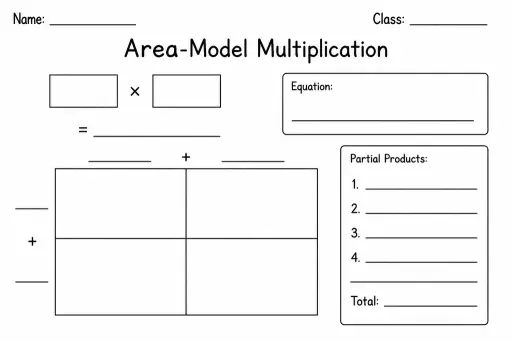
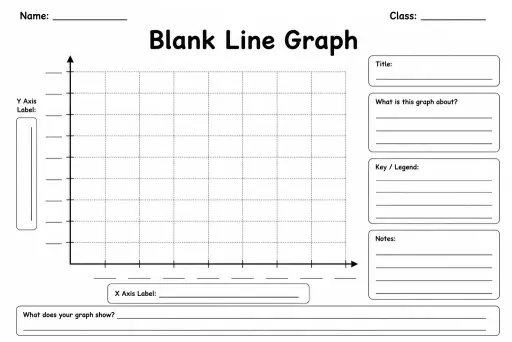
See what other teachers think and share a helpful note.
Generate a fresh worksheet for any grade, topic and language. Free.
 Home
Home All solutions
 Pricing
 About us
 KiwiBee for Non-profits
 Events & webinars
 For big organisations
 For schools
 For centers
 For team leaders
 For teachers
 AI and resources
 Resources
 Printable worksheets
 Lesson Packs
 Interactive simulations
 Teacher tools
 AI studio
 Ideas and research