Printable template
Coordinate Grid — 1 Quadrant
Single-quadrant numbered grid.

The 1-Quadrant Coordinate Grid template features a single numbered grid covering only positive x and y values, making it the ideal starting point for students in grades 3–6 who are new to graphing. The large, uncluttered layout reduces cognitive load so beginners can focus entirely on locating and plotting points rather than navigating negative numbers. Teachers use it to introduce ordered pairs, map simple patterns, or scaffold early data-plotting activities before moving students to a full four-quadrant plane. Parents also find this template handy for at-home practice: the familiar first-quadrant space matches most elementary graphing homework. Its clean design prints sharply on standard letter paper, and the numbered axes eliminate the need for rulers or manual setup — just download, print, and start plotting.
Learning objectives
- Identify and plot ordered pairs in the first quadrant
- Read and write coordinates in (x, y) format
- Connect data tables to visual graphs
- Recognize patterns and linear relationships
- Build foundational skills before advancing to all four quadrants
How to use this template
- Download the free printable PDF and print one copy per student on letter paper.
- Point out the x-axis (horizontal) and y-axis (vertical) and review how to read each axis number.
- Call out ordered pairs aloud and have students mark each point with a dot or small X.
- Draw lines or bars between plotted points to extend into simple line or bar graphs.
- Collect completed sheets as formative evidence of plotting accuracy before moving to quadrant 2–4 work.
Classroom & home ideas
- Create a 'coordinate treasure hunt' where each correct point reveals the next clue.
- Plot classroom survey data (e.g., number of siblings vs. age) to introduce scatter plots.
- Use dot-to-dot coordinate instructions to form simple shapes and reinforce sequencing.
- Have students write their own ordered-pair riddles for classmates to plot and solve.
- Graph a simple function table (input/output) to visualize how rules produce patterns.
Skills practised
Frequently asked questions
What grade level is the 1-Quadrant grid best for?
It works well for grades 3–6. Third graders typically start with basic ordered pairs, while fifth and sixth graders use it for early graphing of equations and data sets before learning negative coordinates.
How many units does the grid display on each axis?
The standard version runs from 0 to 10 on both axes in single-unit increments, providing enough room for typical elementary and early middle-school tasks.
Can I use this template to teach bar or line graphs?
Yes. While it is technically a coordinate plane, teachers regularly use it as a base for simple line graphs and scatter plots by labeling the axes with real-world units.
Is it easy to adapt the scale for a different range of numbers?
Absolutely — just relabel the printed numbers with a pen or marker to rescale the axes to fit your data, such as 0–20 or 0–100.
Likes & comments
See what other teachers think and share a helpful note.
Create more worksheets in our Worksheet Studio
Generate fresh worksheets for any grade, topic, and language — free.
Open the Worksheet StudioRelated worksheets
Cube Net Template
Triangular / Tessellation Grid
Hundred Square (Blank)
Maths Journal Page
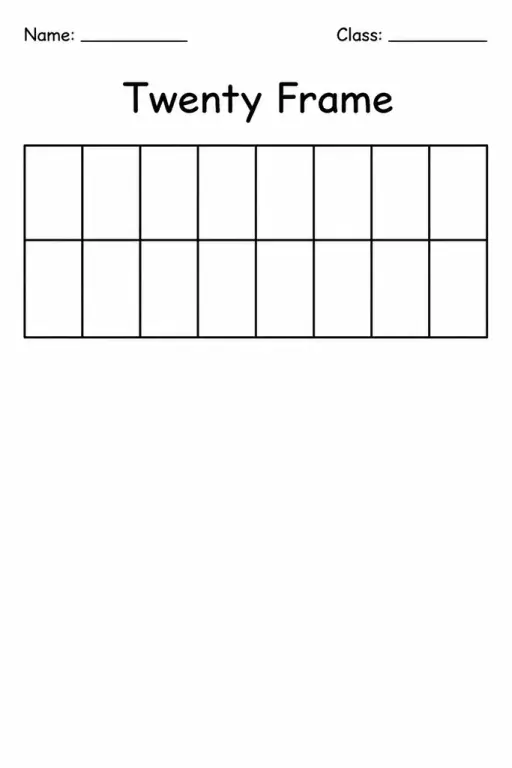
Twenty Frame
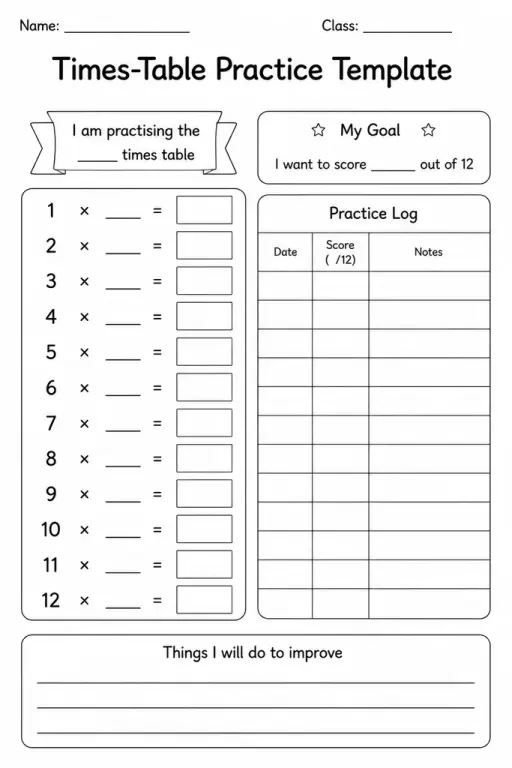
Times-Table Practice Template
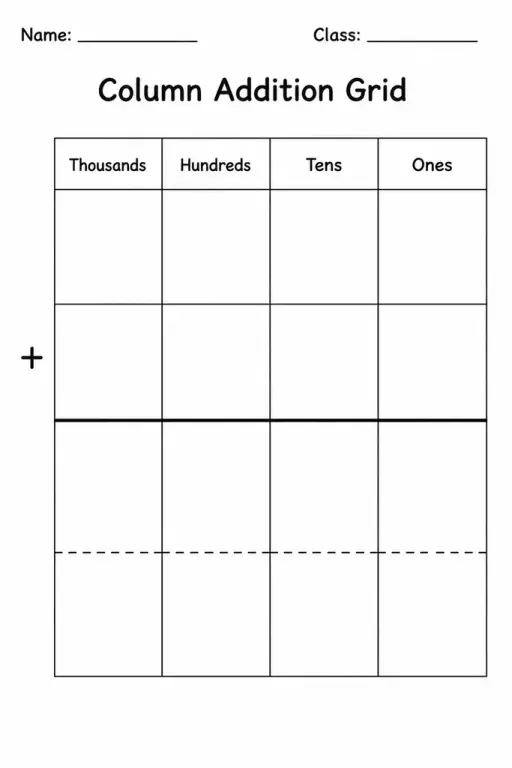
Column Addition Grid
 For big organisations
 For schools
 For centers
 For team leaders
 For teachers
 AI and resources
 Printable worksheets
 Interactive simulations
 Teacher tools
 AI studio
 Ideas and research