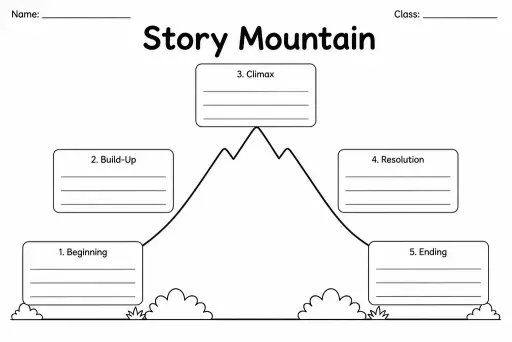
Story Mountain
Graphic Organizers
Ages 4–11
——
KiwiBee uses optional Google Analytics, Google Ads, and Meta Pixel cookies to understand adult visitors, measure completed sign-ups, and improve campaigns. Essential cookies always stay on. OpenAI’s ChatGPT Ads Pixel also measures page views and completed enquiries after advertising consent, and may use hashed contact details for matching. Privacy policy

The Y-Chart is a three-section graphic organizer shaped like the letter Y, dividing a topic into three sensory or perceptual lenses: 'Looks like,' 'Sounds like,' and 'Feels like.' Widely used from kindergarten through grade 5, it builds descriptive vocabulary and multi-sensory observation skills. Students use it when studying a historical event, exploring a science concept, analysing a character's emotions, or brainstorming details for a descriptive writing piece. Teachers find it especially powerful for developing empathy—prompting students to imagine how something sounds or feels, not just how it appears. The simple Y shape keeps the task approachable for young learners while still generating enough detail to power a well-developed paragraph or class discussion. It works equally well as a solo think tool, a partner activity, or a whole-class shared-writing exercise.
Young learners typically use it with teacher support or draw pictures in each section rather than write words. A shared whole-class Y-Chart on chart paper is an ideal entry point for K–1 students.
That limitation is actually a productive thinking challenge. Encourage students to think metaphorically—what would this idea 'sound like' if it could make a noise? This kind of creative stretch deepens understanding.
A Venn diagram compares two or more things by finding overlap. A Y-Chart explores one thing from three sensory or perceptual angles, making it a descriptive analysis tool rather than a comparison tool.
Yes. For example, use a Y-Chart to explore 'multiplication': it looks like equal-sized groups, sounds like repeated counting, and feels like a faster way to add—connecting the abstract to the concrete.
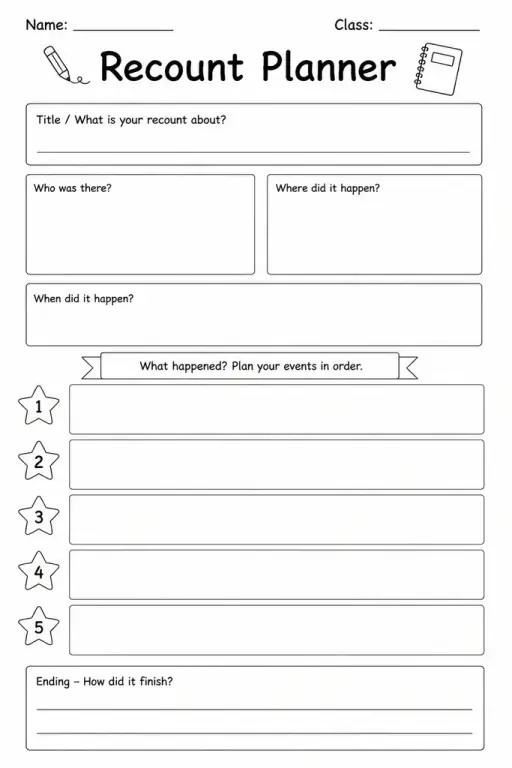
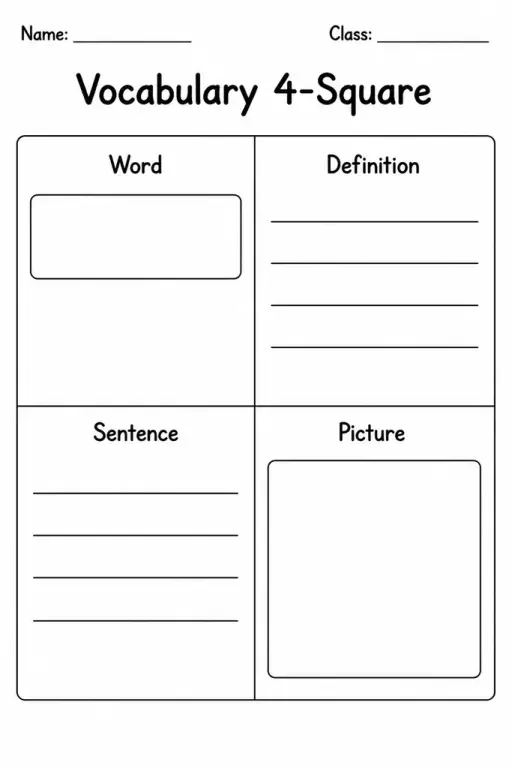
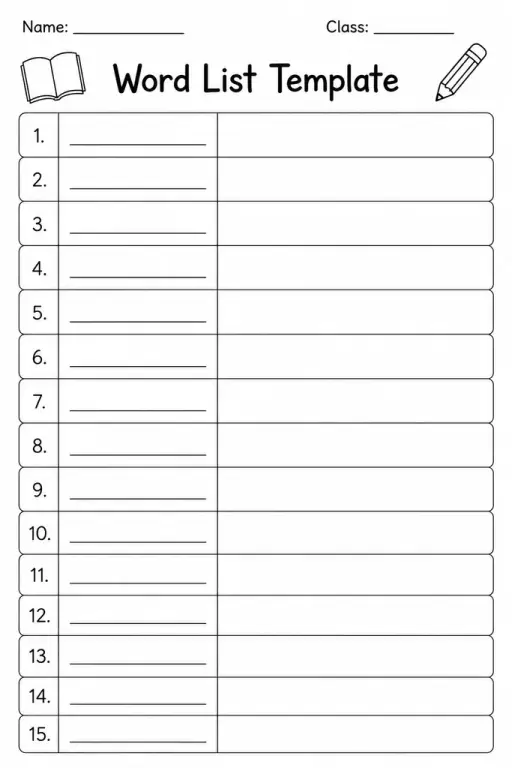
See what other teachers think and share a helpful note.
Generate a fresh worksheet for any grade, topic and language. Free.
 Home
Home All solutions
 Pricing
 About us
 KiwiBee for Non-profits
 Events & webinars
 For big organisations
 For schools
 For centers
 For team leaders
 For teachers
 AI and resources
 Resources
 Printable worksheets
 Lesson Packs
 Interactive simulations
 Teacher tools
 AI studio
 Ideas and research