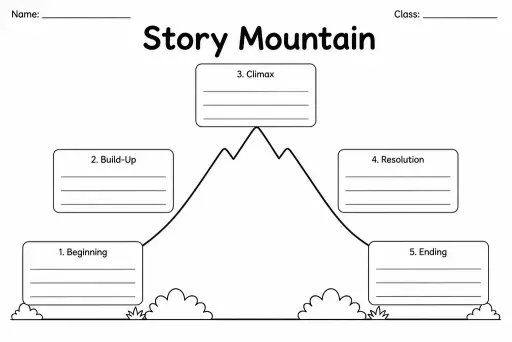
Story Mountain
Graphic Organizers
Ages 4–11
——
KiwiBee uses optional Google Analytics, Google Ads, and Meta Pixel cookies to understand adult visitors, measure completed sign-ups, and improve campaigns. Essential cookies always stay on. OpenAI’s ChatGPT Ads Pixel also measures page views and completed enquiries after advertising consent, and may use hashed contact details for matching. Privacy policy

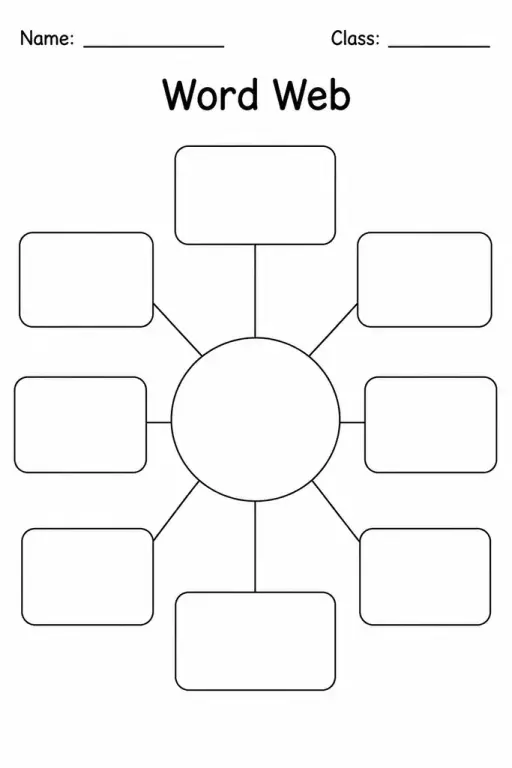
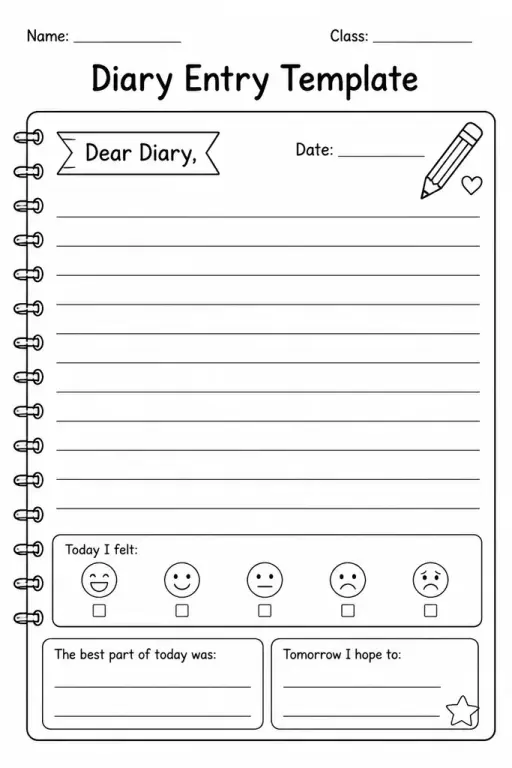
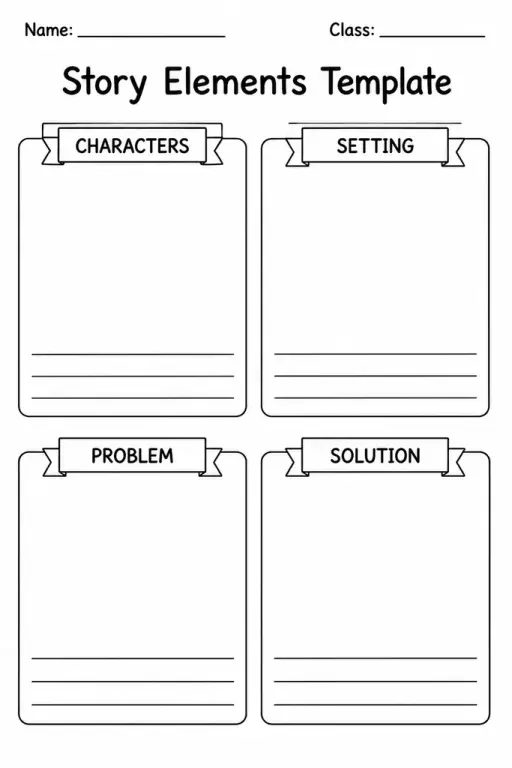
A reading response page is a single-sheet organizer featuring open-ended prompt areas and ruled writing lines, designed for students in grades 2–6 to record their thinking about any book, article, or story they have just read. Unlike worksheets tied to a specific text, this blank template works with any title — swap it in for independent reading journals, guided reading rotations, or homework response logs without printing a new design each time. Students use the prompt sections to capture a summary, personal reaction, favorite passage, or connection to their own life, then develop their thoughts on the lined section below. Teachers appreciate the flexibility: hand it out after a read-aloud, assign it for a chapter book check-in, or use it as a quick formative assessment. Parents can print one at home to support nightly reading routines.
The blank version leaves the prompt labels empty so teachers can write or stamp their own — summary, connection, question, prediction, or vocabulary — tailored to the current unit or standard.
Yes. For younger writers, fill in just one or two prompts per session rather than the full page, and allow drawing in any blank prompt box.
Absolutely. The template is text-type neutral — swap in prompts like 'main idea,' 'new fact,' or 'wonder question' for informational reading.
Print 20–30 copies, staple or bind them with a card-stock cover, and students have a full-term personal reading journal ready on day one.
See what other teachers think and share a helpful note.
Generate a fresh worksheet for any grade, topic and language. Free.
 Home
Home All solutions
 Pricing
 About us
 KiwiBee for Non-profits
 Events & webinars
 For big organisations
 For schools
 For centers
 For team leaders
 For teachers
 AI and resources
 Resources
 Printable worksheets
 Lesson Packs
 Interactive simulations
 Teacher tools
 AI studio
 Ideas and research