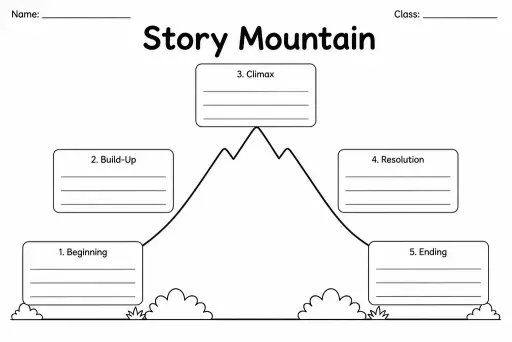
Story Mountain
Graphic Organizers
Ages 4–11
——
KiwiBee uses optional Google Analytics, Google Ads, and Meta Pixel cookies to understand adult visitors, measure completed sign-ups, and improve campaigns. Essential cookies always stay on. OpenAI’s ChatGPT Ads Pixel also measures page views and completed enquiries after advertising consent, and may use hashed contact details for matching. Privacy policy

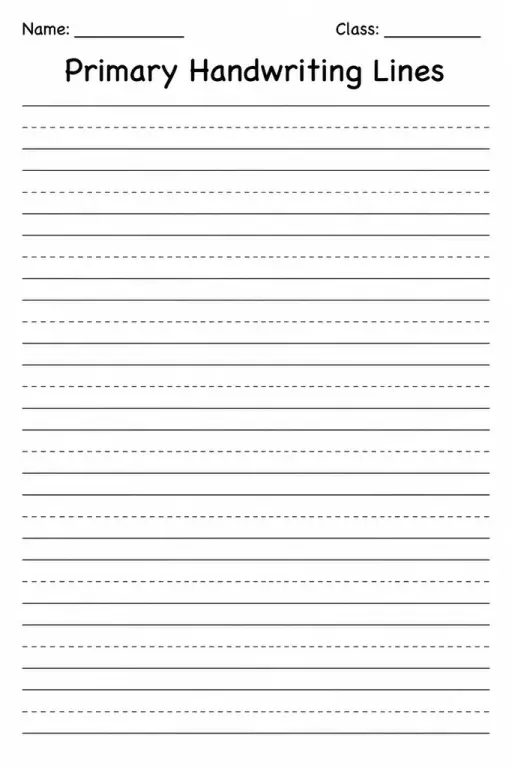
Wide-ruled handwriting paper features extra-tall guideline rows designed specifically for the youngest and least coordinated writers — typically Pre-Kindergarten through Grade 1. The generous row height (often 1.25–1.5 inches) gives tiny hands enough room to form big, confident letters without cramping or overlapping. Each row still includes the familiar solid headline, dashed midline, and solid baseline so letter proportions are taught from day one, even at a larger scale. Kindergarten teachers reach for this format at the start of the year before transitioning students to standard primary lines. It also suits students with fine motor delays or those receiving occupational therapy support, since the wide rows reduce frustration and allow more deliberate pencil movements. Parents use it for pre-writing name practice and alphabet tracing at home.
Wide-ruled paper has taller rows — typically 1.25 to 1.5 inches — versus the standard 1-inch rows on primary handwriting lines. Both use the solid-dashed-solid guideline system, but wide ruling gives very young or developing writers more physical space to form letters correctly.
Most students are ready to transition when they can consistently keep letters within the wide rows and show good baseline alignment — usually mid-Kindergarten to early Grade 1. Follow your school's handwriting curriculum pacing guide for specific benchmarks.
Yes. The extra width in each row benefits left-handed students who tend to make larger initial letter strokes. The blank template also avoids any right-handed directional cues.
Absolutely — the wide rows are ideal for number formation too. Numbers 1–10 fit comfortably in a single row, and the dashed midline helps students see where numerals like '3' or '5' have a midpoint.
See what other teachers think and share a helpful note.
Generate a fresh worksheet for any grade, topic and language. Free.
 Home
Home All solutions
 Pricing
 About us
 KiwiBee for Non-profits
 Events & webinars
 For big organisations
 For schools
 For centers
 For team leaders
 For teachers
 AI and resources
 Resources
 Printable worksheets
 Lesson Packs
 Interactive simulations
 Teacher tools
 AI studio
 Ideas and research