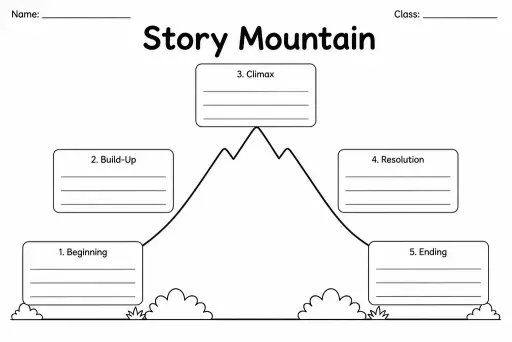
Story Mountain
Graphic Organizers
Ages 4–11
——
KiwiBee uses optional Google Analytics, Google Ads, and Meta Pixel cookies to understand adult visitors, measure completed sign-ups, and improve campaigns. Essential cookies always stay on. OpenAI’s ChatGPT Ads Pixel also measures page views and completed enquiries after advertising consent, and may use hashed contact details for matching. Privacy policy

The spelling practice template uses the classic look-cover-write-check method, dividing each row into four labelled blank columns: Look (where the teacher or student writes the word), Cover (a fold-over or blank column that hides the model), Write (student attempts the word from memory), and Check (student self-corrects by comparing). Students in grades 1–6 use it independently or in pairs to drill weekly spelling lists, high-frequency words, or vocabulary from any subject. The four-column structure builds automaticity through spaced repetition within a single session and shows students exactly where errors occur so they can target problem letter patterns. Teachers appreciate that it doubles as a built-in self-assessment tool without requiring any extra marking.
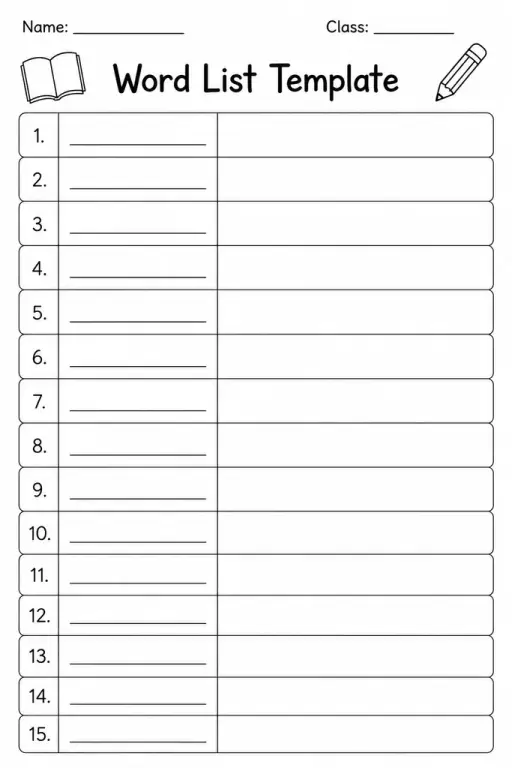
A standard A4 or letter version typically accommodates 10–15 words depending on row height. For younger students with larger handwriting, choose a wide-ruled version with 8–10 rows.
Yes, for independent learners. Younger students or ELL students usually benefit from having the teacher pre-fill the Look column so they focus on memorising, not transcribing.
Some versions include a second Write column labelled 'Try Again' for words that were incorrect on the first attempt, supporting the repeat practice that consolidates correct spelling.
The key difference is that the Cover step breaks the line of sight to the model, forcing retrieval from memory. Straight copying does not activate the same memorisation process, so errors are less likely to be caught or corrected.
See what other teachers think and share a helpful note.
Generate a fresh worksheet for any grade, topic and language. Free.
 Home
Home All solutions
 Pricing
 About us
 KiwiBee for Non-profits
 Events & webinars
 For big organisations
 For schools
 For centers
 For team leaders
 For teachers
 AI and resources
 Resources
 Printable worksheets
 Lesson Packs
 Interactive simulations
 Teacher tools
 AI studio
 Ideas and research