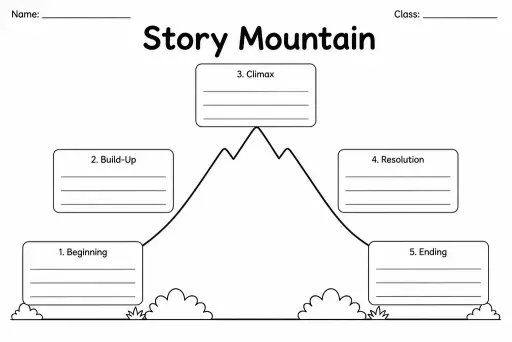
Story Mountain
Graphic Organizers
Ages 4–11
——
KiwiBee uses optional Google Analytics, Google Ads, and Meta Pixel cookies to understand adult visitors, measure completed sign-ups, and improve campaigns. Essential cookies always stay on. OpenAI’s ChatGPT Ads Pixel also measures page views and completed enquiries after advertising consent, and may use hashed contact details for matching. Privacy policy

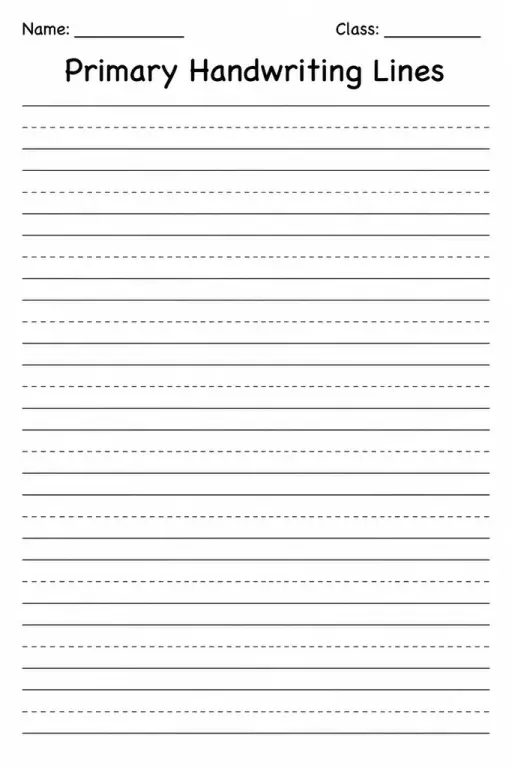
A name tracing template gives the youngest learners a personalised, meaningful first writing experience — their own name. The template provides a row of blank name boxes or dotted-letter outlines where a teacher or parent writes the child's name in a traceable format, and the student traces it, then copies it independently on the rows below. Because children are inherently motivated to recognise and write their own name, this template tends to produce stronger engagement than generic letter-practice sheets. PreK and Kindergarten teachers use name tracing sheets during the first weeks of school to simultaneously introduce pencil grip, left-to-right directionality, and the concept that letters form words with meaning. Parents use them at the kitchen table before school even starts. The completely blank template works for any name of any length — simply write or type the name before printing.
You can write the name by hand using a yellow crayon or highlighter directly on the printed sheet so the student traces over it, or type the name in a dotted font (such as 'Dotted' or 'KG Primary Dots') in the editable version before printing.
Use a slightly smaller font size when preparing the template, or split a very long name across two rows with the first name on one row and the last name on the next. The blank format gives full flexibility.
Most children are ready to write their name without tracing by the middle of Kindergarten, once they can identify all the letters in their name and reproduce basic letterforms. Tracing can continue as a warm-up even after independence is reached — it reinforces muscle memory.
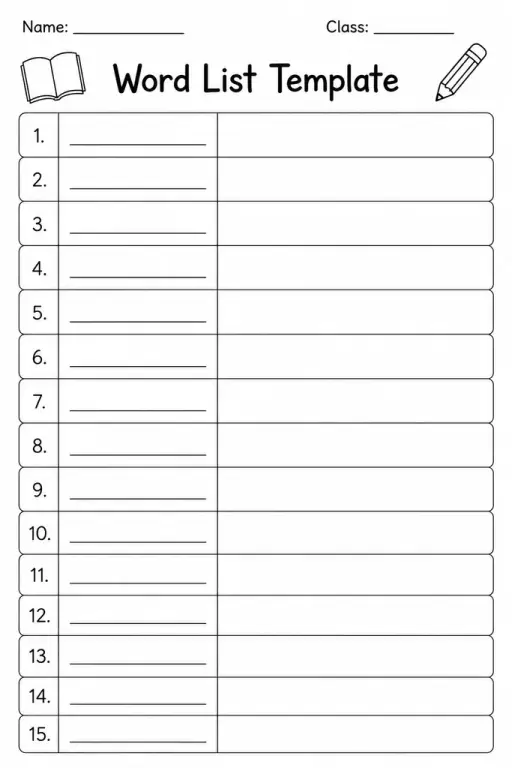
Yes — the blank rows work for any short word you want a child to trace and copy. Teachers regularly repurpose the format for high-frequency words, number words, colour words, or the weekly spelling list.
See what other teachers think and share a helpful note.
Generate a fresh worksheet for any grade, topic and language. Free.
 Home
Home All solutions
 Pricing
 About us
 KiwiBee for Non-profits
 Events & webinars
 For big organisations
 For schools
 For centers
 For team leaders
 For teachers
 AI and resources
 Resources
 Printable worksheets
 Lesson Packs
 Interactive simulations
 Teacher tools
 AI studio
 Ideas and research