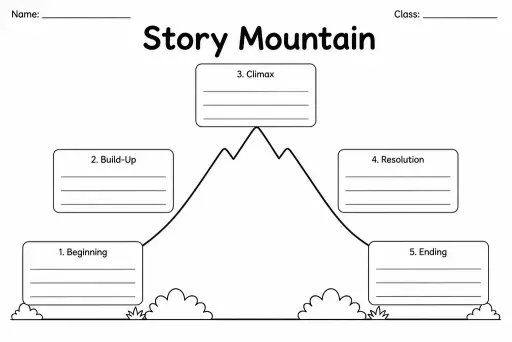
Story Mountain
Graphic Organizers
Ages 4–11
——
KiwiBee uses optional Google Analytics, Google Ads, and Meta Pixel cookies to understand adult visitors, measure completed sign-ups, and improve campaigns. Essential cookies always stay on. OpenAI’s ChatGPT Ads Pixel also measures page views and completed enquiries after advertising consent, and may use hashed contact details for matching. Privacy policy

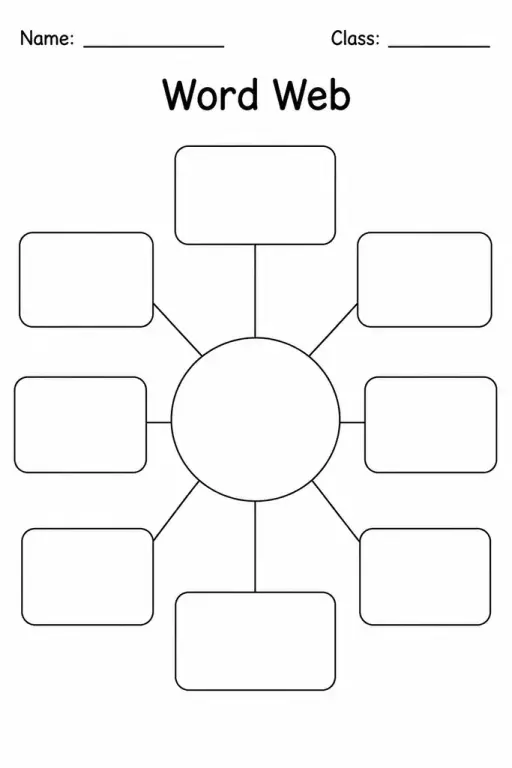
The Main Idea and Details Web is a blank graphic organiser built around a central circle connected to surrounding detail bubbles by radiating lines. Students write their core topic or main idea in the centre, then populate each spoke with a supporting detail, example, or piece of evidence. It is widely used across Grades 1–6 for reading comprehension, non-fiction note-taking, and brainstorming before writing. Teachers appreciate the web format because it makes hierarchical thinking visible at a glance: children can see instantly how each detail connects back to one unifying idea. Because the template is entirely blank, it works for any subject — science facts, story summaries, social studies research, or creative writing prep. Parents homeschooling younger children find it especially useful for guided discussions about books or documentaries.
The standard template includes six surrounding bubbles, giving students space for up to six supporting details. You can hand-draw extra bubbles if a topic needs more.
Yes. For early writers, teachers often pre-fill the centre circle and guide students to draw or write a single word in each bubble. The visual structure helps even pre-readers grasp the concept of a main idea.
Absolutely. Students can place a story theme or character name in the centre and add character traits, events, or feelings in the detail bubbles.
Yes. The PDF can be opened in most annotation apps (Notability, GoodNotes, Adobe Reader) and filled in on a tablet or interactive whiteboard.
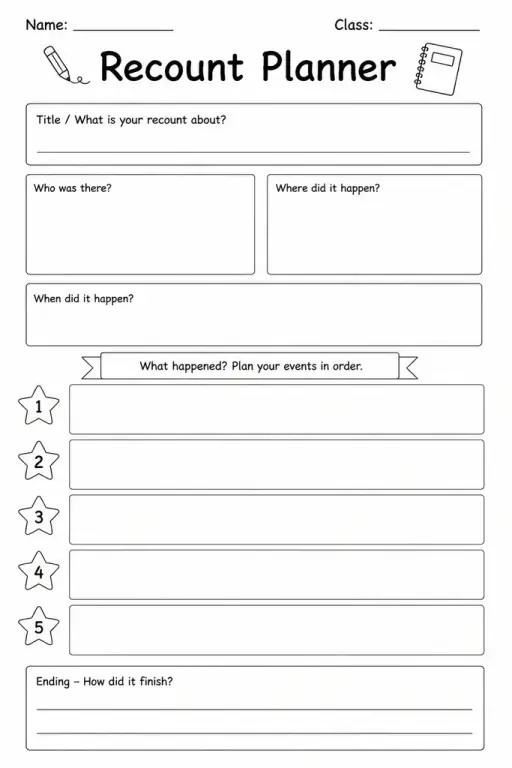
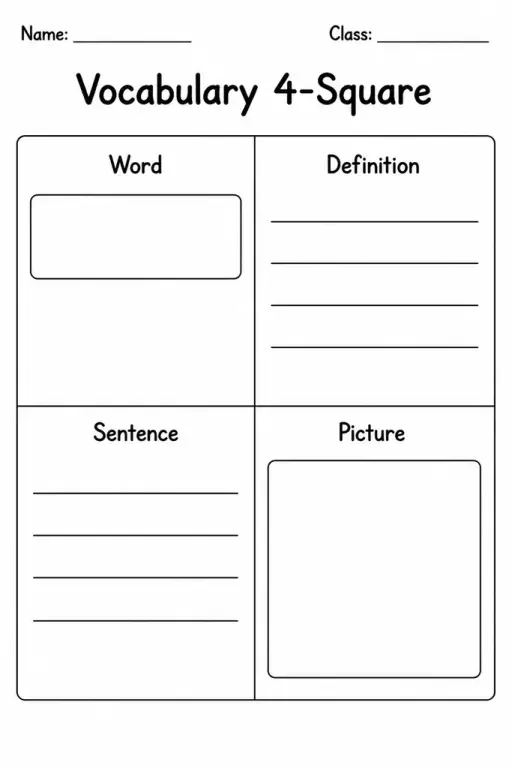
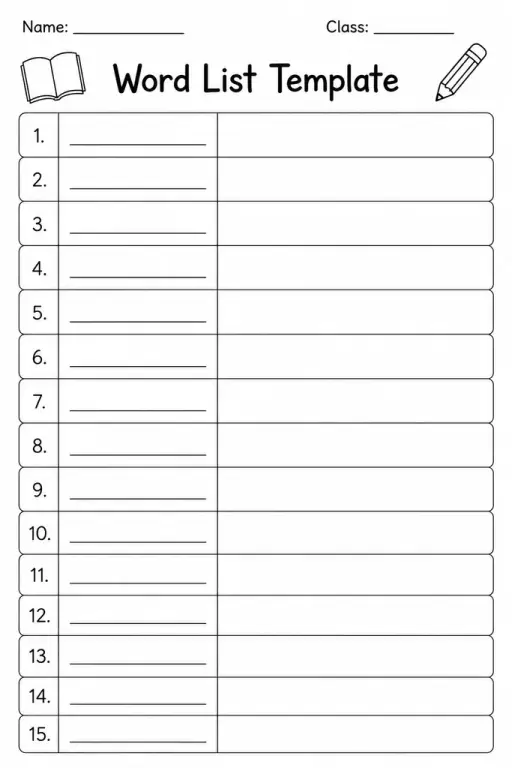
See what other teachers think and share a helpful note.
Generate a fresh worksheet for any grade, topic and language. Free.
 Home
Home All solutions
 Pricing
 About us
 KiwiBee for Non-profits
 Events & webinars
 For big organisations
 For schools
 For centers
 For team leaders
 For teachers
 AI and resources
 Resources
 Printable worksheets
 Lesson Packs
 Interactive simulations
 Teacher tools
 AI studio
 Ideas and research