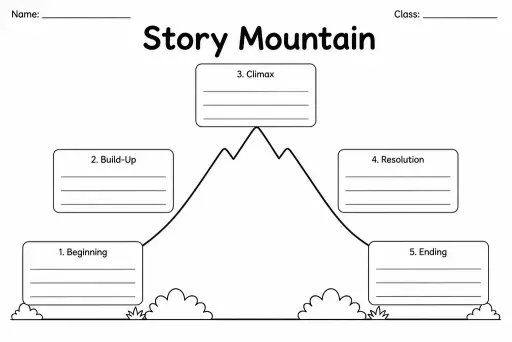
Story Mountain
Graphic Organizers
Ages 4–11
——
KiwiBee uses optional Google Analytics, Google Ads, and Meta Pixel cookies to understand adult visitors, measure completed sign-ups, and improve campaigns. Essential cookies always stay on. OpenAI’s ChatGPT Ads Pixel also measures page views and completed enquiries after advertising consent, and may use hashed contact details for matching. Privacy policy

A KWHL Chart extends the familiar KWL format by adding a fourth column: How will I find out? This addition turns a passive prediction tool into a research planning scaffold. Students record what they Know, form questions under Want to Know, then decide How they will investigate before diving in. After research or instruction, they fill the Learned column. The extra step is especially valuable in grades 3 through 8, where independent research skills begin to matter. Teachers use it to build information literacy alongside content knowledge, while students gain practice identifying reliable sources, experiments, or experts before they start. The blank template works across every subject area.
The KWHL adds a How will I find out? column between W and L. This extra step prompts students to plan their research strategy rather than jumping straight into reading or browsing.
Grades 3 and up, where students begin independent research projects. The How column introduces source planning in a structured way that grows with the student.
Yes. Even for a 45-minute lesson, the How column can list the textbook page, video, or experiment students will use, keeping the thinking visible.
Definitely. Print one sheet per group. Teams can debate their H column choices together, which is itself a valuable discussion about evaluating information sources.
See what other teachers think and share a helpful note.
Generate a fresh worksheet for any grade, topic and language. Free.
 Home
Home All solutions
 Pricing
 About us
 KiwiBee for Non-profits
 Events & webinars
 For big organisations
 For schools
 For centers
 For team leaders
 For teachers
 AI and resources
 Resources
 Printable worksheets
 Lesson Packs
 Interactive simulations
 Teacher tools
 AI studio
 Ideas and research