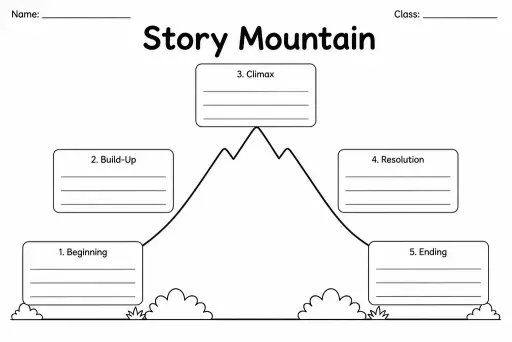
Story Mountain
Graphic Organizers
Ages 4–11
——
KiwiBee uses optional Google Analytics, Google Ads, and Meta Pixel cookies to understand adult visitors, measure completed sign-ups, and improve campaigns. Essential cookies always stay on. OpenAI’s ChatGPT Ads Pixel also measures page views and completed enquiries after advertising consent, and may use hashed contact details for matching. Privacy policy

The How-To / Procedure Organiser is a structured planning template for grades 1–6 that guides students through writing clear, sequential instructions. The top section provides a 'You Will Need' materials list so readers know what to gather before starting, while the numbered steps section below keeps each action in logical order. This template is ideal for procedural writing units, STEM project documentation, cooking sequences, science experiments, or any task where order matters. Teachers use it as a writing scaffold during guided lessons; students reach for it whenever they need to explain a process clearly. The consistent format trains young writers to think in sequences, anticipate reader needs, and distinguish materials from actions—skills that transfer directly into nonfiction and technical writing.
The printable includes space for up to eight numbered steps. For shorter procedures, students simply leave later boxes blank; for longer ones, they can tape two sheets together or continue on a second copy.
Grade 1 students typically use it with teacher support or in a shared-writing context. The clear visual structure—materials box at top, numbered steps below—makes it accessible even for emergent writers who can draw and label.
Absolutely. The 'You Will Need' section maps directly onto a materials list, and the numbered steps mirror the experimental procedure section of a lab report, making it a natural bridge to formal science writing.
It shines in English writing, science, cooking/home economics, technology, and art—any context where a process needs to be followed or explained in order.
See what other teachers think and share a helpful note.
Generate a fresh worksheet for any grade, topic and language. Free.
 Home
Home All solutions
 Pricing
 About us
 KiwiBee for Non-profits
 Events & webinars
 For big organisations
 For schools
 For centers
 For team leaders
 For teachers
 AI and resources
 Resources
 Printable worksheets
 Lesson Packs
 Interactive simulations
 Teacher tools
 AI studio
 Ideas and research