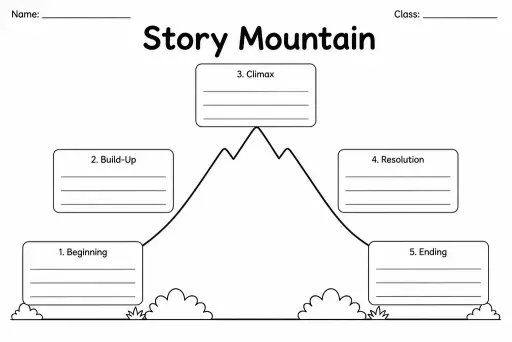
Story Mountain
Graphic Organizers
Ages 4–11
——
KiwiBee uses optional Google Analytics, Google Ads, and Meta Pixel cookies to understand adult visitors, measure completed sign-ups, and improve campaigns. Essential cookies always stay on. OpenAI’s ChatGPT Ads Pixel also measures page views and completed enquiries after advertising consent, and may use hashed contact details for matching. Privacy policy

The Cycle Diagram (Blank) is an empty circular-arrow graphic organizer suited for grades 2–8. Its looping arrows visually communicate that a process repeats—making it the go-to template for science cycles (water cycle, rock cycle, life cycles), social studies patterns (trade routes, historical cause-and-effect loops), and even literary analysis of recurring story structures. Students write a stage label and brief description inside each segment, then follow the arrows to see how the final stage connects back to the beginning. Teachers appreciate the blank format because the number of visible segments can be customised by how many labels students add, so the same printable adapts whether a cycle has three stages or six. The template is equally useful for individual seat work, small-group collaboration, or whole-class anchor charts.
The template typically accommodates four to six stages. For fewer stages, simply leave segments blank or draw lines through them; for more complex cycles, students can add extra arrows and boxes in the margins.
A flow chart shows a linear process with a clear start and end. A cycle diagram is specifically for processes that loop back to the beginning, such as natural cycles, recurring historical patterns, or continuous manufacturing processes.
Yes. History teachers use it for recurring political cycles, ELA teachers for narrative structure analysis, and even math teachers for the cycle of problem-solving steps (understand, plan, solve, check).
For learning, the blank version requires students to recall and organise information actively, which improves retention compared to simply reading a pre-filled diagram. Pair it with a pre-filled mentor diagram for struggling learners.
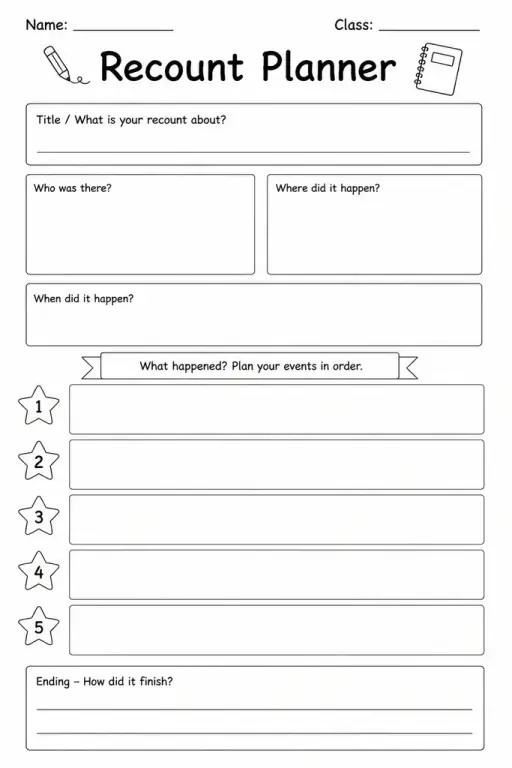
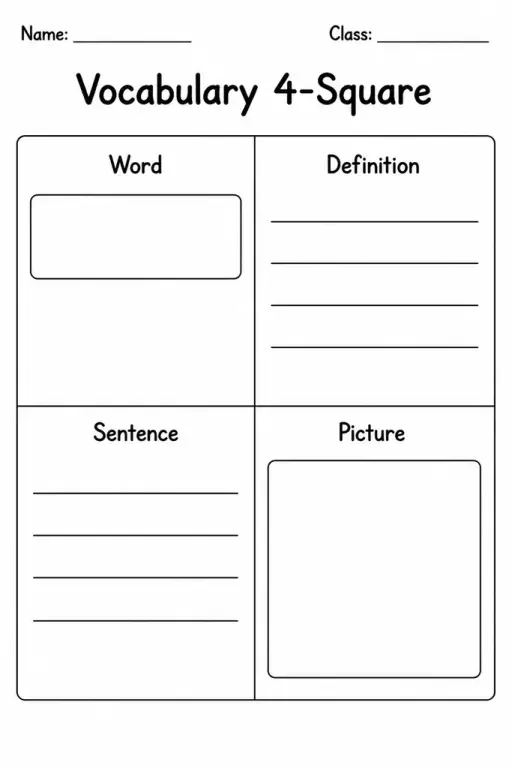
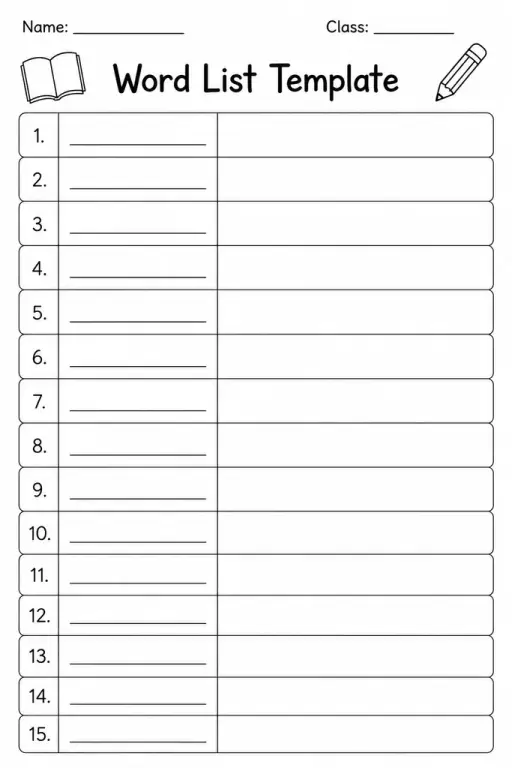
See what other teachers think and share a helpful note.
Generate a fresh worksheet for any grade, topic and language. Free.
 Home
Home All solutions
 Pricing
 About us
 KiwiBee for Non-profits
 Events & webinars
 For big organisations
 For schools
 For centers
 For team leaders
 For teachers
 AI and resources
 Resources
 Printable worksheets
 Lesson Packs
 Interactive simulations
 Teacher tools
 AI studio
 Ideas and research