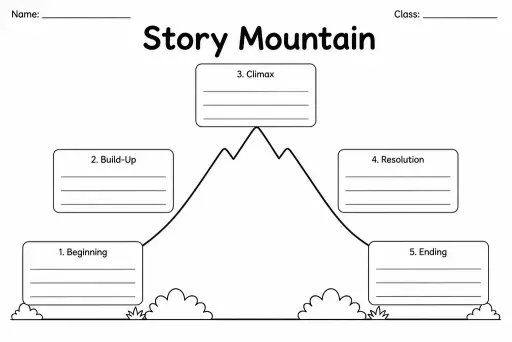
Story Mountain
Graphic Organizers
Ages 4–11
——
KiwiBee uses optional Google Analytics, Google Ads, and Meta Pixel cookies to understand adult visitors, measure completed sign-ups, and improve campaigns. Essential cookies always stay on. OpenAI’s ChatGPT Ads Pixel also measures page views and completed enquiries after advertising consent, and may use hashed contact details for matching. Privacy policy

The Cause and Effect Chart presents a pair of linked blank boxes—one for the cause, one for its effect—connected by a clear visual arrow to show the relationship between them. Students in grades 2–8 use it to analyze texts, scientific observations, historical decisions, and story events where one thing leads directly to another. Teachers deploy it during close-reading stops, science lab debrief discussions, and social studies lessons to make abstract causal thinking visible and concrete. It is equally useful for a parent coaching a child to think through why a story character made a choice. The chart supports single cause-effect pairs and can be stacked or chained for more complex analyses. Because the boxes contain no pre-printed prompts beyond "Cause" and "Effect," the same template works for a second-grader explaining why a plant wilted and an eighth-grader analyzing the causes of a historical conflict.
Print additional copies and assign one cause per chart, then group the charts together to show how several factors contributed to a single outcome. Some teachers draw arrows from multiple cause boxes into one shared effect box on a whiteboard.
Yes. Students complete one chart, then use the effect as the cause on a second chart, creating a chain. This works well for complex historical sequences or multi-step science processes.
It is specifically useful in science—recording what changed in an experiment and what resulted. The cause-effect structure maps directly onto the independent variable and dependent variable in an experiment.
For grades 2–3, students draw pictures inside each box or write single words. For grades 5–8, expect complete sentences with text evidence cited below each box.
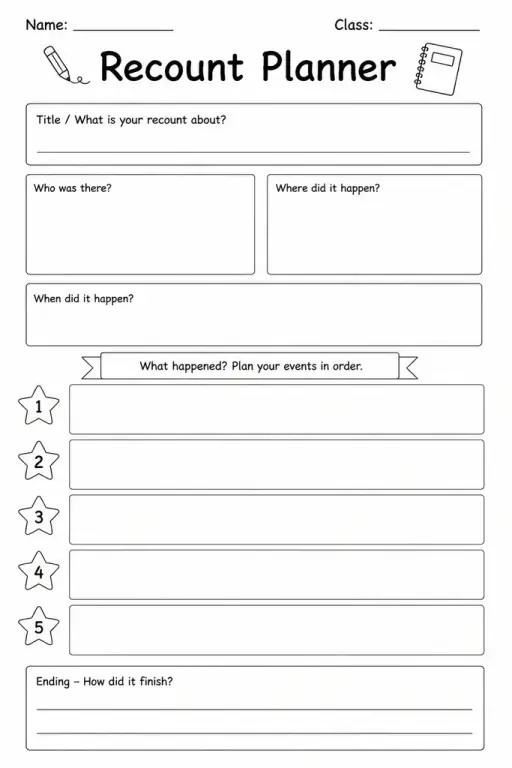
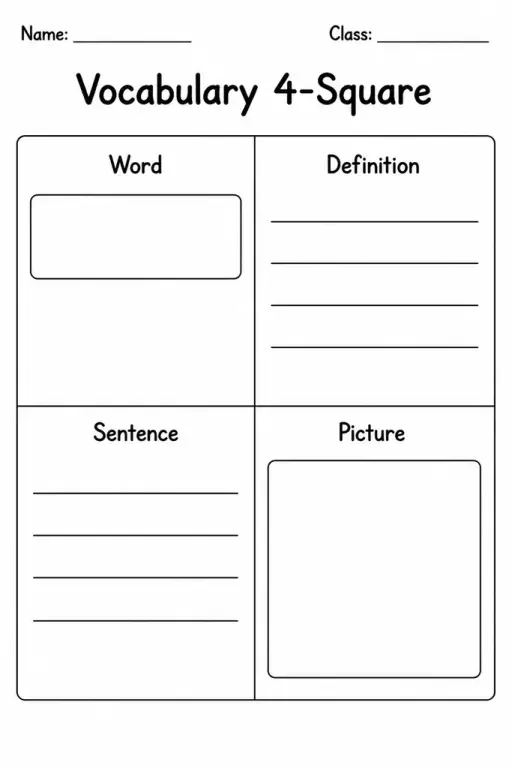
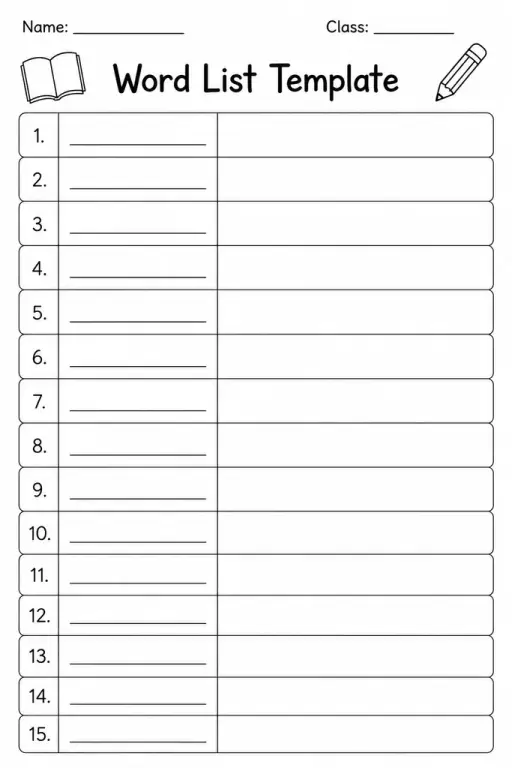
See what other teachers think and share a helpful note.
Generate a fresh worksheet for any grade, topic and language. Free.
 Home
Home All solutions
 Pricing
 About us
 KiwiBee for Non-profits
 Events & webinars
 For big organisations
 For schools
 For centers
 For team leaders
 For teachers
 AI and resources
 Resources
 Printable worksheets
 Lesson Packs
 Interactive simulations
 Teacher tools
 AI studio
 Ideas and research