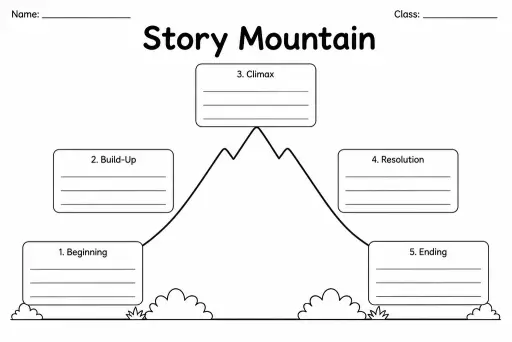
Story Mountain
Graphic Organizers
Ages 4–11
——
KiwiBee uses optional Google Analytics, Google Ads, and Meta Pixel cookies to understand adult visitors, measure completed sign-ups, and improve campaigns. Essential cookies always stay on. OpenAI’s ChatGPT Ads Pixel also measures page views and completed enquiries after advertising consent, and may use hashed contact details for matching. Privacy policy

An author and genre study template provides a flexible blank frame students use to collect and organize observations about a specific author's body of work or a literary genre as a whole. Sections cover biographical notes or genre definition, a list of titles read, recurring themes or conventions, writing style observations, and a personal reflection. Students in grades 2–7 complete it over the course of a multi-week study as they read several books by the same author or multiple texts in one genre. Teachers use it to make abstract literary concepts—voice, tone, genre conventions—concrete by anchoring them to real books students have read. The open-field design means it works equally well for a picture-book author like Mo Willems, a middle-grade novelist like Rick Riordan, a poetry collection, or a genre unit on historical fiction. Print one per student at the start of the unit and add to it over time.
Aim for at least two books for a shorter unit or three to five for a deeper study. The patterns and comparisons become richer with more texts, but two is enough to start noticing an author's recurring choices.
For an author study, students focus on one person's voice, themes, and biography across multiple titles. For a genre study, they focus on shared conventions, tropes, and structures across books by different authors. The same template fields accommodate both.
With teacher modeling and shared writing support, yes. In grades 2–3, complete the first sections together as a class, then have students fill in the personal reflection and title list on their own as independent practice.
Yes—print a fresh copy for each new unit. Keep completed copies in a reading portfolio so students can compare their growing analytical vocabulary from one study to the next.
See what other teachers think and share a helpful note.
Generate a fresh worksheet for any grade, topic and language. Free.
 Home
 All solutions
 Pricing
 About us
 KiwiBee for Non-profits
 Events & webinars
 For big organisations
 For schools
 For centers
 For team leaders
 For teachers
 AI and resources
 Resources
 Printable worksheets
 Lesson Packs
 Interactive simulations
 Teacher tools
 AI studio
 Ideas and research