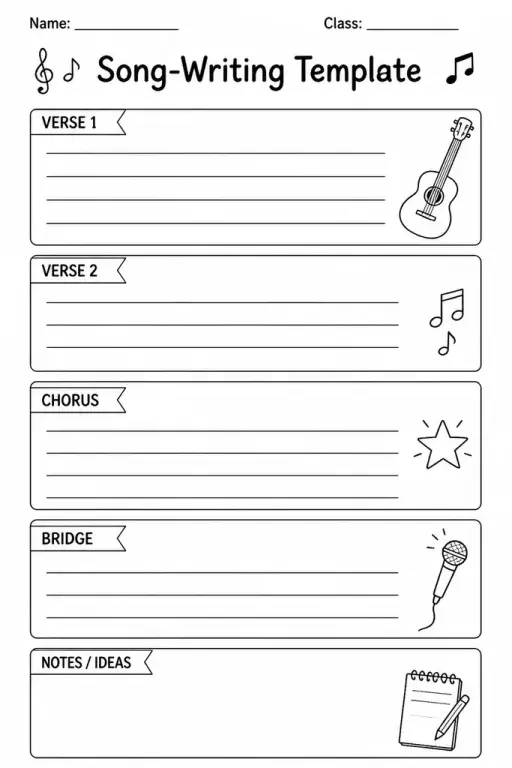
Song-Writing Template
Music Templates
Ages 4–11
——
KiwiBee uses optional Google Analytics, Google Ads, and Meta Pixel cookies to understand adult visitors, measure completed sign-ups, and improve campaigns. Essential cookies always stay on. OpenAI’s ChatGPT Ads Pixel also measures page views and completed enquiries after advertising consent, and may use hashed contact details for matching. Privacy policy

This blank self-portrait guidelines template gives students a pre-drawn face outline with light proportion guides—horizontal lines marking the eye level, nose placement, and mouth position—so they can focus on observation and mark-making rather than struggling with basic proportions. Ideal for grades 2–8 art classes, it suits first attempts at realistic portraiture as well as more polished studies. Teachers introduce it before mirror-drawing sessions or at the start of a portrait unit; students keep multiple copies to compare progress across a term. Because the structural guides are subtle, finished drawings look like genuine student work, not traced outlines. Parents use it for at-home drawing practice—children can fill in features from a mirror, a photo, or pure imagination. The reusable format means the same template supports pencil sketching, coloured-pencil rendering, or mixed-media experiments.
No—the guides are drawn lightly so students can erase them once features are placed. Some teachers have students intentionally leave them as part of a 'process-visible' artwork.
The proportion focus is most effective from grade 2 upward. Younger children can still use it freely, but the guide lines may mean less to them without a brief teacher introduction.
Absolutely. The template works for any human face—self-portrait, peer portrait, or a character from imagination. The proportion guides apply universally.
Pencil, coloured pencil, fine-liner, and watercolour pencil all work well. For wet media like watercolour paint, print on heavier card stock (at least 90 lb / 160 gsm).

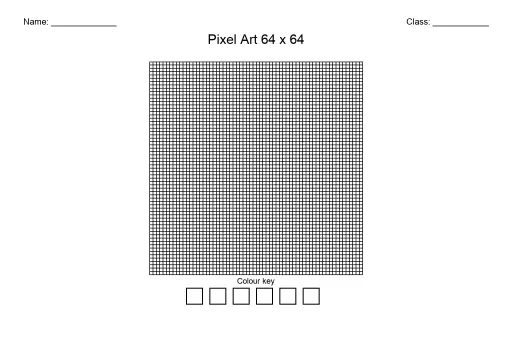
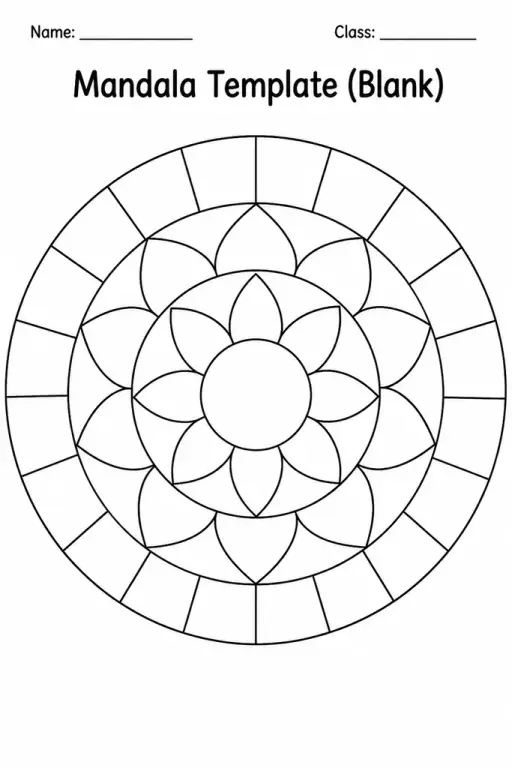
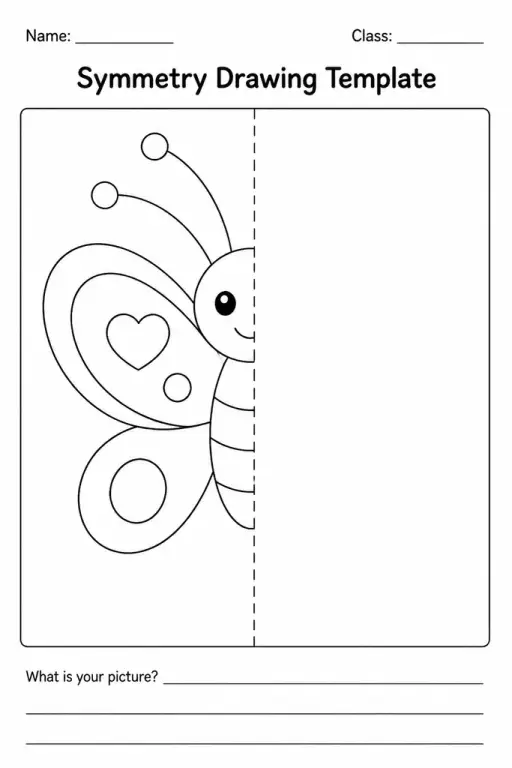
See what other teachers think and share a helpful note.
Generate a fresh worksheet for any grade, topic and language. Free.
 Home
Home All solutions
 Pricing
 About us
 KiwiBee for Non-profits
 Events & webinars
 For big organisations
 For schools
 For centers
 For team leaders
 For teachers
 AI and resources
 Resources
 Printable worksheets
 Lesson Packs
 Interactive simulations
 Teacher tools
 AI studio
 Ideas and research