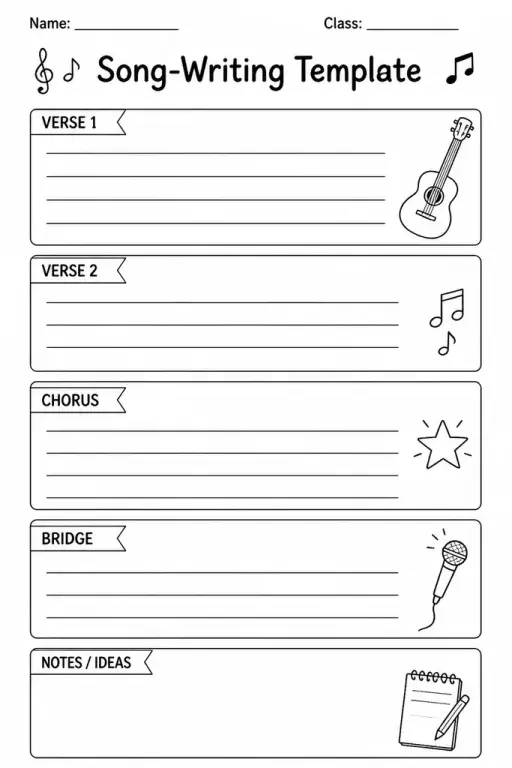
Song-Writing Template
Music Templates
Ages 4–11
——
KiwiBee uses optional Google Analytics, Google Ads, and Meta Pixel cookies to understand adult visitors, measure completed sign-ups, and improve campaigns. Essential cookies always stay on. OpenAI’s ChatGPT Ads Pixel also measures page views and completed enquiries after advertising consent, and may use hashed contact details for matching. Privacy policy

This artist study template gives students a dedicated space to research and respond to a single artist's work. One large box—sized to fit a printed or hand-drawn reproduction—sits alongside structured response lines covering the artist's name, dates, nationality, and movement, followed by open sections for describing the artwork, analysing the artist's style and techniques, and explaining personal connections to the work. Designed for grades 3–8, it replaces ad-hoc worksheet chaos with a consistent, reusable format teachers can rely on across every unit. Students return to the same template for each artist study, which builds both research habits and comparative thinking over time. The artwork box doubles as a drawing space—students may paste a printed image, sketch a copy, or draw in their own style inspired by the artist. Teachers also use it as a gallery-research tool during museum visits.
Students can draw a simplified sketch of the artwork from a screen or textbook, or describe the composition in rough visual notes. The sketch practice itself reinforces careful observation.
Absolutely. The fields work equally well for contemporary artists, illustrators, graphic designers, or architects. Simply note 'living' or the current year in the dates field.
Teachers often print two copies and have students place them side by side for comparison. A dedicated two-column comparison template is a separate resource, but this one supports the first step of any comparison task.
For grades 3–4, two or three sentences about what they like or reminds them of is sufficient. By grades 7–8, expect a paragraph that references specific visual elements and the artist's intent.

See what other teachers think and share a helpful note.
Generate a fresh worksheet for any grade, topic and language. Free.
 Home
Home All solutions
 Pricing
 About us
 KiwiBee for Non-profits
 Events & webinars
 For big organisations
 For schools
 For centers
 For team leaders
 For teachers
 AI and resources
 Resources
 Printable worksheets
 Lesson Packs
 Interactive simulations
 Teacher tools
 AI studio
 Ideas and research