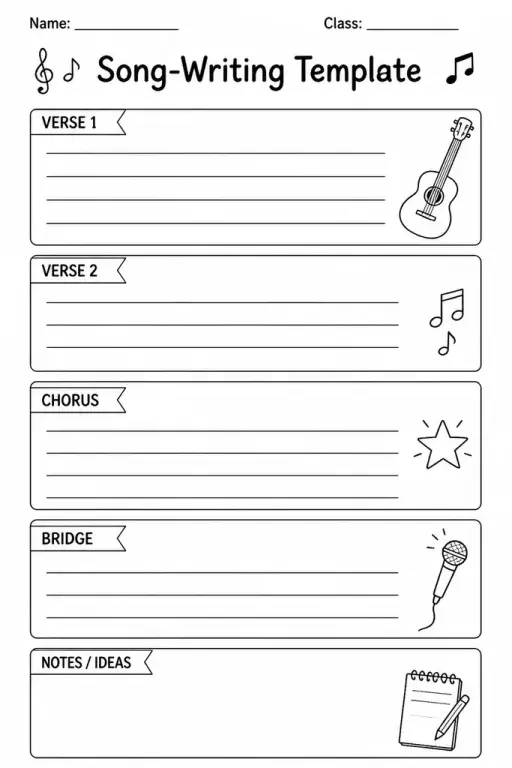
Song-Writing Template
Music Templates
Ages 4–11
——
KiwiBee uses optional Google Analytics, Google Ads, and Meta Pixel cookies to understand adult visitors, measure completed sign-ups, and improve campaigns. Essential cookies always stay on. OpenAI’s ChatGPT Ads Pixel also measures page views and completed enquiries after advertising consent, and may use hashed contact details for matching. Privacy policy

The pop-art repeat grid template is a four-panel blank grid — two columns by two rows — that mirrors the format made iconic by Andy Warhol's silkscreen multiples. Each panel is identically sized and blank, inviting grades 3–8 to draw or trace the same image four times, then vary the colour scheme in each panel to explore how colour alone changes mood and meaning. Art teachers use it when teaching pop art, colour theory, and repetition as a design principle — three curriculum threads in one activity. Students get the visual payoff of a professional-looking repeat print without needing specialist printing equipment. The template works with pencil crayons, markers, collage, or even digital tools, and the finished piece is display-ready straight off the printer.
Bold, simple images with clear outlines work best — faces, animals, food items, household objects, or icons. Highly detailed or realistic images lose impact at this scale. Silhouettes and graphic shapes are ideal.
In the classic pop-art tradition, yes — the power of the format comes from that strict repetition. However, for a more advanced challenge, teachers can ask students to vary line weight or add one distortion per panel.
Yes. Grade 3 students can trace a simple shape (e.g. an apple or star outline) rather than drawing freehand. The colouring stage is accessible to all ability levels, and the finished result always looks striking.
The easiest method is to draw or print the image on a separate sheet, hold both sheets against a window (DIY light box), and trace the outline into each panel. A proper light pad works even better.

See what other teachers think and share a helpful note.
Generate a fresh worksheet for any grade, topic and language. Free.
 Home
Home All solutions
 Pricing
 About us
 KiwiBee for Non-profits
 Events & webinars
 For big organisations
 For schools
 For centers
 For team leaders
 For teachers
 AI and resources
 Resources
 Printable worksheets
 Lesson Packs
 Interactive simulations
 Teacher tools
 AI studio
 Ideas and research