AI for Teachers
ChatGPT for Teachers: A Complete 2026 Guide
A concise guide to using ChatGPT for teacher brainstorming, image creation and editing, slide-deck planning, visual resources, and coloring worksheets.
KiwiBeeMay 28, 20264 min read
KiwiBee uses optional Google Analytics, Google Ads, and Meta Pixel cookies to understand adult visitors, measure completed sign-ups, and improve campaigns. Essential cookies always stay on. OpenAI’s ChatGPT Ads Pixel also measures page views and completed enquiries after advertising consent, and may use hashed contact details for matching. Privacy policy
Teacher blog
Practical guides to using AI in the classroom — ChatGPT workflows, AI lesson planning, grading, and the tools that actually save teachers time.
13 articles
A concise guide to using ChatGPT for teacher brainstorming, image creation and editing, slide-deck planning, visual resources, and coloring worksheets.
Keep publisher-supplied video beside the exact curriculum book and lesson context teachers are already using in KiwiBee.
Use the selected lesson, objectives, standards, and chosen sources to draft reviewable worksheets and printables in KiwiBee.
Organize private source files by curriculum, choose the materials needed for a request, and reuse them within an authorized lesson workflow.
Learn how selected class, curriculum, and lesson context can guide editable AI-assisted lesson resources while the teacher remains the reviewer.
Explore a formative assessment flow that keeps uploaded evidence, AI suggestions, teacher review, and confirmed gradebook use as distinct steps.
For teachers, the useful question is not whether an LMS has AI. It is whether AI-created work continues into assignments, games and evidence.
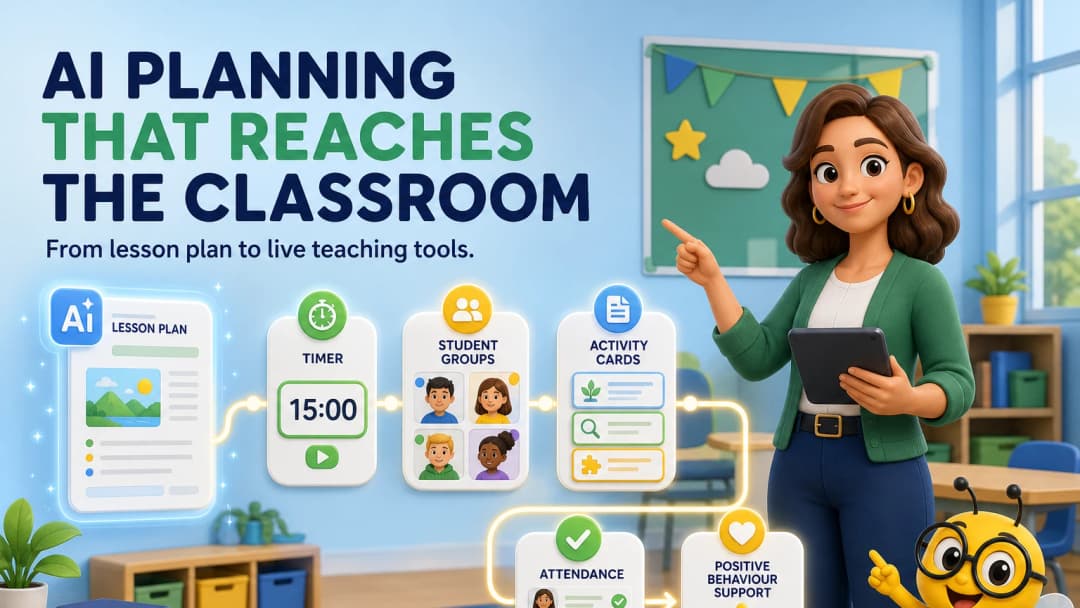
Toddle has powerful AI. KiwiBee’s alternative angle is how planning connects to the live classroom after the lesson is written.
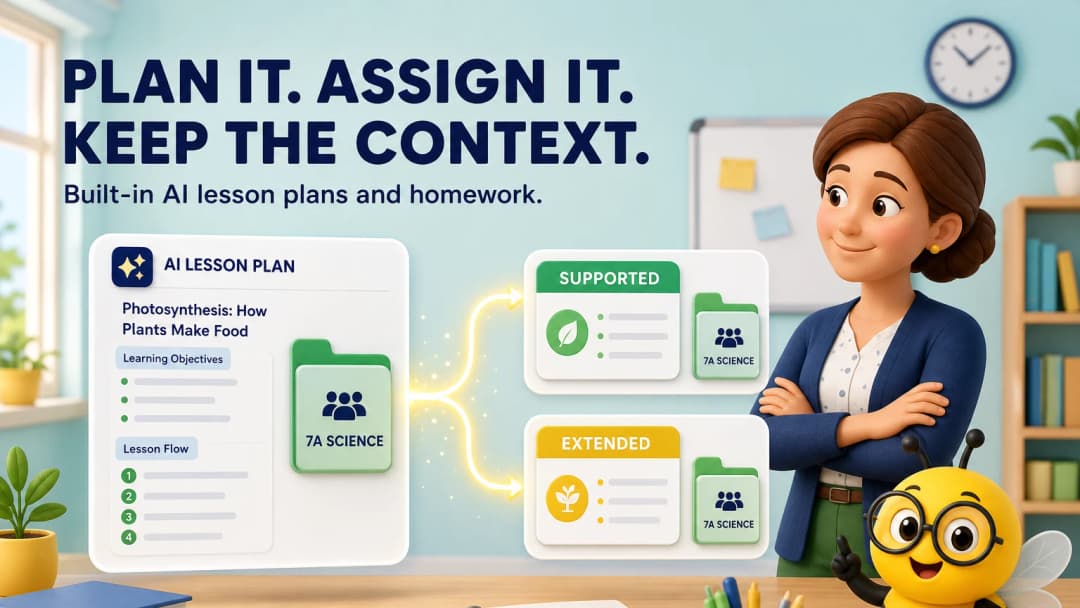
AI is most useful when a lesson idea can become student work without copying content between an LMS and a separate chatbot.
A concise guide to using NotebookLM as a teacher: add trusted sources, ask source-grounded questions, and make clearer revision resources for students.
A concise guide to using Claude Artifacts for teachers: build interactive HTML activities, iterate quickly, and share a polished resource with care.
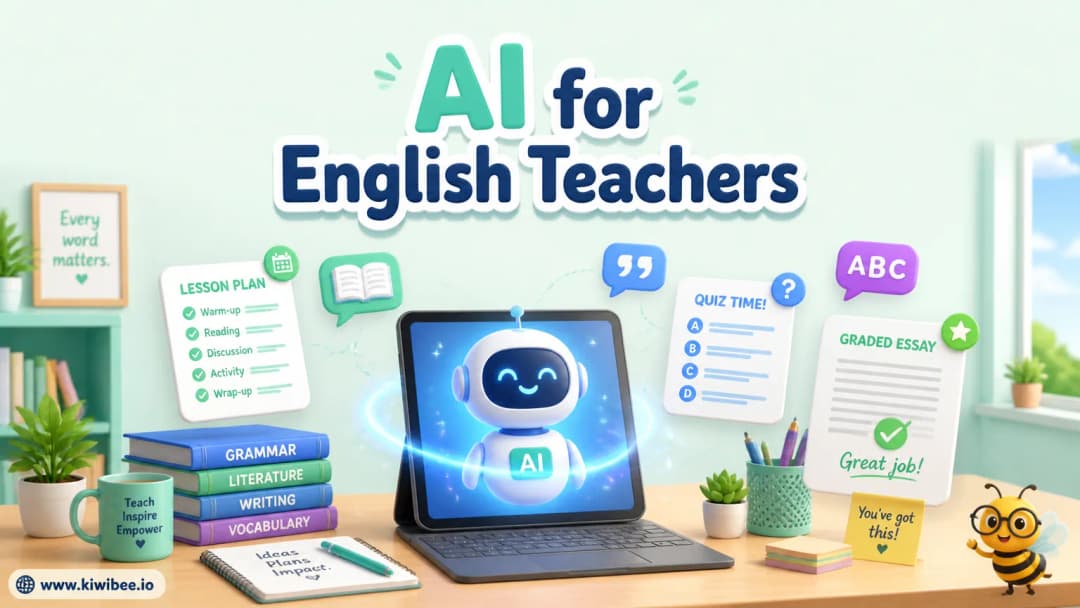
From auto-drafting reports to building 4x4 pair-work mats and vocabulary colouring books, here are seven AI uses that save English teachers real time.
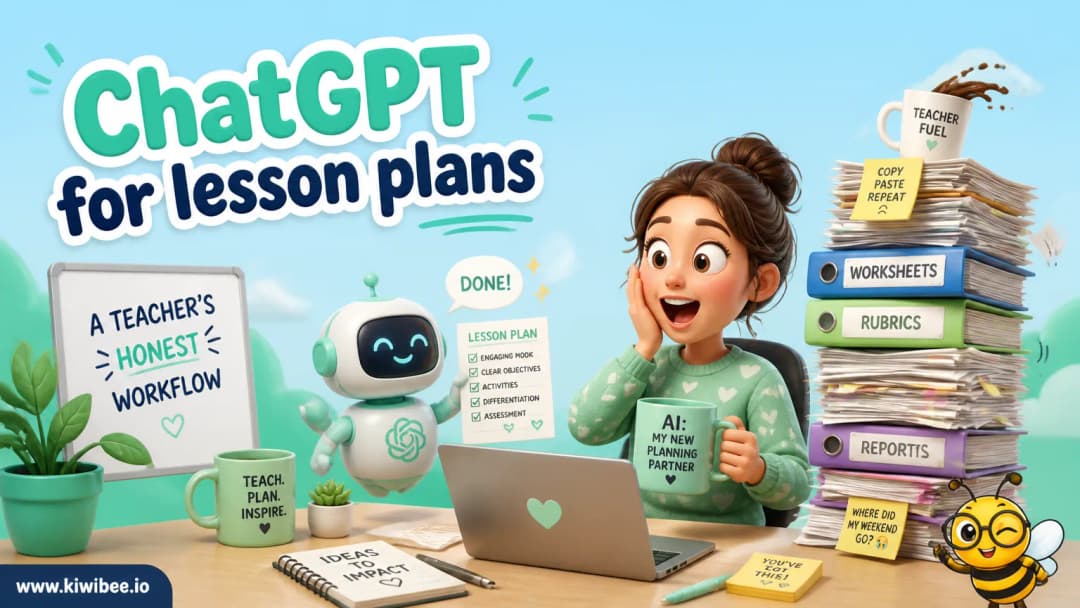
A workable lesson-planning routine uses ChatGPT as a draft tool, not a final authority. Here is a clear prompt-and-review process teachers can adapt to their own curriculum and policies.

 Home
Home All solutions
 Pricing
 About us
 KiwiBee for Non-profits
 Events & webinars
 For big organisations
 For schools
 For centers
 For team leaders
 For teachers
 AI and resources
 Resources
 Printable worksheets
 Lesson Packs
 Interactive simulations
 Teacher tools
 AI studio
 Ideas and research