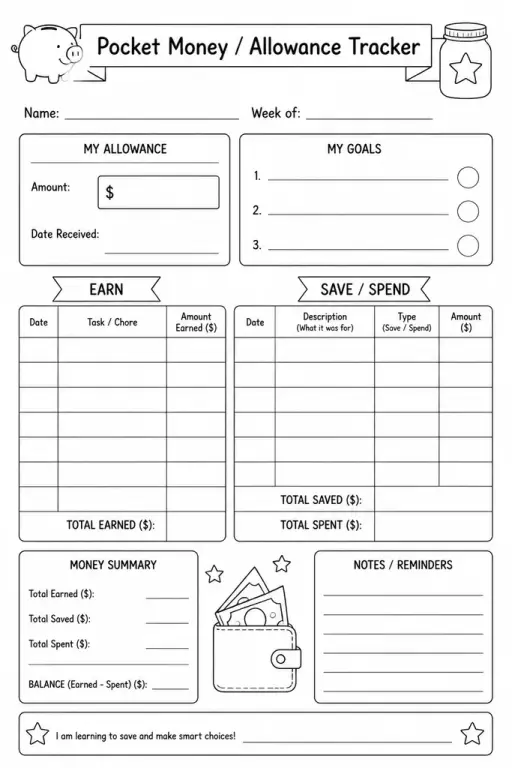
Pocket Money / Allowance Tracker
Parent & Home Printables
Ages 4–11
——
KiwiBee uses optional Google Analytics, Google Ads, and Meta Pixel cookies to understand adult visitors, measure completed sign-ups, and improve campaigns. Essential cookies always stay on. OpenAI’s ChatGPT Ads Pixel also measures page views and completed enquiries after advertising consent, and may use hashed contact details for matching. Privacy policy

A Unit / Topic Plan template provides a bird's-eye view of a sequence of lessons grouped around a single theme, concept, or text. Rather than planning one lesson at a time, teachers map out the full arc of a unit — the big idea, the key skills and knowledge to build, the order of lessons, and the assessments that mark the end of the sequence. Each lesson slot in the grid is intentionally left blank, so the teacher supplies the specific activities and learning goals to fit their class and curriculum. This template is especially useful when preparing for a new term or introducing a topic you have not taught before, because it forces you to think about progression and coherence rather than individual activities in isolation. Heads of department can also use it as a collaborative planning tool, completing one shared copy and then letting individual teachers fill in their own lesson-level detail beneath the agreed sequence.
Most units span 4–8 lessons, though complex topics or extended projects may run longer. The template rows can be extended as needed — print extra pages if your unit requires more than the default number of rows.
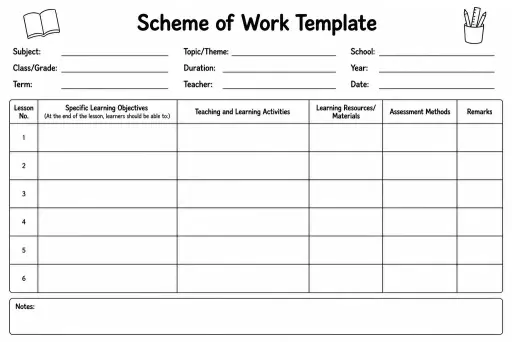
A unit or topic plan focuses on one teaching sequence with its own arc; a scheme of work typically covers a full term or year and links multiple units together, often including assessment objectives and statutory requirements.
Yes. Add a column for the contributing subject and list the relevant teacher or department. Cross-curricular units often benefit most from this kind of overview because they involve coordination across teams.
No — it complements them. The unit plan sets the sequence and big-picture goals; individual lesson plans (such as a single lesson plan template) fill in the detail for each row.
See what other teachers think and share a helpful note.
Generate a fresh worksheet for any grade, topic and language. Free.
 Home
Home All solutions
 Pricing
 About us
 KiwiBee for Non-profits
 Events & webinars
 For big organisations
 For schools
 For centers
 For team leaders
 For teachers
 AI and resources
 Resources
 Printable worksheets
 Lesson Packs
 Interactive simulations
 Teacher tools
 AI studio
 Ideas and research