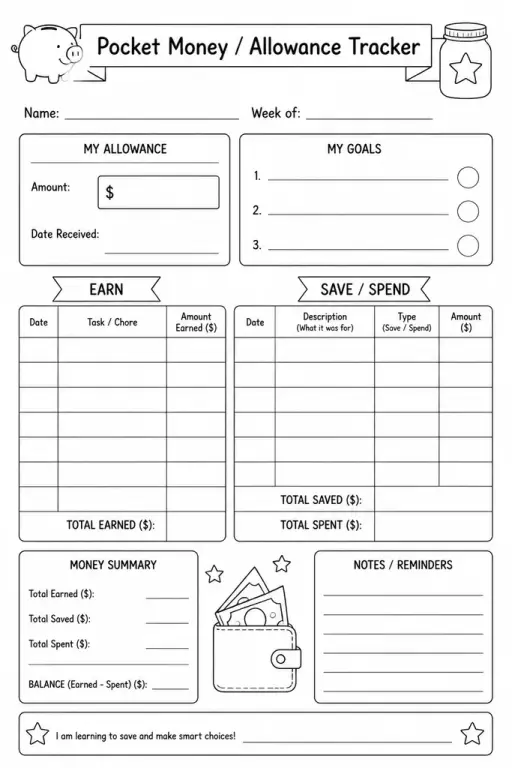
Pocket Money / Allowance Tracker
Parent & Home Printables
Ages 4–11
——
KiwiBee uses optional Google Analytics, Google Ads, and Meta Pixel cookies to understand adult visitors, measure completed sign-ups, and improve campaigns. Essential cookies always stay on. OpenAI’s ChatGPT Ads Pixel also measures page views and completed enquiries after advertising consent, and may use hashed contact details for matching. Privacy policy

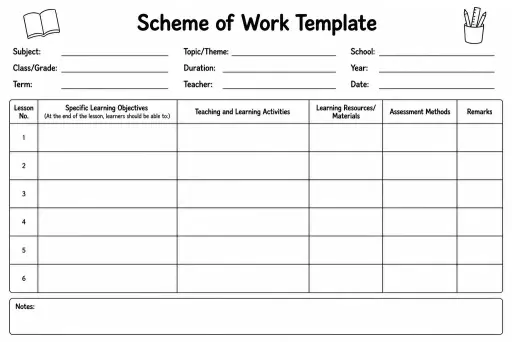
The Pupil Progress Tracker is a blank data-tracking grid designed for teachers who need to record a single learner's performance across multiple assessments, objectives, or time points on one page. Unlike class-wide grids, this template focuses on the individual: one row or column represents one assessment moment, and the body of the sheet collects scores, grades, levels, or qualitative notes in a chronological sequence. Teachers use it to build a longitudinal evidence file for a specific pupil — invaluable for SEND reviews, pupil premium accountability checks, parent consultations, or any point where you need to demonstrate the trajectory of one child's learning over time. Because it is entirely blank, it accepts numbers, National Curriculum levels, percentages, or bespoke school frameworks without any reformatting.
A whole-class tracker shows all pupils against one measure. This template flips the focus — one pupil across many measures and time points — making it the right tool when you need depth of evidence for a specific learner.
Yes. Simply label some columns with assessment scores and others with a 'notes' header. The blank grid is flexible enough to hold mixed data types side by side.
Absolutely. The chronological data layout is exactly the kind of evidence SENCO teams and local authorities look for to demonstrate impact of provision and measure progress against SMART targets.
On landscape A4 or US Letter, the blank grid fits approximately eight to twelve assessment columns comfortably. For a full academic year of fortnightly data, use two sheets printed back to back.
See what other teachers think and share a helpful note.
Generate a fresh worksheet for any grade, topic and language. Free.
 Home
Home All solutions
 Pricing
 About us
 KiwiBee for Non-profits
 Events & webinars
 For big organisations
 For schools
 For centers
 For team leaders
 For teachers
 AI and resources
 Resources
 Printable worksheets
 Lesson Packs
 Interactive simulations
 Teacher tools
 AI studio
 Ideas and research