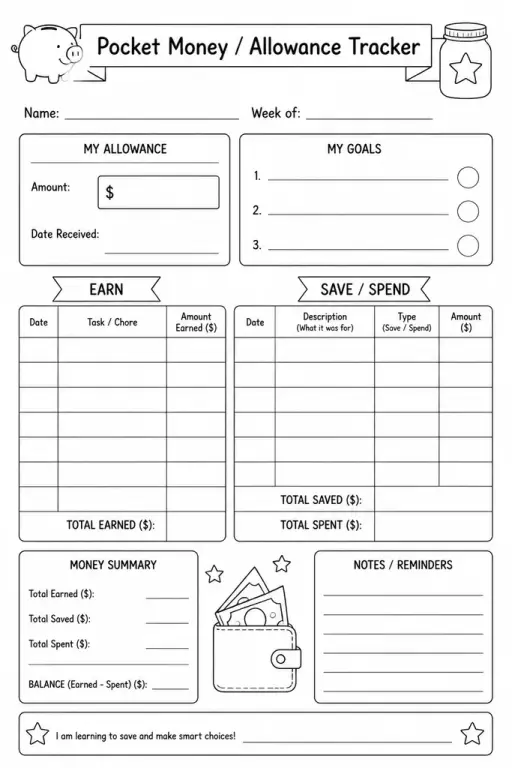
Pocket Money / Allowance Tracker
Parent & Home Printables
Ages 4–11
——
KiwiBee uses optional Google Analytics, Google Ads, and Meta Pixel cookies to understand adult visitors, measure completed sign-ups, and improve campaigns. Essential cookies always stay on. OpenAI’s ChatGPT Ads Pixel also measures page views and completed enquiries after advertising consent, and may use hashed contact details for matching. Privacy policy

A sticker chart template is a blank reward grid teachers print and personalise for any student goal — reading streaks, homework completion, positive behaviour, or classroom jobs. Each cell marks one earned sticker, stamp, or drawn star, giving children a clear visual record of their progress toward a prize or privilege. Because the chart arrives completely blank, teachers can label columns for days of the week, specific targets, or individual student names before laminating for reuse. Primary and early-elementary teachers rely on sticker charts to make abstract expectations concrete and motivating. Parents also print them for home routines such as chores or screen-time limits. The simple grid format works across age groups and subjects, making it one of the most versatile behaviour management tools in any classroom toolkit.
Most classroom sticker charts work best with 20–30 cells — enough to span a few weeks but short enough that the goal feels reachable. Younger children benefit from smaller grids of 10–15 cells so they reach the reward faster and stay motivated.
Yes. Print one copy per student and add each child's name before distributing, or create a table-group version with one column per student on a single sheet posted at the group's table.
Absolutely. Students can draw a star, colour in a square, or add a stamp. The blank grid works with any mark, so you are never dependent on having physical stickers on hand.
Sticker charts are most common in PreK through Grade 5, but can be adapted for older students using a points tally or habit tracker framing — simply relabel the columns and swap stickers for initials or tally marks.
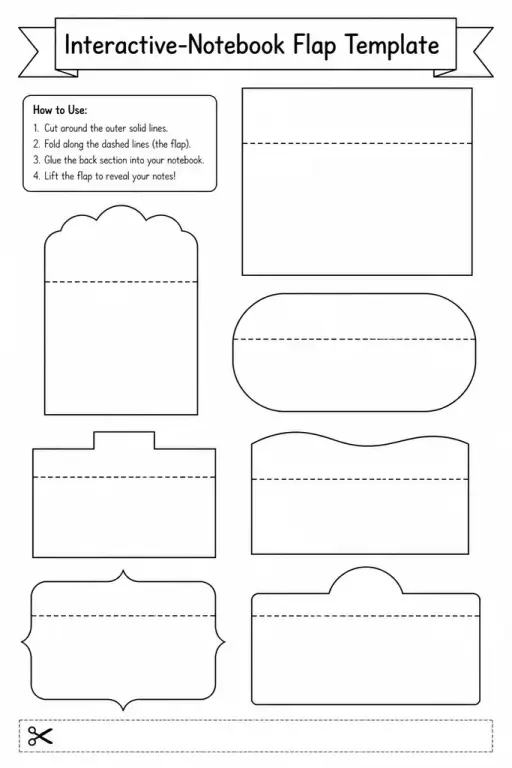
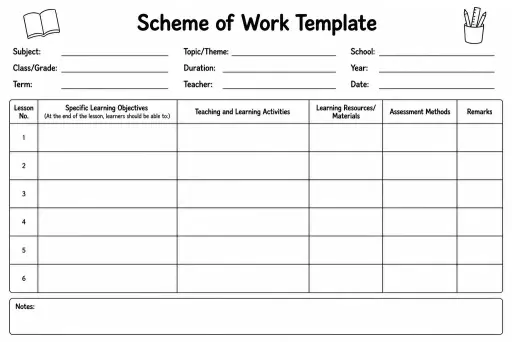
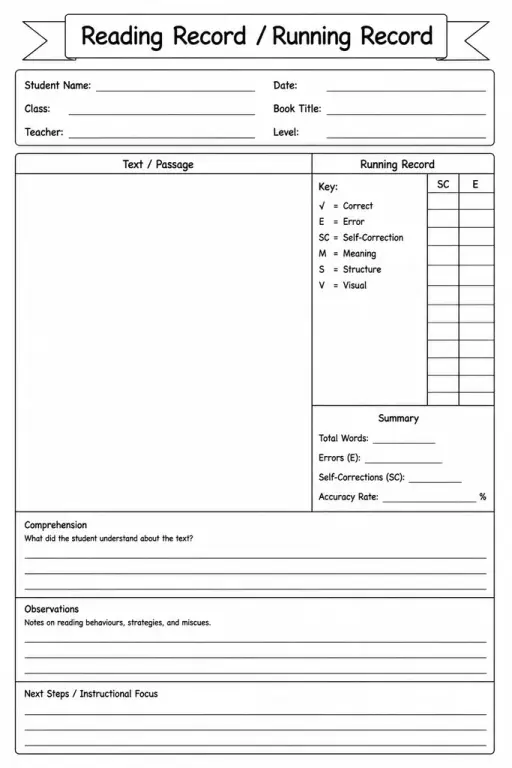
See what other teachers think and share a helpful note.
Generate a fresh worksheet for any grade, topic and language. Free.
 Home
Home All solutions
 Pricing
 About us
 KiwiBee for Non-profits
 Events & webinars
 For big organisations
 For schools
 For centers
 For team leaders
 For teachers
 AI and resources
 Resources
 Printable worksheets
 Lesson Packs
 Interactive simulations
 Teacher tools
 AI studio
 Ideas and research