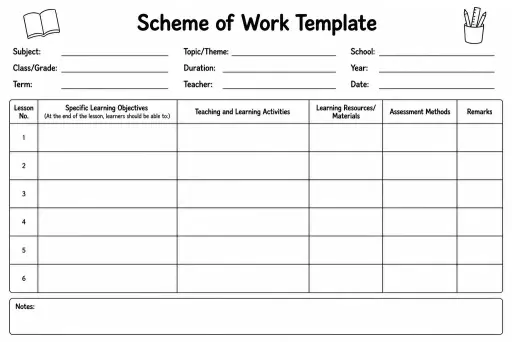
Scheme of Work Template
Teacher Planners
Ages 4–11
——
KiwiBee uses optional Google Analytics, Google Ads, and Meta Pixel cookies to understand adult visitors, measure completed sign-ups, and improve campaigns. Essential cookies always stay on. OpenAI’s ChatGPT Ads Pixel also measures page views and completed enquiries after advertising consent, and may use hashed contact details for matching. Privacy policy

The Pocket Money and Allowance Tracker is a blank earn-and-save sheet that helps children and parents record how money is earned, received, spent, and saved over time. Parents fill in the child's name and starting balance, then child and parent together log each transaction — an allowance payment, a bonus for an extra chore, a small purchase, or a transfer to a savings jar — so the running total is always visible. Designed for Grades 1 through 8, this template bridges the gap between handing over coins and actually teaching financial thinking. Younger children track simple weekly allowances with parental help; older students use it independently to budget toward a specific goal. The blank format requires no app, no account, and no screen — just a printed sheet, a pen, and a regular five-minute money check-in that builds real-world numeracy and money habits from an early age.
Grade 1 (age 6–7) upward. Young children will need a parent to do the writing and arithmetic; by Grade 3 or 4 most children can log transactions themselves with light oversight.
Both approaches work — this tracker records either. Some families use a fixed unconditional allowance to teach budgeting; others tie earnings directly to completed chores. The tracker simply records whatever system you choose.
The same way a bank statement works: note the date, what happened, and the amount. The physical act of writing each transaction is actually what builds awareness, regardless of whether the money itself is physical or digital.
That is valuable data, not a failure. Use the completed tracker to have a non-judgemental conversation about what they bought, whether they are happy with those choices, and what they might want to save for next time.
See what other teachers think and share a helpful note.
Generate a fresh worksheet for any grade, topic and language. Free.
 Home
Home All solutions
 Pricing
 About us
 KiwiBee for Non-profits
 Events & webinars
 For big organisations
 For schools
 For centers
 For team leaders
 For teachers
 AI and resources
 Resources
 Printable worksheets
 Lesson Packs
 Interactive simulations
 Teacher tools
 AI studio
 Ideas and research