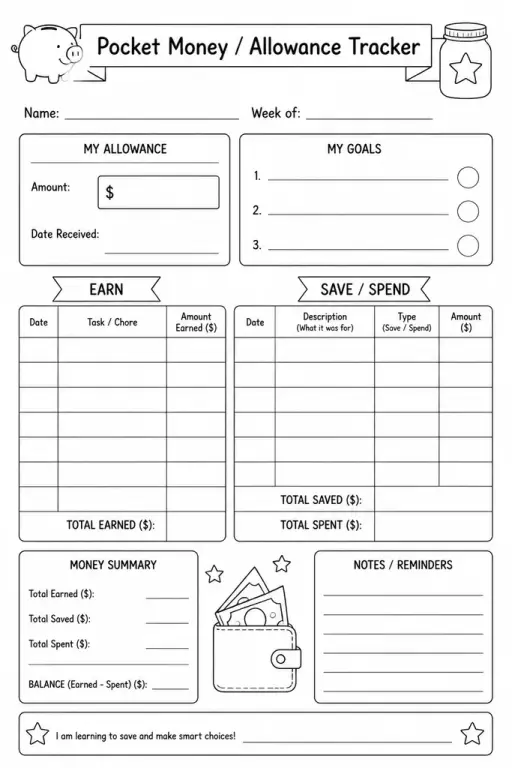
Pocket Money / Allowance Tracker
Parent & Home Printables
Ages 4–11
——
KiwiBee uses optional Google Analytics, Google Ads, and Meta Pixel cookies to understand adult visitors, measure completed sign-ups, and improve campaigns. Essential cookies always stay on. OpenAI’s ChatGPT Ads Pixel also measures page views and completed enquiries after advertising consent, and may use hashed contact details for matching. Privacy policy

An IEP / Support Plan Template is a blank goals-and-provision frame that learning support coordinators, classroom teachers, and specialist staff use to document the individualised education program or support plan for a student with additional learning needs. The structured layout guides the educator through the essential components of a compliant, actionable plan: student profile, current levels of performance, long-term and short-term goals, adjustments and accommodations, who delivers each provision, and the review schedule. The template is intentionally curriculum-neutral so it adapts to any disability category, learning difficulty, or support need. Special education teachers use it as the master plan document; classroom teachers use it as a quick-reference summary for daily adjustments. Having a clean, well-organised printed plan also facilitates productive meetings with families, allied health professionals, and school leadership.
The template provides a comprehensive blank frame aligned with common IEP components, but schools should verify that the completed plan meets their specific jurisdiction's legal requirements.
Ideally the classroom teacher, learning support coordinator, parents or guardians, the student where appropriate, and any relevant allied health professionals contribute to the goals and provisions.
Most education authorities recommend at least one formal review per semester, with informal progress monitoring happening more frequently throughout the year.
Yes. The blank 'area of need' section accommodates school-identified support needs that do not yet have a formal diagnosis, making it useful for early identification and monitoring.
See what other teachers think and share a helpful note.
Generate a fresh worksheet for any grade, topic and language. Free.
 Home
Home All solutions
 Pricing
 About us
 KiwiBee for Non-profits
 Events & webinars
 For big organisations
 For schools
 For centers
 For team leaders
 For teachers
 AI and resources
 Resources
 Printable worksheets
 Lesson Packs
 Interactive simulations
 Teacher tools
 AI studio
 Ideas and research