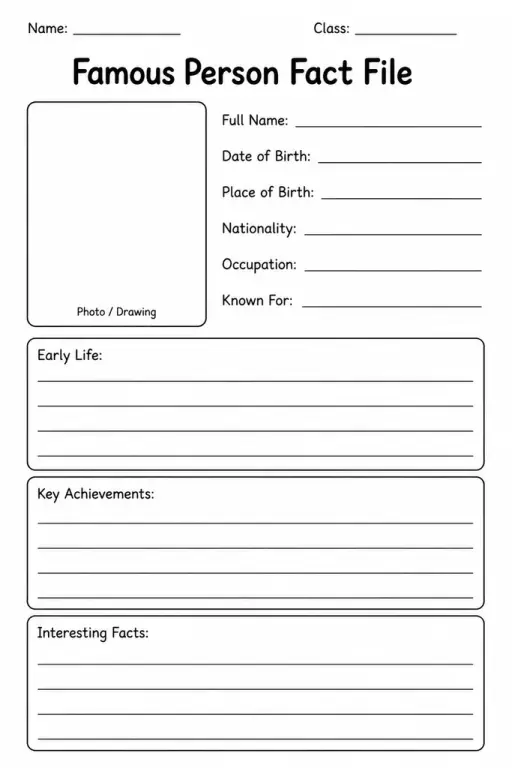
Famous Person Fact File
Social Studies Templates
Ages 4–11
——
KiwiBee uses optional Google Analytics, Google Ads, and Meta Pixel cookies to understand adult visitors, measure completed sign-ups, and improve campaigns. Essential cookies always stay on. OpenAI’s ChatGPT Ads Pixel also measures page views and completed enquiries after advertising consent, and may use hashed contact details for matching. Privacy policy

The Goods and Services Sort is a blank two-column sorting frame for students in grades 1–5 studying introductory economics. One column is reserved for 'Goods'—physical items that can be touched and owned—and the other for 'Services'—actions performed by workers for others. Students populate both columns by writing, drawing, or pasting example items, then use the sorted chart as a reference and discussion anchor. Teachers introduce the template early in a community workers or economics unit to build vocabulary and reinforce the distinction before moving on to producers, consumers, and markets. The blank format makes it reusable: a grade 1 class might draw a baker and a loaf of bread, while a grade 5 class analyses local business types from a community map. Parents and homeschool educators find it equally handy for real-world economic conversations.
Digital products are a productive 'hard case'—use them as a discussion prompt. Most economics curricula at grades 1–5 classify downloadable items as goods because they are owned, while streaming counts as a service because nothing is permanently owned.
Yes. Parents can walk through a grocery trip or a day's errands and help children sort every business they visit into the correct column—the blank rows leave plenty of space for real-life examples.
Absolutely. Students complete the sort before the lesson without any guidance, then complete a second copy after instruction. Comparing the two reveals exactly which misconceptions were corrected.
It aligns with NCSS economics standards and most state social studies frameworks for grades 1–5 that require students to distinguish goods from services and identify producers and consumers.
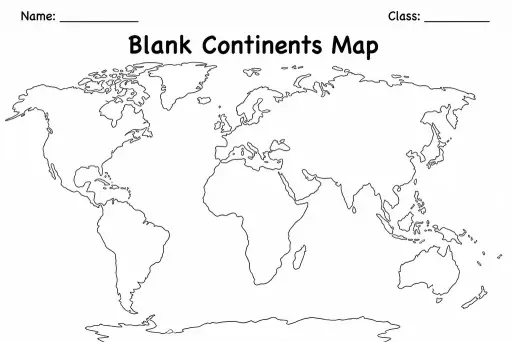
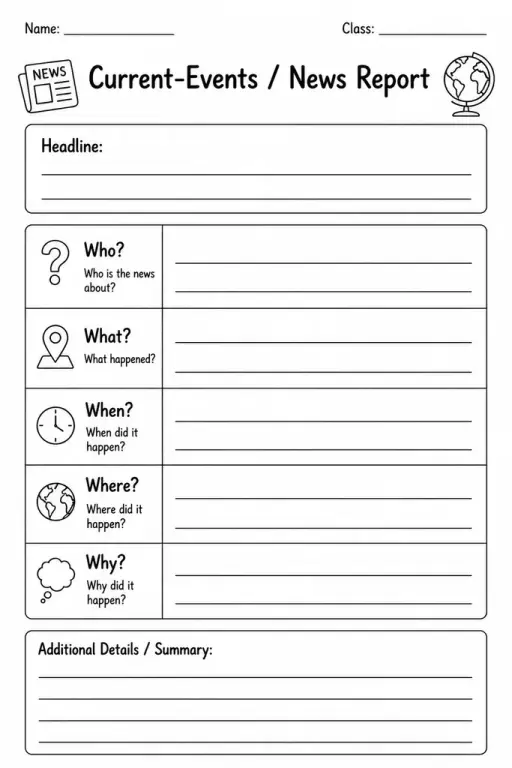
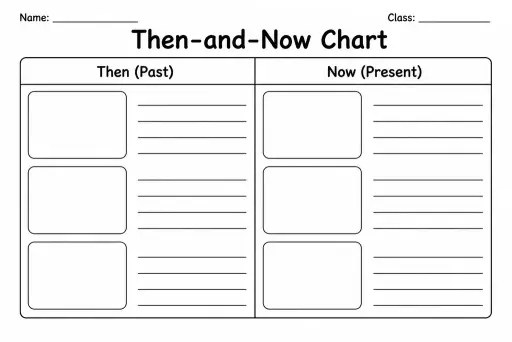
See what other teachers think and share a helpful note.
Generate a fresh worksheet for any grade, topic and language. Free.
 Home
Home All solutions
 Pricing
 About us
 KiwiBee for Non-profits
 Events & webinars
 For big organisations
 For schools
 For centers
 For team leaders
 For teachers
 AI and resources
 Resources
 Printable worksheets
 Lesson Packs
 Interactive simulations
 Teacher tools
 AI studio
 Ideas and research