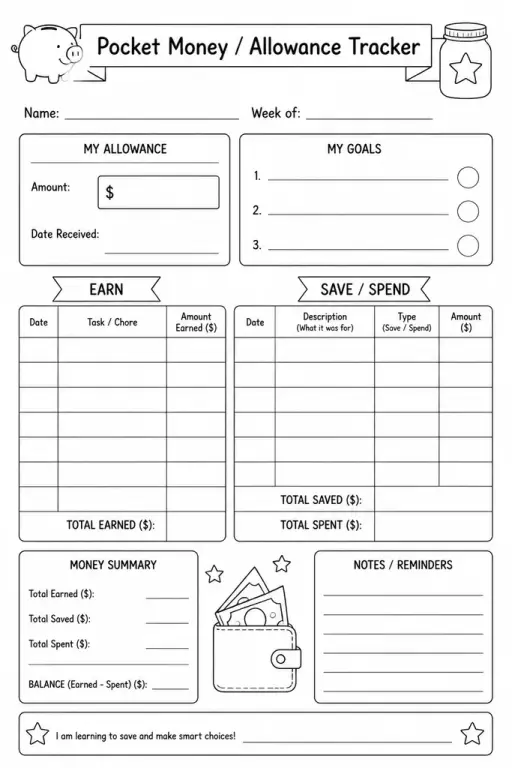
Pocket Money / Allowance Tracker
Parent & Home Printables
Ages 4–11
——
KiwiBee uses optional Google Analytics, Google Ads, and Meta Pixel cookies to understand adult visitors, measure completed sign-ups, and improve campaigns. Essential cookies always stay on. OpenAI’s ChatGPT Ads Pixel also measures page views and completed enquiries after advertising consent, and may use hashed contact details for matching. Privacy policy

A Chore Chart Template is a blank single-child grid that parents fill in with household jobs and days of the week. It gives one child a clear, visual list of responsibilities — whether that is making their bed, feeding a pet, or taking out the rubbish — and a simple way to track which tasks are done each day. The blank format means you decide the chores, the frequency, and any reward system that suits your household. Designed for Kindergarten through Grade 8, this template grows with the child: younger kids get three or four simple picture-friendly tasks; older children handle a fuller list with more autonomy. Parents can laminate the chart, use a checkbox sticker system, or simply tick off completed chores in pen. One printed copy often lasts a whole month before needing a refresh.
Three to five tasks is a manageable starting point for Kindergarten to Grade 2. Keep each task short and specific — 'put shoes away' rather than 'tidy room' — so success feels achievable.
Yes. The blank grid suits any age. Teens typically handle longer task lists and more complex chores, so you might expand the column or use a weekly layout rather than a daily one.
That is entirely up to you — the template is blank and flexible. Some families mark a dollar value or star next to each chore; others prefer chores as non-negotiable contributions separate from any allowance.
A laminated copy can last months — just wipe and rewrite as chores change. If you print on plain paper, replacing it monthly keeps it looking fresh and gives you a natural moment to negotiate updated responsibilities.
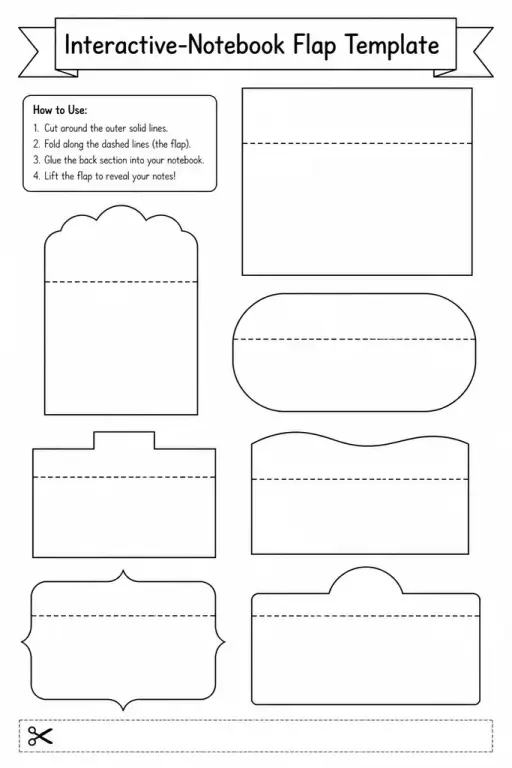
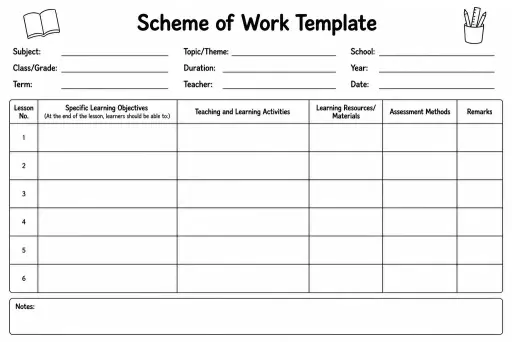
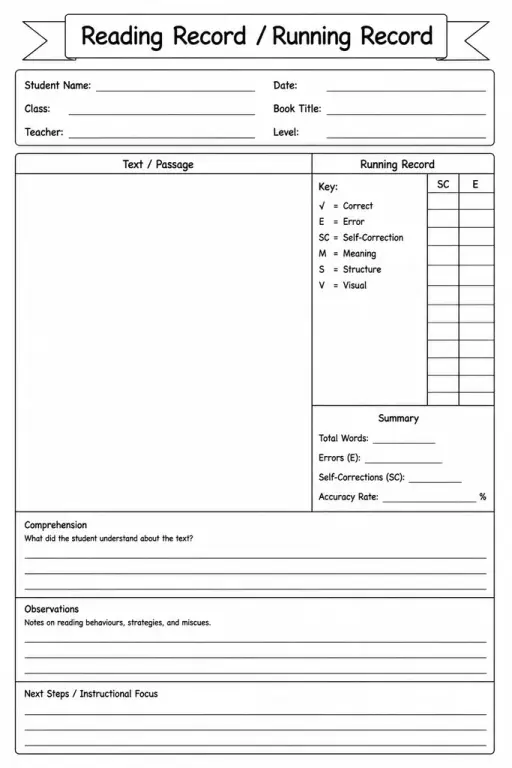
See what other teachers think and share a helpful note.
Generate a fresh worksheet for any grade, topic and language. Free.
 Home
Home All solutions
 Pricing
 About us
 KiwiBee for Non-profits
 Events & webinars
 For big organisations
 For schools
 For centers
 For team leaders
 For teachers
 AI and resources
 Resources
 Printable worksheets
 Lesson Packs
 Interactive simulations
 Teacher tools
 AI studio
 Ideas and research