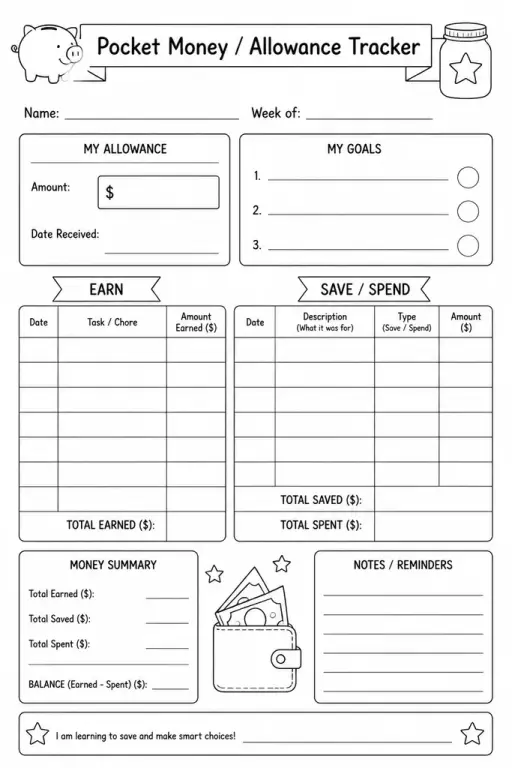
Pocket Money / Allowance Tracker
Parent & Home Printables
Ages 4–11
——
KiwiBee uses optional Google Analytics, Google Ads, and Meta Pixel cookies to understand adult visitors, measure completed sign-ups, and improve campaigns. Essential cookies always stay on. OpenAI’s ChatGPT Ads Pixel also measures page views and completed enquiries after advertising consent, and may use hashed contact details for matching. Privacy policy

This blank bingo board gives teachers a clean, ready-to-fill grid they can customise for any lesson topic in minutes. Unlike pre-printed bingo sets, the empty squares mean the teacher controls exactly which vocabulary words, math facts, images, or concepts appear — making it a genuine review tool rather than a novelty. Print one master and photocopy, or give each student their own blank to fill in differently so no two boards are the same. The teacher version typically includes a caller's reference sheet alongside the player grid, letting one adult run the game while students focus on recognising content. From kindergarten sight words to high-school chemistry symbols, the same blank grid serves every grade and subject with zero extra prep beyond writing in the squares.
Provide a master word bank of 30+ items and have each student randomly pick and arrange 24 (for a 5×5 grid with a free square). The randomisation is built-in with no extra work for you.
A 3×3 or 4×4 grid works well for kindergarten and Grade 1 — fewer squares mean less visual clutter and faster game rounds that suit short attention spans.
Yes. Laminate blank boards and let students write in the squares with dry-erase markers. Wipe after each game for a new round or a new topic.
Absolutely. Prepare a pre-filled caller deck on index cards and a small group of students can run the game independently as a literacy or maths centre.
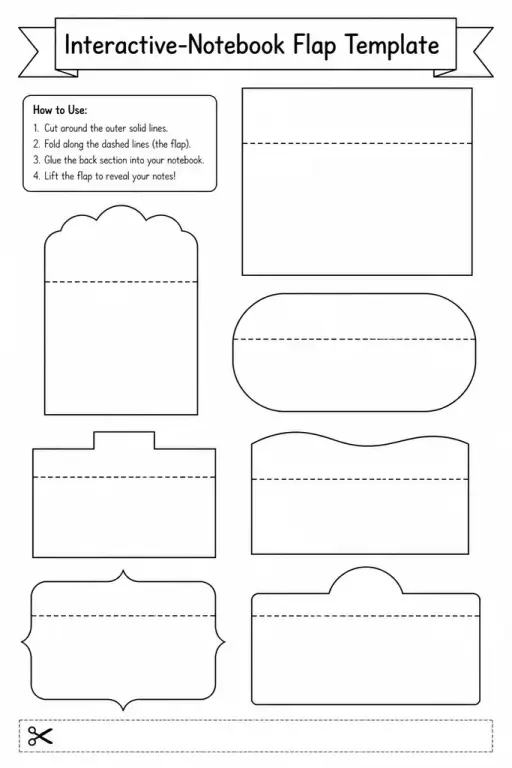
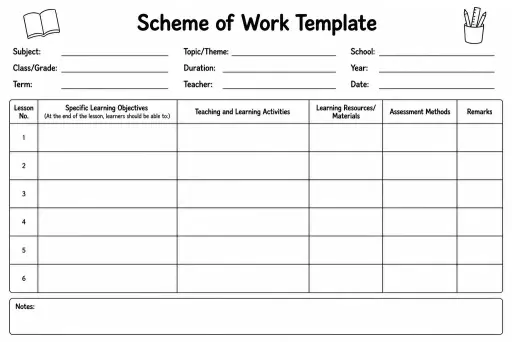
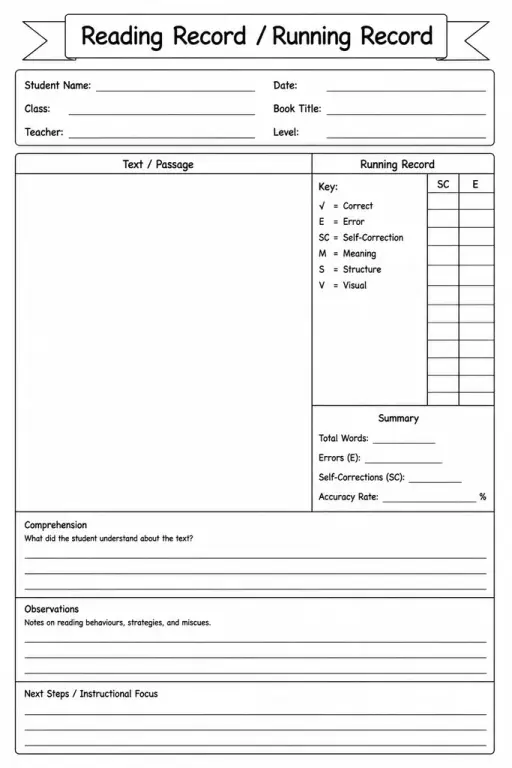
See what other teachers think and share a helpful note.
Generate a fresh worksheet for any grade, topic and language. Free.
 Home
Home All solutions
 Pricing
 About us
 KiwiBee for Non-profits
 Events & webinars
 For big organisations
 For schools
 For centers
 For team leaders
 For teachers
 AI and resources
 Resources
 Printable worksheets
 Lesson Packs
 Interactive simulations
 Teacher tools
 AI studio
 Ideas and research