Top Brain Break Activities for the Classroom
Three proven brain break formats that re-energize students and sharpen focus in minutes.
 By KiwiBee· KiwiBee
Last updated May 26, 2026
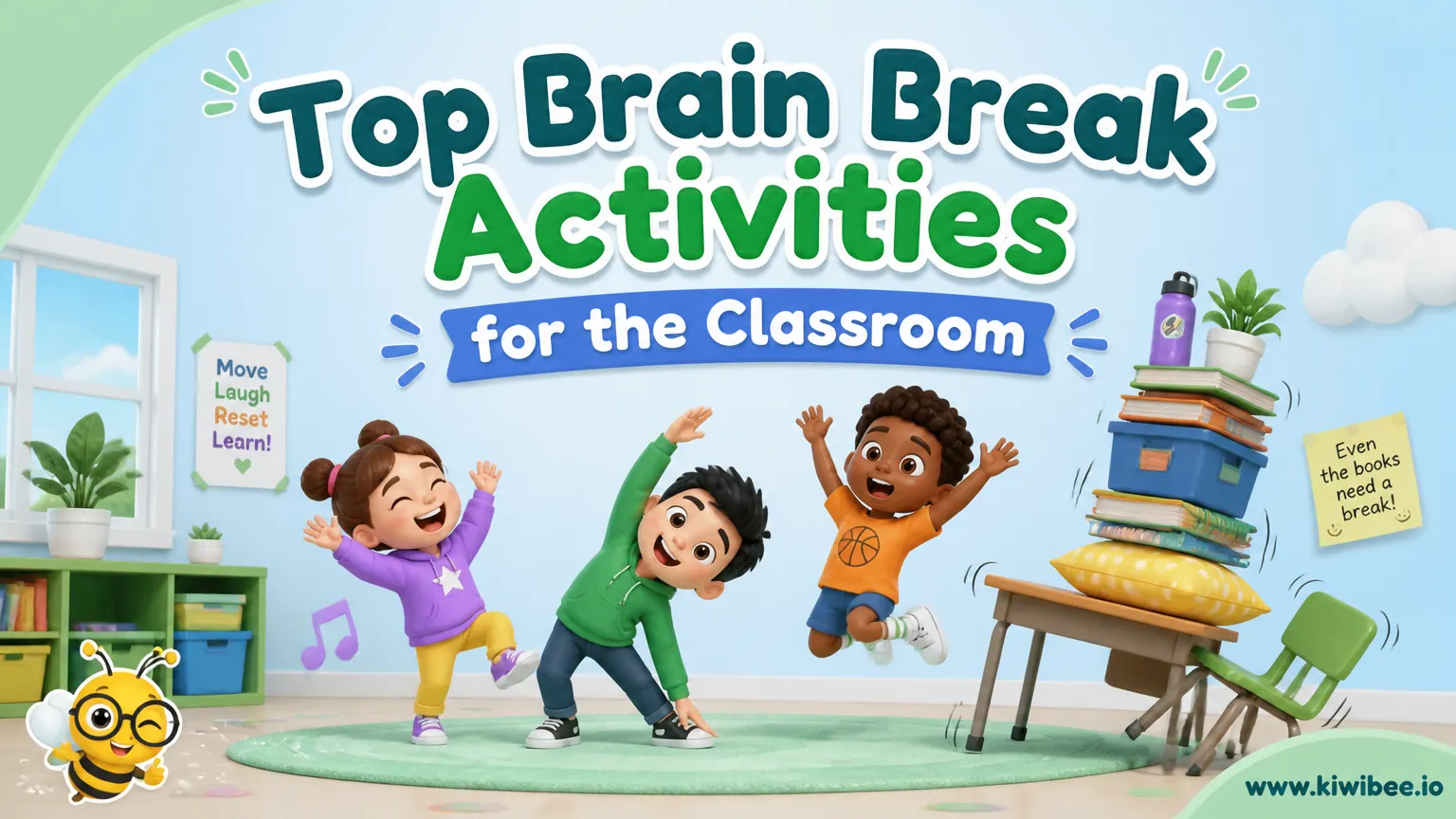
Three brain breaks I have stolen from other teachers and would not give up
A good brain break does three things: gets bodies moving, costs me almost no prep, and is short enough that I do not lose the lesson. Here are the three that survived a full year of trying everything I could find on YouTube — and what I do with each one now.
1. The Floor Is Lava (Mario edition)
Play a Mario-themed Floor Is Lava video — the audio cues tell students when the floor becomes lava. They have to get off the ground onto chairs, desks, or designated safe spots. It is loud, it is silly, and it absolutely works. I run it for two to three minutes max, in the middle of long writing sessions when I can feel the room dying.
Three variations I have used: team challenge (most students still standing wins points for their team), obstacle course (students have to climb over books or under desks while avoiding 'lava'), and creative movement (they have to hop, skip, or crawl between safe zones). The team version is the one I run most because it ties straight into my ClassSpark points — teams compete, points feed back, the brain break becomes a behaviour boost.
2. Coach Corey Martin's brain break videos
Coach Corey Martin's YouTube channel is a teacher's emergency kit. Dance videos, exercise videos, stretching videos, mindfulness videos, educational movement videos — every category covered. I keep a tab of his playlist open for the days I have not planned anything specific and just need three minutes of energy.
My rule: preview every video before I project it to my class. The channel is huge and not every video matches every age group. Once I have a shortlist for my grade, I rotate through five or six favourites and the kids never notice repeats.
3. Larva and Lamput animations
This one surprises people. Larva and Lamput are short animated shorts — usually two to four minutes — with almost no dialogue. Just slapstick humour and silly characters. They are language-independent, which is enormous if you teach ESL or have multilingual students, and they take zero teacher attention to run.
I use them as a reset break after long testing or independent work. I project one episode, kids watch and laugh, then we move on. Optional: a one-minute discussion afterward about what happened. The kids genuinely look forward to these.
The thing that makes brain breaks work over the long term
Any brain break gets old if it is the only one. The trick is to rotate three or four, never the same one two days in a row, and let students vote on the favourite at the end of each week. I track the votes — and the participation — through ClassSpark, which gives me a quick read on which breaks actually re-engage which kids. The dance videos work better for my reluctant boys. The mindfulness ones reset my anxious students. The Floor Is Lava is universal.
Safety and logistics
Quick checklist before any movement-based brain break: classroom is clear of trip hazards, rules explained before the music starts, I monitor the corners of the room not just the centre, and I adjust intensity to the youngest or smallest student in the group. Two minutes of activity should energise them, not exhaust them.
Where this fits in KiwiBee
If you want brain breaks built into your behaviour system, KiwiBee adds ClassSpark with timer-based whole-class rewards, Wordwall-style quick games for movement breaks, and a class shop students can spend break points in. Try it free at app.kiwibee.io.
Explore the platform
Continue with KiwiBee
Choose the KiwiBee workspace or resource library that fits what you need next.
Related posts
Top Warm-Up Activities for the Classroom
Explore video, image, question, and brainstorming warm-ups that activate prior knowledge and set the tone for engaged learning.
The Best Fun Timers to Use in the Classroom (Primary)
Five fun timers that keep primary classes focused — from the ClassDojo and Siri timers to the Mission Impossible, bomb, and volcano countdowns.
Quick Classroom Management Board Ideas
Explore four classic classroom management boards, from happy face charts to star systems, and learn how to digitize them with ClassSpark for real-time parent visibility.
 For big organisations
 For schools
 For centers
 For team leaders
 For teachers
 AI and resources
 Printable worksheets
 Teacher tools
 AI studio
 Ideas and research