Pair Work for English Classes: Primary Level Activities
Four hands-on resources that turn pair work into productive English practice.
 By KiwiBee· KiwiBee
Last updated May 26, 2026
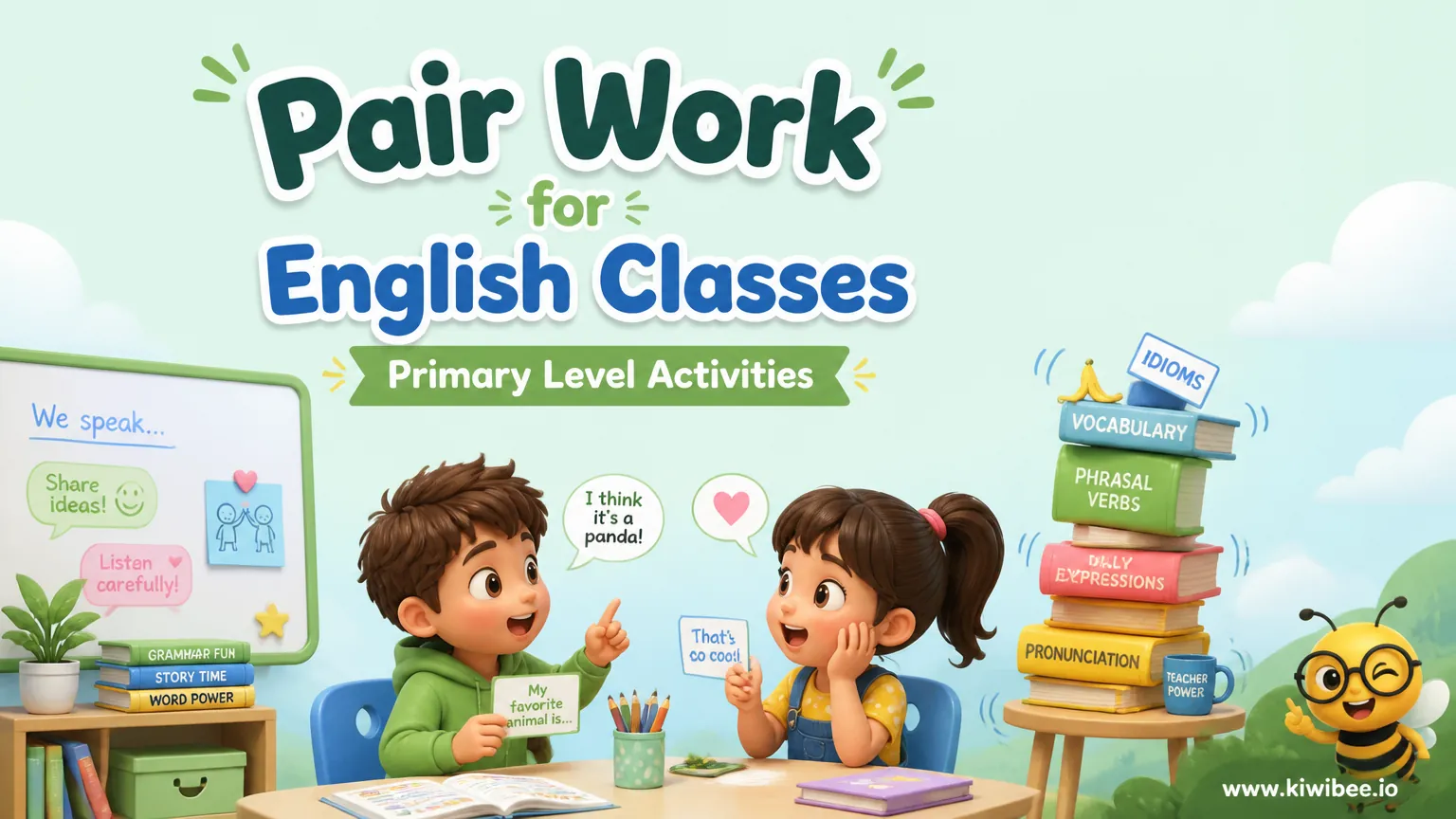
Four pair-work tools that survived ten years of my primary classroom
Pair work is the single most cost-effective format in primary English teaching. Two students working together produce three times the talking time of any whole-class activity, and the ones who are too shy to volunteer in front of 25 will happily speak to one partner. After a decade of trying every framework, I have come back to four pair-work tools that I keep on hand at all times. Here they are.
1. Word mats
A laminated A4 sheet covered in target vocabulary with images. Each pair gets one mat between them. The activities are infinitely variable: 'tell your partner three words you can see', 'point to the word as your partner says it', 'choose a word and act it out for your partner to guess', 'use three words in a sentence'. The mat is the prompt. The pair generates the language.
Why this works for primary: the mat takes away the 'I do not know what to say' freeze. The kids who would otherwise sit silent now have something concrete to point at and talk about. Two minutes of mat-based pair work generates more vocabulary repetition than ten minutes of teacher-led drilling.
2. Dice
A small dice (or two) sitting between every pair. The number rolled determines what the pair does. Roll 1: name three things in the classroom. Roll 2: spell a word your partner gives you. Roll 3: ask your partner a question. Roll 4: use a target word in a sentence. Roll 5: act out an action verb. Roll 6: make up a sentence with two target words.
The dice introduces just enough randomness to keep the routine fresh. Kids who would normally pick the same easy activity have to engage with whatever the dice rolls. I keep a stack of laminated 'dice activity' sheets for different units. Setup time: zero. Engagement: high.
3. Spinners
A spinner is a dice's flashier cousin. A printed spinner with eight or twelve segments, each with a different task. The kids spin, get a task, complete it with their partner, spin again. Visually more engaging than a dice, especially for younger primary, and you can fit longer prompts on each segment than you can on a dice face.
My favourite use: vocabulary spinner. Each segment names a vocabulary word the pair has to use in a sentence. The randomness ensures coverage across the whole word list, not just the three easy ones. I print mine inside the class, laminate, attach a brad fastener through the centre, ten minutes of setup.
4. Snakes and Ladders
The most under-used pair-work tool in primary English. A printed snakes and ladders board where each square requires the player to answer a question or use a target word to advance. Pair plays head-to-head, dice rolls determine moves, but the linguistic challenge of each square is the actual learning.
The board structure does several things at once: it provides clear turn-taking, automatic motivation (you want to reach the top first), built-in repetition (you cross every square multiple times across multiple games), and zero teacher intervention once the game is running. I use this as a Friday reward activity that is secretly the most productive language practice of the week.
Tracking pair work without losing my mind
The hardest part of pair work is monitoring engagement across ten or twelve pairs simultaneously. Some pairs work brilliantly. Some pairs have one strong student carrying both. Some pairs go silent the moment my back turns. I cannot see all of them at once.
What helped: a quick participation log per pair, awarded as ClassSpark points at the end of the activity. I circulate, listen, and award the pair (not the individuals) a participation score. The kids know the score is for the pair, which makes them coach each other rather than compete. Where the pair work involves a Wordwall-style game, the score happens automatically. And the participation pattern over time feeds into the gradebook so I have evidence for end-of-term reports on speaking and collaboration.
Where this fits in KiwiBee
If you want pair-work tracking without a clipboard, KiwiBee adds ClassSpark to log pair-work participation, Wordwall-style pair games tied to your lesson, and a class shop students can spend pair-work points in. Try it free at app.kiwibee.io.
Explore the platform
Continue with KiwiBee
Choose the KiwiBee workspace or resource library that fits what you need next.
Related posts
Top Worksheet Choice for Primary English: Word Search
Word searches top the list of student-favorite worksheets. Learn why they work so well for vocabulary, spelling, and cognitive development, plus tips for creating your own.
Top Flashcard Games for Kids to Learn English
From classic drills to Hot Potato, discover eight flashcard games that make English vocabulary practice fun, interactive, and effective for young learners.
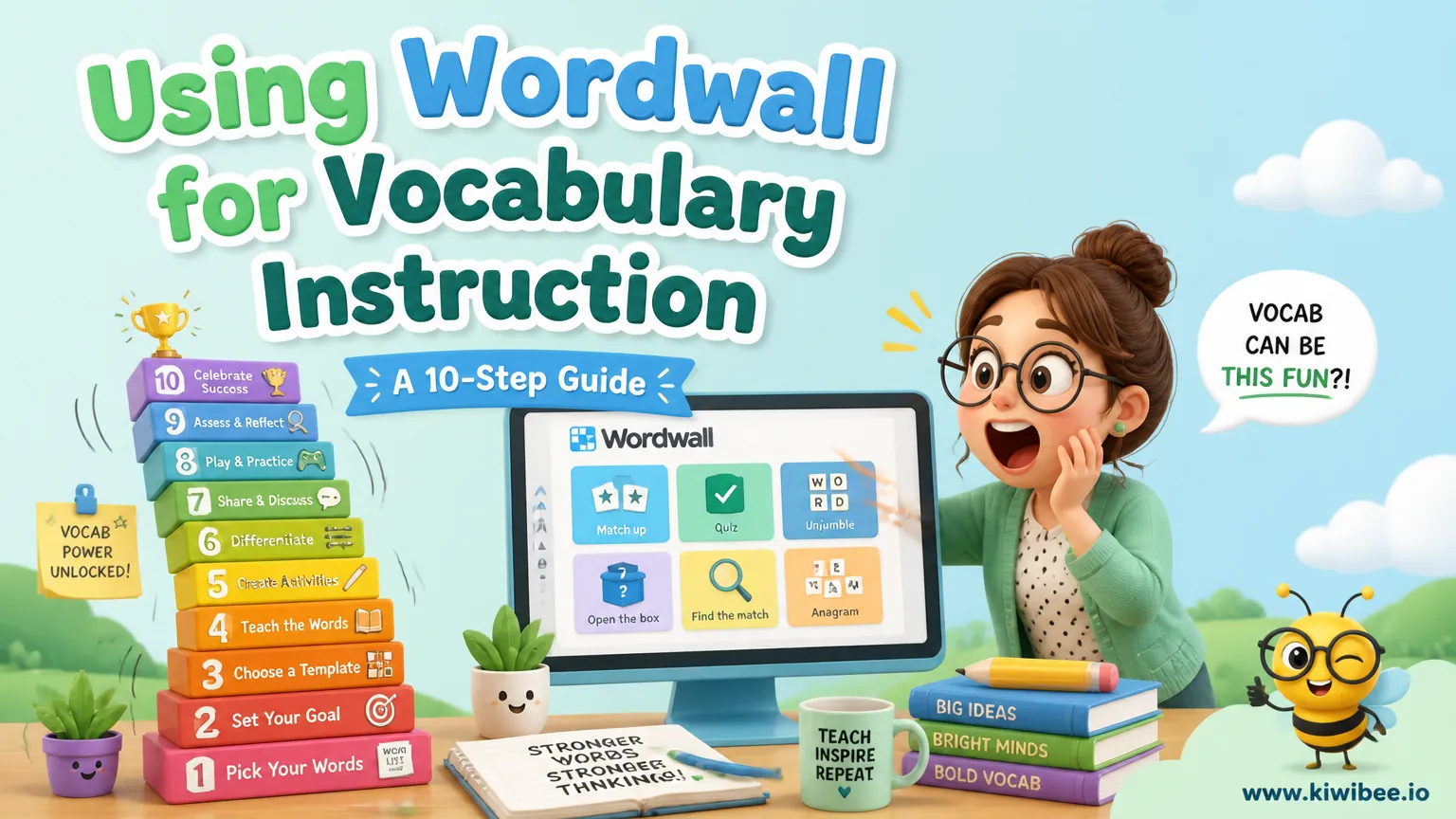
Using Wordwall for Vocabulary Instruction: A 10-Step Guide
Transform vocabulary instruction with this 10-step Wordwall workflow. Each step uses a different activity type to build recognition, comprehension, and retention systematically.
 For big organisations
 For schools
 For centers
 For team leaders
 For teachers
 AI and resources
 Printable worksheets
 Teacher tools
 AI studio
 Ideas and research