Top Flashcard Games for Kids to Learn English
Eight engaging flashcard games that turn vocabulary practice into an exciting classroom experience.
 By KiwiBee· KiwiBee
Last updated May 26, 2026
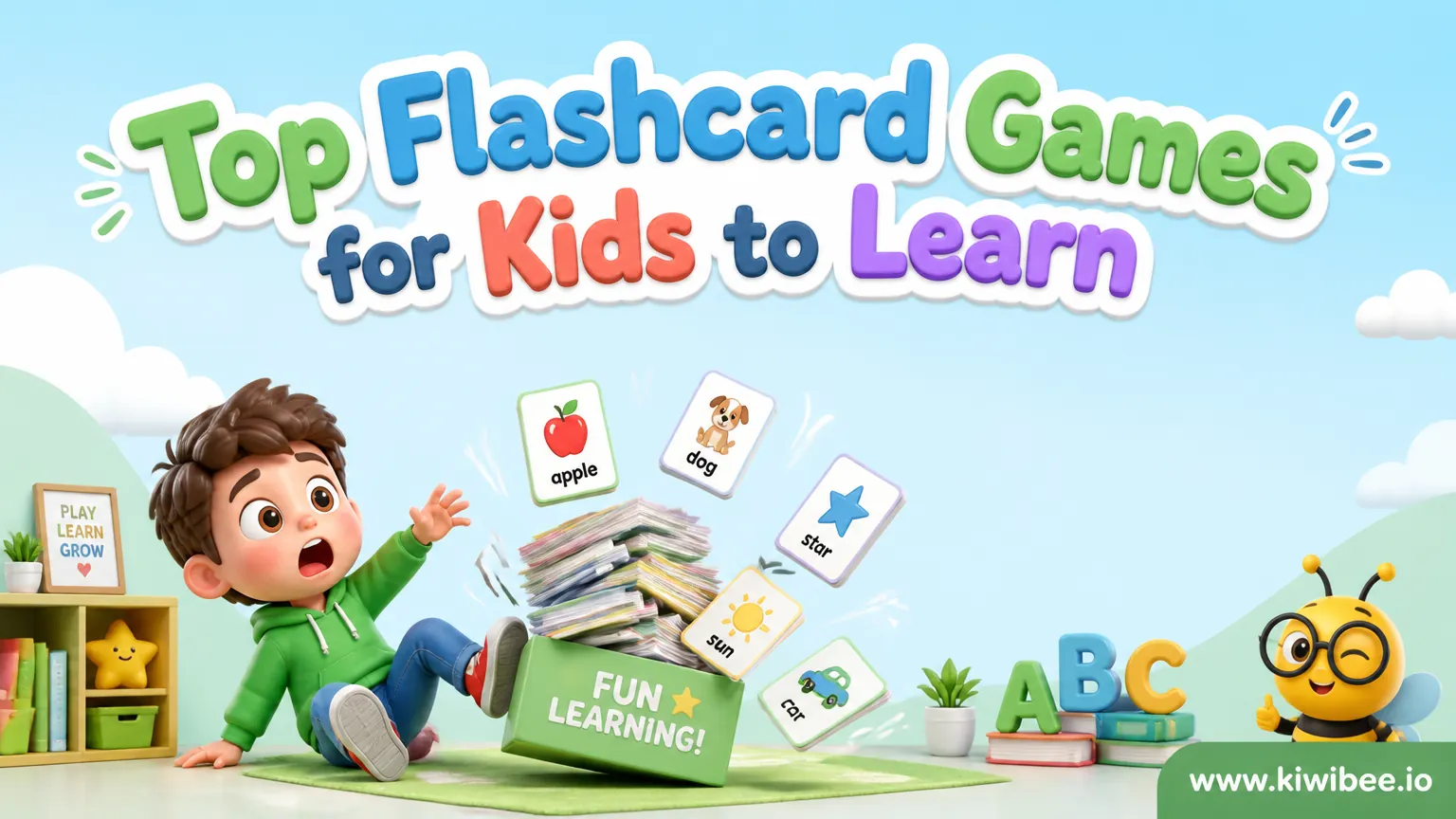
Eight flashcard games my students actually ask for
Flashcards survived the digital revolution because they work. After ten years of teaching English to kids, here are the eight flashcard games I still use weekly — what they are good for, how I run them, and the small variations that turn a flat drill into a game my students request by name.
1. The classic drill
Hold up a card. Students say the word. Move to the next. That is it. The simplest format, and still the most efficient for first exposure. Variations that keep it alive: speed drill (faster and faster until they break), whisper-shout (alternate volume), and individual vs whole-class response. The drill is boring on its own. The variations are what stop it from feeling like punishment.
2. Matching game
Two decks: one of words, one of images. Spread face down, students flip two cards at a time, keep the matches. Improves memory, concentration, and vocabulary association. Variations: definition matching (words to definitions), sentence matching (words to example sentences). My class plays this in pairs while I take attendance.
3. Charades with flashcards
Pull a card, act it out, no speaking, no sound. Their team guesses. Brilliant for verbs, emotions, and any vocabulary that has a physical component. Variations: limited time per card, allow sound effects but no speech. Best for medium-energy days when I want movement without a full brain break.
4. Pictionary with flashcards
Same as charades but drawing instead of acting. One student draws on the board, their team guesses. Variations: blind Pictionary (drawer is blindfolded and guided by teammates), limited lines (drawer can only use five lines). The blind version is hilarious and produces drawings I save in my Teaching Memories folder.
5. Go Fish
Deal pairs of matching cards. Students take turns asking each other for specific cards to make pairs. 'Got any apples?' If yes, hand it over. If no, 'Go Fish.' Reinforces vocabulary and forces oral repetition of the target words in a natural exchange. Variation: students must use the word in a sentence when they ask. Sneakiest grammar practice in the room.
6. Flashcard Bingo
Bingo cards with words or images from the deck. Teacher calls out words or holds up images, students mark them off, first to a line shouts bingo. Endlessly adaptable, works at every age, and the kids never get tired of it. Sentence Bingo (where the teacher reads a sentence and students mark the target word used inside it) is the version I run most.
7. Memory / Concentration
Pairs of cards face down. Students flip two at a time, keep matches, get another turn if they match. Pure memory work, plus quiet concentration — useful for after lunch when the energy is wild. Variation: sound memory (match words to recorded sounds), sentence memory (match words to example sentences).
8. Hot Potato
Students sit in a circle. Music plays, flashcard is passed around. Music stops, whoever is holding the card must say the word. Variation: question Hot Potato (answer a question about the word), sentence Hot Potato (use it in a sentence). The pressure of the music gives the game its energy.
What I changed this year
I still print flashcards for the physical games above — there is something about a card in a kid's hand that no screen replicates. But for the digital versions — matching, bingo, memory, hot-potato-style timed games — I now run them inside KiwiBee's classroom game maker, which builds all of these formats from one vocabulary list. Whatever the kids do feeds back into their auto-graded homework, and the free AI worksheet generator produces printable versions of the same words for the days I want a physical card in their hand. Same eight games. One source of truth for the vocabulary.
Where this fits in KiwiBee
If you want flashcards without the printing, KiwiBee adds Wordwall-style flashcard games, auto-graded flashcard homework, and a free worksheet generator with images. Try it free at app.kiwibee.io.
Explore the platform
Continue with KiwiBee
Choose the KiwiBee workspace or resource library that fits what you need next.
Related posts
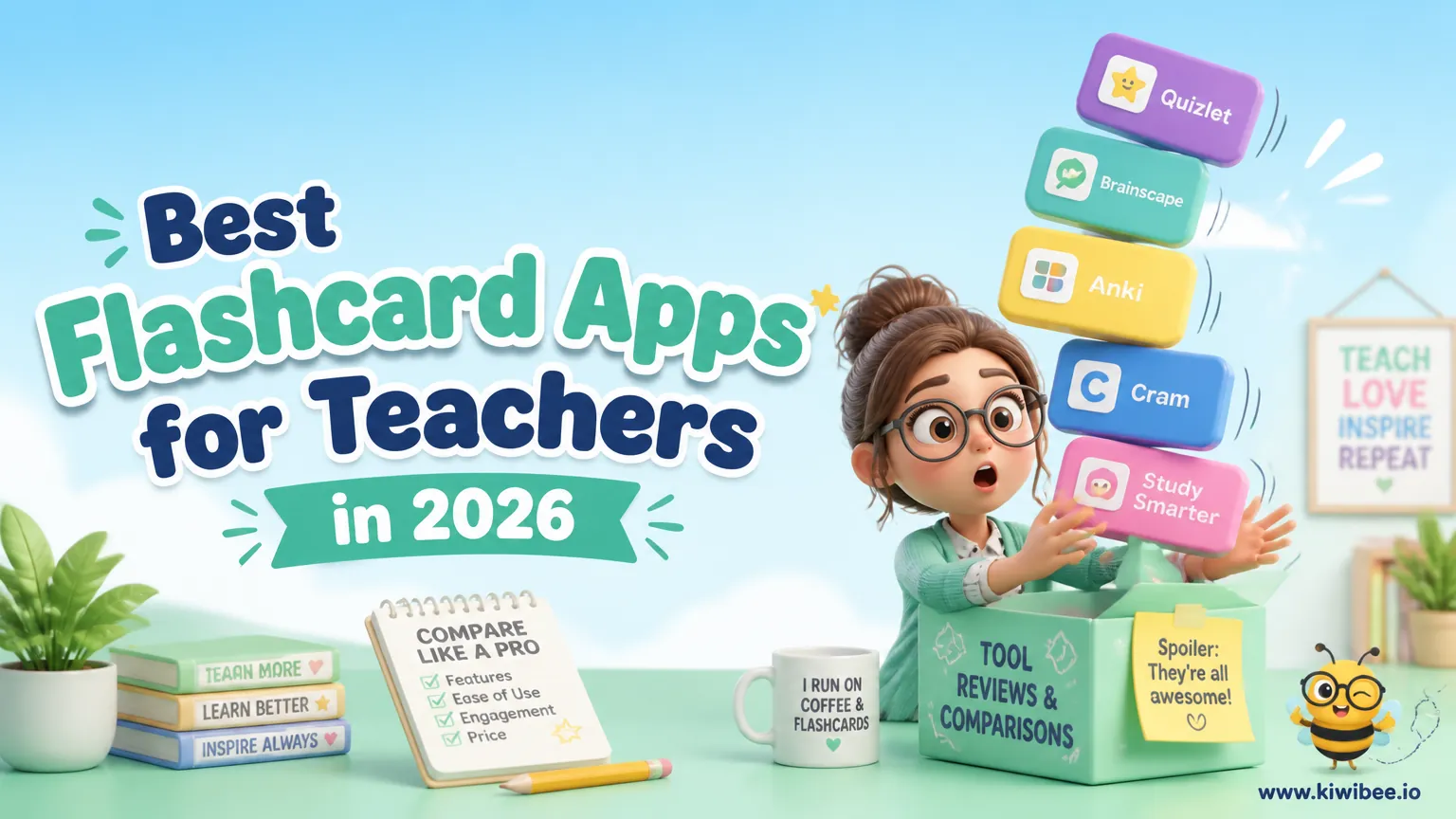
Best Flashcard Apps for Teachers in 2026
Best Flashcard Apps for Teachers in 2026. An honest review of the leading classroom tools with strengths, weaknesses, and how to pick the right one for your context.
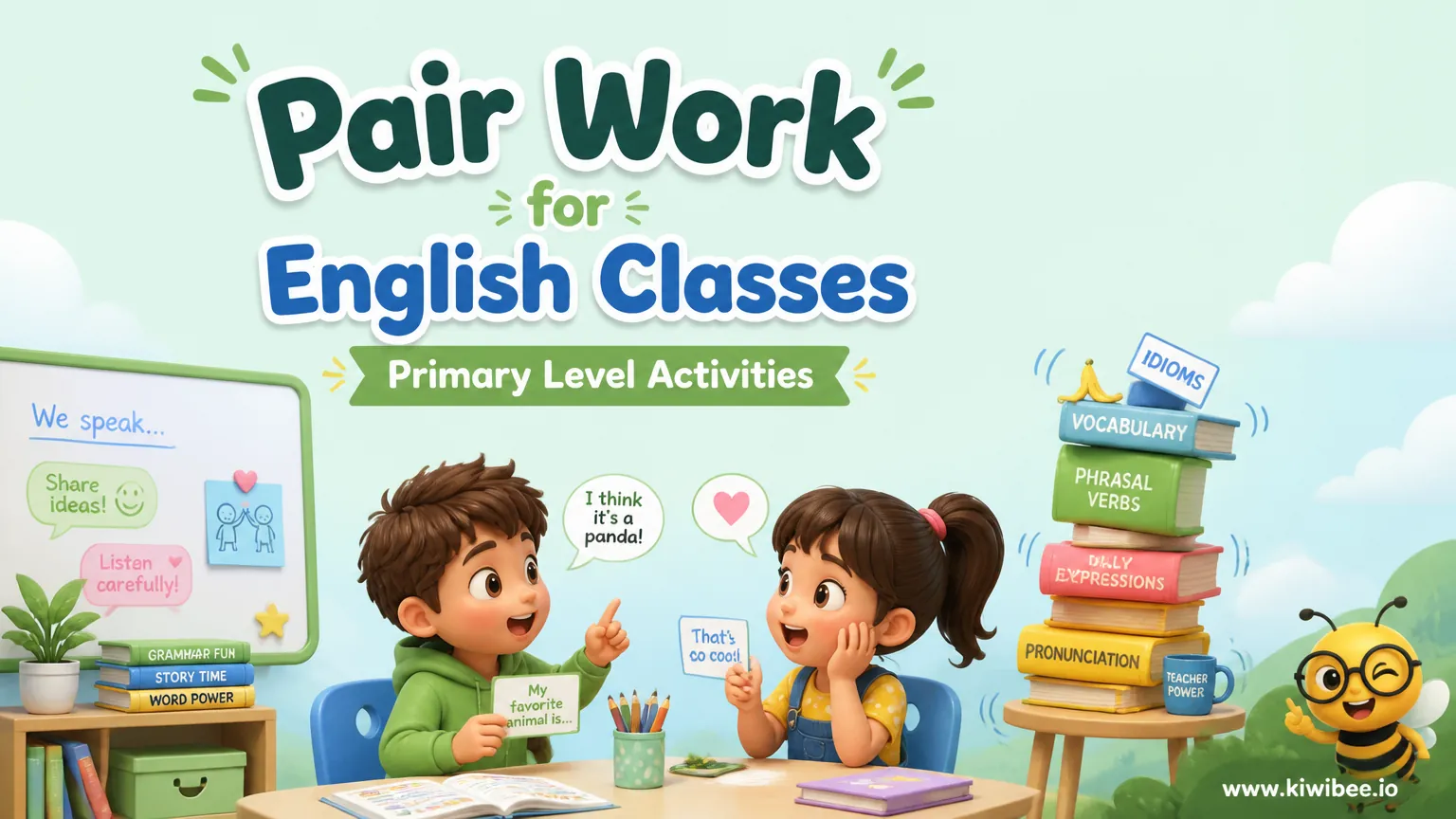
Pair Work for English Classes: Primary Level Activities
Practical pair work activities for primary English classes using word mats, dice games, spinners, and Snakes and Ladders to build speaking and vocabulary skills.
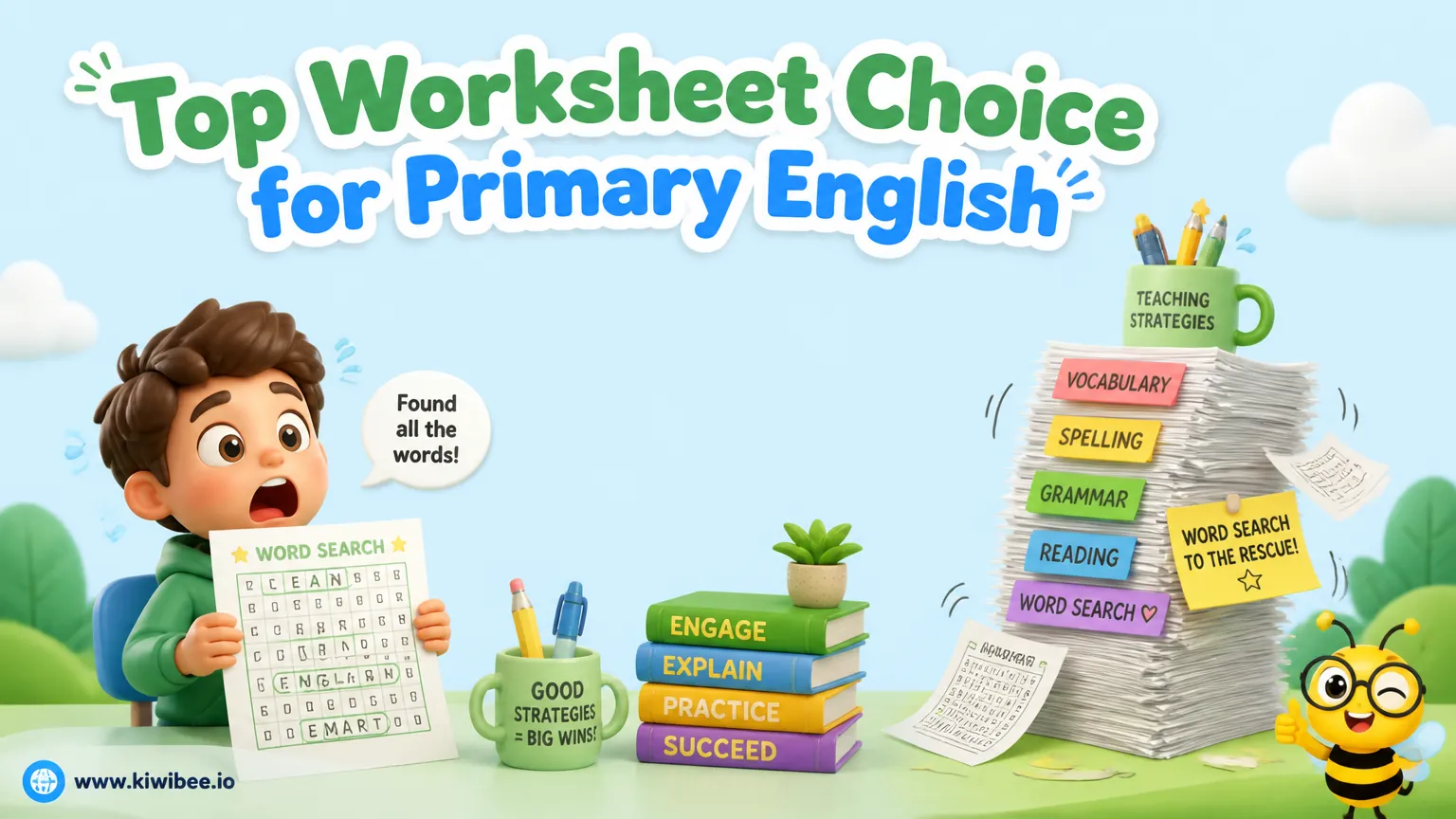
Top Worksheet Choice for Primary English: Word Search
Word searches top the list of student-favorite worksheets. Learn why they work so well for vocabulary, spelling, and cognitive development, plus tips for creating your own.
 For big organisations
 For schools
 For centers
 For team leaders
 For teachers
 AI and resources
 Printable worksheets
 Teacher tools
 AI studio
 Ideas and research