Using Wordwall for Vocabulary Instruction: A 10-Step Guide
A structured approach to teaching vocabulary using Wordwall's diverse activity types, from flashcards to crosswords.
 By KiwiBee· KiwiBee
Last updated May 26, 2026
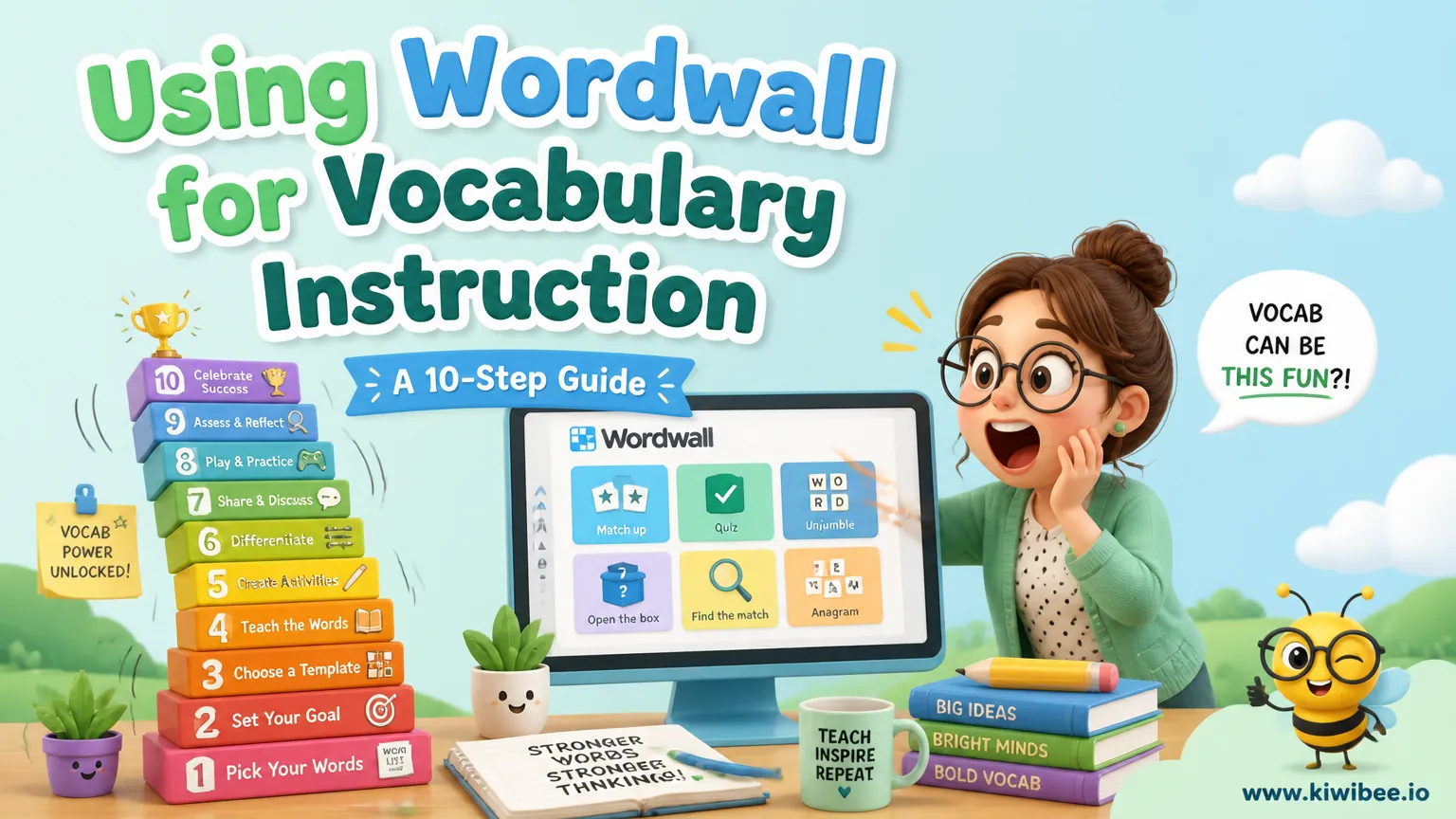
My 10-step vocabulary routine — and what changed when I tied it to my lesson plan
Vocabulary is the part of language teaching where I used to lose kids the fastest. They would meet a word on Monday, half-recognise it on Wednesday, and have forgotten it by Friday's quiz. After a lot of trial and error I settled on a 10-step Wordwall sequence that takes one set of target words and cycles them through a full week of formats. Here is the routine, and the one change that doubled retention.
1. Flashcard introduction
Day one, I introduce the new words with Wordwall's Flashcard template. Each card shows the word with an image and pronunciation. No drills yet — just exposure. Students see, hear, and look at the image. That's the only goal for round one.
2. Image association
Same day, second pass. I show only the images and ask students to guess the words. Wordwall's Image Match template handles this. It forces active recall instead of passive recognition, and it tells me within ten minutes which words have stuck and which need another round tomorrow.
3. Open the Box — missing word
Day two opens with the Open the Box template. Each box hides a sentence with one word missing. Students pick the right vocabulary word to complete it. This moves the words from isolated items into context, which is where retention actually happens.
4. Whole-class word search
Mid-week brain break. I project a word search using the target words. Teams race. Kids who would not voluntarily study vocabulary will hunt for the same words for ten minutes if there is a race involved.
5. Anagram challenge
Anagram template, same words. Students unscramble the letters. This is where I catch spelling weaknesses I would not otherwise see. The kids who can read the word fine but cannot reproduce it accurately surface here.
6. Sentence construction with images
Day three. I show the images one at a time and challenge students to construct sentences using the target word. Points for length, points for complexity, points for using two target words in one sentence. This is where vocabulary becomes language instead of memorised lookup.
7. Matching words and meanings
Wordwall's Matching template, word-to-definition. The kids who know the word now have to articulate what it means. I always discover at least one student who has been using a word confidently for three days and cannot define it.
8. Spelling activity
Quiz or Missing Word template, this time the student types the word from a prompt. Pure spelling test. Day four, before the formative.
9. Whack-a-Mole — incorrect words
This template gets undervalued. Students whack the misspelled or misused words and ignore the correct ones. It teaches discrimination — the skill of noticing a wrong version of a word, which is the foundation of editing your own writing.
10. Word meaning crossword
End of week. Crossword template with the definitions as clues. By now the kids have seen these words in nine different formats. Solving the crossword is mostly a victory lap. Anyone still struggling here is the kid I follow up with individually next week.
The change that doubled retention
For two years I ran this exact routine in Wordwall, and the kids did well in the moment but the unit test scores were inconsistent. Then I moved the same 10-step routine into KiwiBee's classroom game maker so every activity is linked back to the unit in my curriculum map and the gradebook updates as students play. The difference: I could finally see which kids struggled on which words across the whole week, and the system suggested re-exposure for the ones that needed it. Retention on unit tests jumped from around 65% to over 85% in a single term. The 10 steps are the same. The connection to the lesson is what changed the outcome.
Where this fits in KiwiBee
If you want vocabulary work that flows into the rest of your week, KiwiBee adds a curriculum map for every unit, vocabulary games connected to those units, and auto-graded vocabulary homework. Try it free at app.kiwibee.io.
Explore the platform
Continue with KiwiBee
Choose the KiwiBee workspace or resource library that fits what you need next.
Related posts
Is Wordwall.net Really Worth It?
From warm-up activities to homework assignments, Wordwall covers nearly every classroom scenario. Here is an honest review of what it does well, where it falls short, and whether it is worth the investment.
Is wordwall enough for all my subjects?
Wordwall for teachers — what it does well, where it falls short, and three alternatives worth trying.
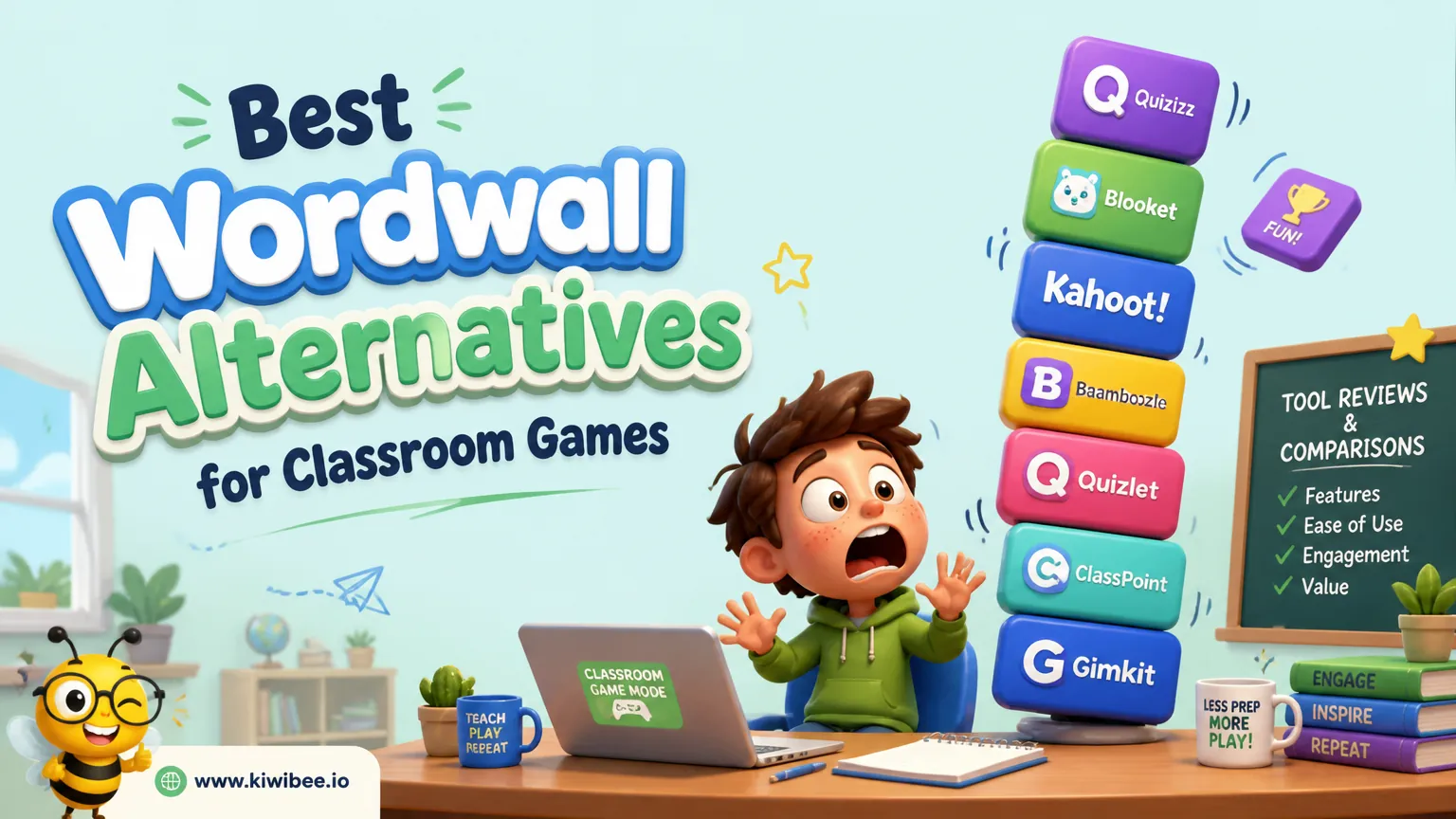
Best Wordwall Alternatives for Classroom Games in 2026
Best Wordwall Alternatives for Classroom Games in 2026. An honest review of the leading classroom tools with strengths, weaknesses, and how to pick the right one for your context.
 For big organisations
 For schools
 For centers
 For team leaders
 For teachers
 AI and resources
 Printable worksheets
 Teacher tools
 AI studio
 Ideas and research