Warm-Up Activities: A Kaleidoscope of Options
From TPR to Wordwall, expand your warm-up repertoire with five versatile activity types.
 By KiwiBee· KiwiBee
Last updated May 26, 2026
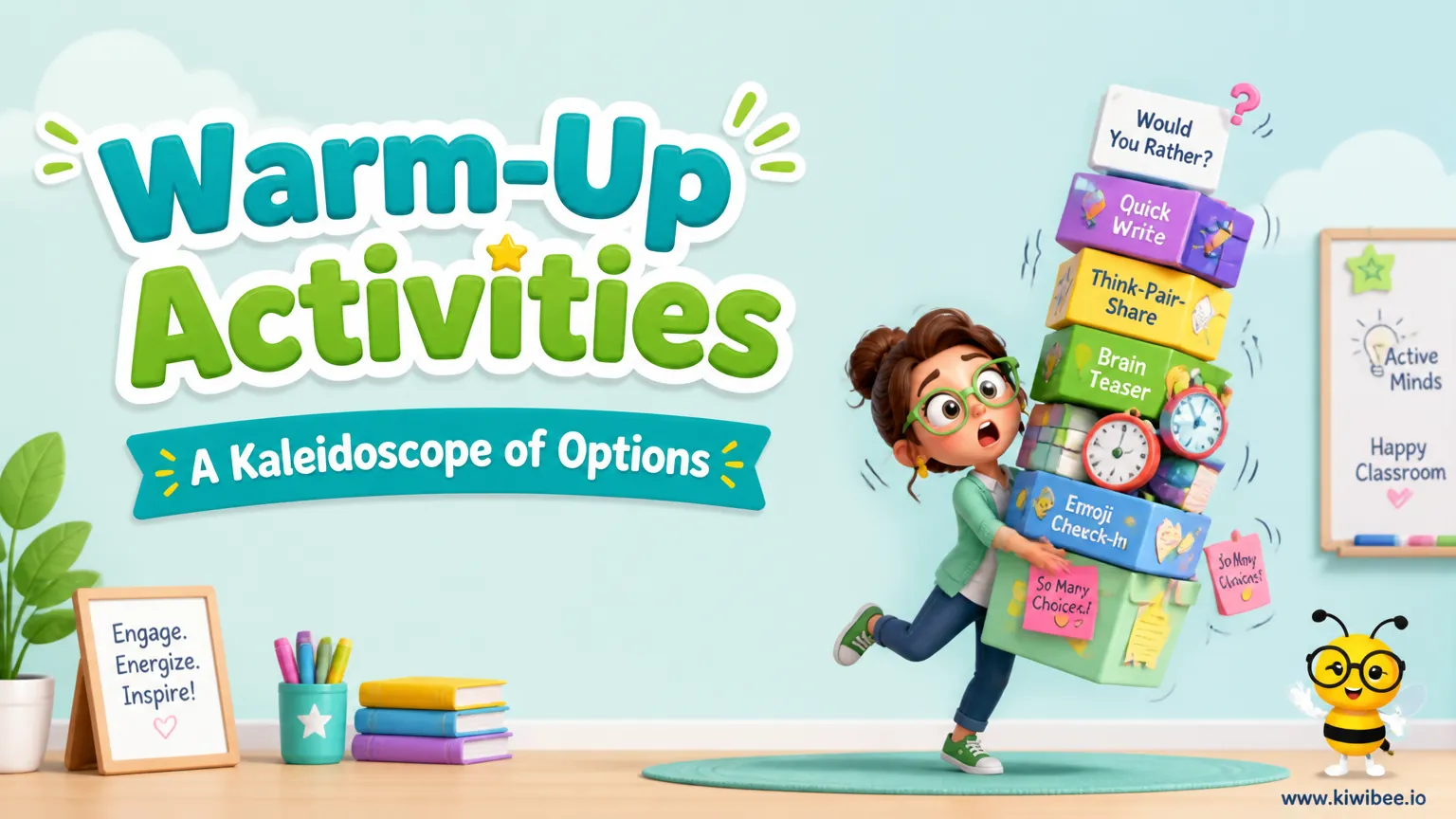
Five warm-up formats — and which works for which kind of class
I run warm-ups every lesson. Over the years I have ended up with five reliable formats, each suited to a different kind of class, a different age group, or a different mood in the room. Here is the menu I work from, and the rule that ties them together.
1. Image-based warm-ups
Project an image. Ask: what do you see, what does this make you think, how does this image relate to the topic? Visual, instantly engaging, accessible to every learning style. Especially powerful for observation and interpretation work.
Example: if I am teaching environmental sustainability, I open with a photo of a polluted river or a healthy forest and let the contrast do the work for me. The kids have opinions about the image before I have said a word.
2. Question-based warm-ups
A single question that activates prior knowledge or surfaces a curiosity. 'What qualities do you admire in a leader?' 'What is the biggest challenge facing scientists today?' 'When was the last time you changed your mind about something?' Direct, targeted, and the kids feel taken seriously when their answer is the starting point of the lesson.
3. Brainstorming sessions
Two-minute idea dump. Present a topic and ask for as many ideas as possible without judgement. Record everything on a whiteboard or shared doc. Forces creative thinking, generates a wide range of perspectives, and gives every student something to point at as their contribution.
My rule for brainstorming: no critique during the dump. The judgement phase comes after the timer ends. Kill ideas too early and the room shuts down.
4. Wordwall-style games
Quick interactive review — matching, quiz, anagram, missing word — built around the previous lesson or the unit so far. Engaging, immediate feedback, fully customisable. Especially useful for the days when the warm-up needs to double as a quick review for what we are about to build on.
Example: 'parts of the cell' as a matching game on day three of a biology unit. The warm-up doubles as the formative I would have run anyway.
5. Total Physical Response (TPR)
Movement-based instruction. Give a command, students follow it physically. 'Stand up. Touch your nose. Walk three steps to your left.' Especially powerful for language teaching, prepositions, action verbs, and any concept that benefits from physical reinforcement. Also a hidden brain break.
Choosing the right one
Five factors decide which I use. The topic — the warm-up has to connect to where the lesson is going. The kids — age, background, energy level on a given day. The time I have — five to ten minutes max. The setting — classroom, hybrid, online. And the learning objective for the warm-up itself: am I activating prior knowledge, building curiosity, or just shifting energy?
Where my warm-up library lives now
I used to keep my warm-up ideas in a Notion doc that I had to scroll through every morning. This year I moved them inside KiwiBee's curriculum planner, where each unit has warm-up options attached as suggestions. The Wordwall-style ones run inside the game maker, and ClassSpark awards participation points for the kids who actually engage at the start of class — which is the kids who would otherwise need a second prompt to wake up. The kaleidoscope is still varied. It just no longer requires me to remember which warm-up I used last Tuesday.
Where this fits in KiwiBee
If you want a warm-up library that pulls from your actual unit, KiwiBee adds Wordwall-style games linked to your lessons, a curriculum map that suggests warm-ups, and ClassSpark to reward early-energy participation. Try it free at app.kiwibee.io.
Explore the platform
Continue with KiwiBee
Choose the KiwiBee workspace or resource library that fits what you need next.
Related posts
Top Warm-Up Activities for the Classroom
Explore video, image, question, and brainstorming warm-ups that activate prior knowledge and set the tone for engaged learning.
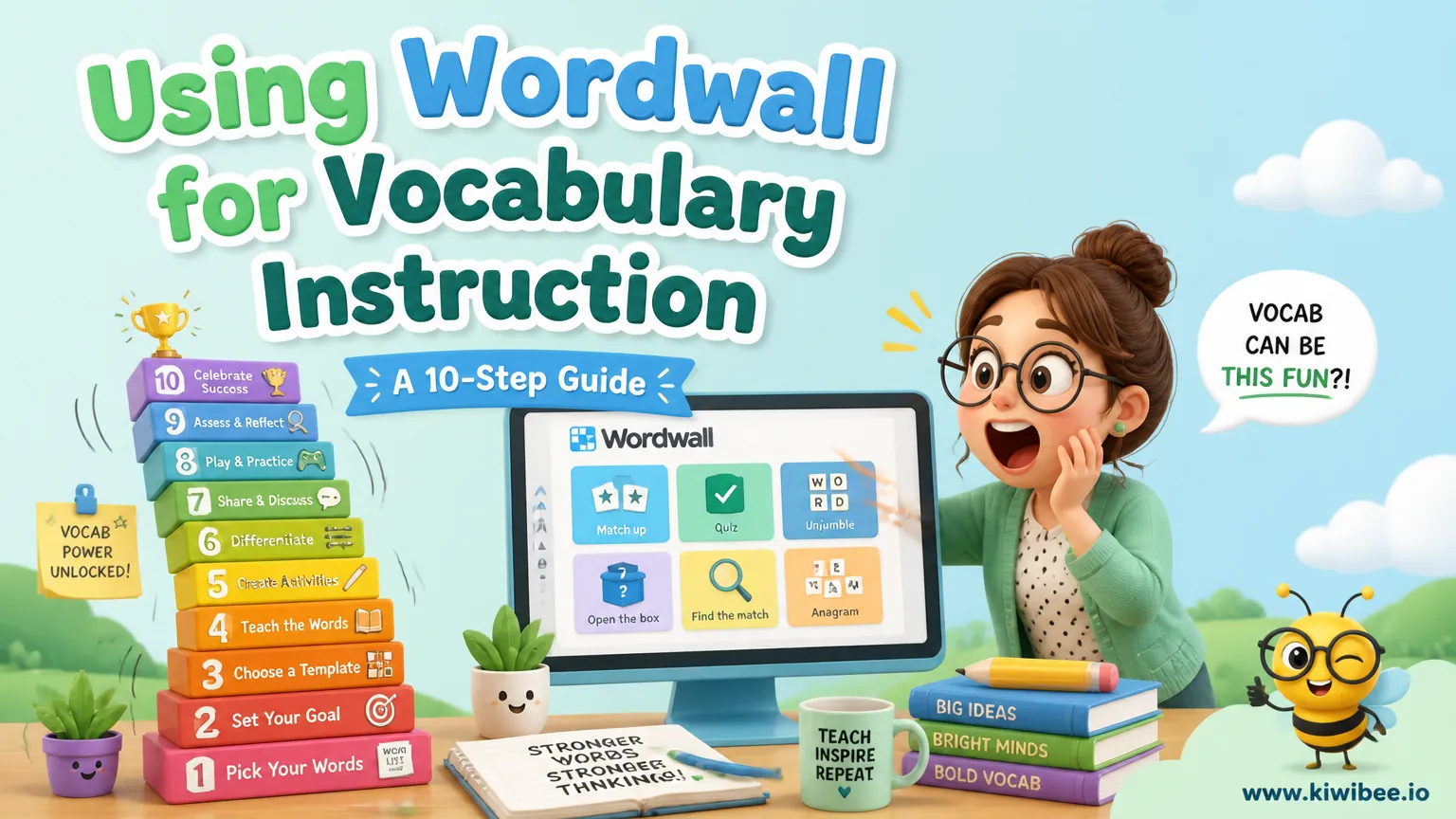
Using Wordwall for Vocabulary Instruction: A 10-Step Guide
Transform vocabulary instruction with this 10-step Wordwall workflow. Each step uses a different activity type to build recognition, comprehension, and retention systematically.

Is Wordwall.net Really Worth It?
From warm-up activities to homework assignments, Wordwall covers nearly every classroom scenario. Here is an honest review of what it does well, where it falls short, and whether it is worth the investment.
 For big organisations
 For schools
 For centers
 For team leaders
 For teachers
 AI and resources
 Printable worksheets
 Teacher tools
 AI studio
 Ideas and research