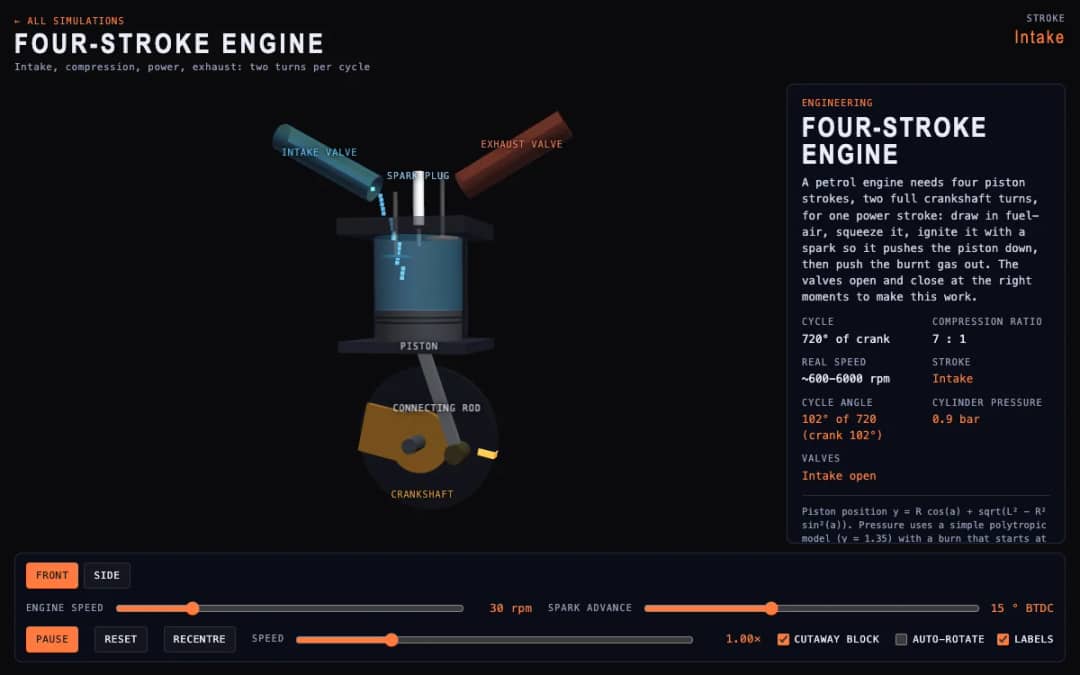
A cutaway engine cylinder shows the piston, valves and spark through the four strokes of the cycle. Students change engine speed and spark advance and watch the stroke, cycle angle, cylinder pressure and valve states update.
—
KiwiBee uses optional Google Analytics, Google Ads, and Meta Pixel cookies to understand adult visitors, measure completed sign-ups, and improve campaigns. Essential cookies always stay on. OpenAI’s ChatGPT Ads Pixel also measures page views and completed enquiries after advertising consent, and may use hashed contact details for matching. Privacy policy
This simulation shows a Warren truss bridge made of triangles, where each straight member is only pulled or pushed. A load can be set to any weight and position along the span, or an automatic truck can drive across. Colours show tension and compression, and readouts give the maximum tension, maximum compression and the reactions at both supports. It helps students see how loads travel through a structure and why engineers use triangles, and it works well for statics and design technology lessons.
Yes. It is free, runs in any modern browser including whiteboards and tablets, and needs no sign-up.
A member in tension is being pulled and tries to stretch, shown in blue here. A member in compression is being pushed and tries to shorten, shown in red. A truss member carries only one of these at a time.
A triangle cannot change shape without one side changing length, so a frame of triangles stays rigid. Loads are then carried as simple pulls and pushes along the members instead of bending them.
Set Load weight and Load position, or switch on Auto drive across. Watch the member colours and read Max tension, Max compression and the support forces in the readout boxes.
Drop it into your LMS, blog, or class site — free.
<iframe src="https://kiwibee.io/en/simulations/truss-bridge-3d-simulation/embed" title="Truss Bridge | KiwiBee" loading="lazy" allowfullscreen style="width:100%;height:min(70vh,620px);min-height:420px;border:0;border-radius:16px"></iframe>Continue exploring
A cutaway engine cylinder shows the piston, valves and spark through the four strokes of the cycle. Students change engine speed and spark advance and watch the stroke, cycle angle, cylinder pressure and valve states update.
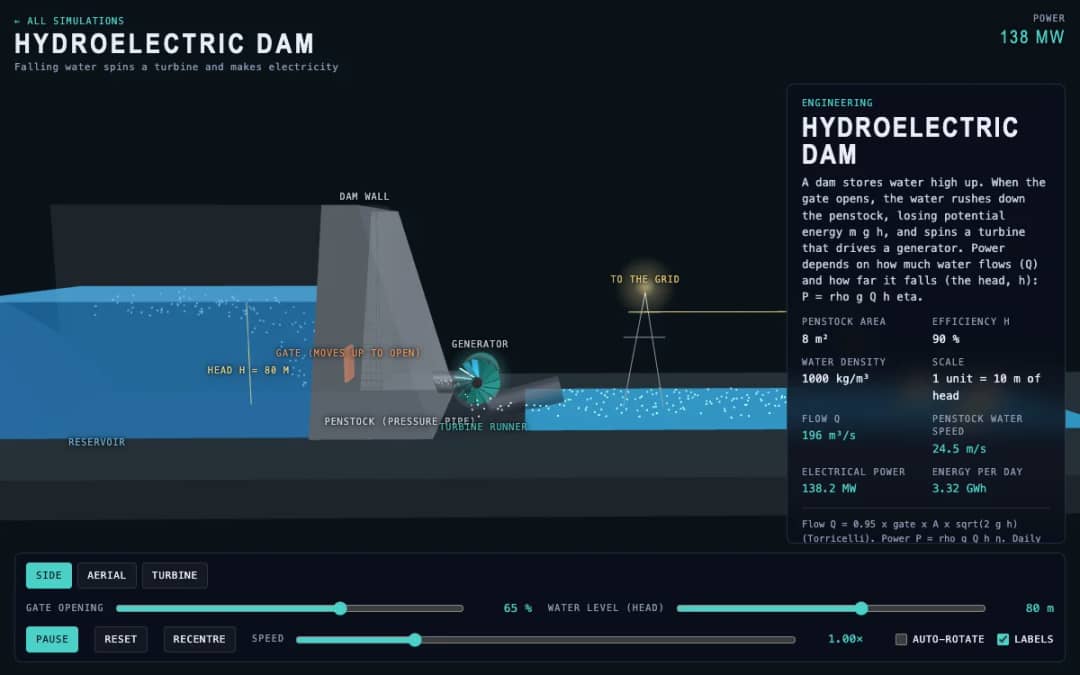
A dam, penstock and turbine are shown in 3D. Students change the gate opening and the water level, called the head, and read the water flow, penstock water speed, electrical power and energy per day.
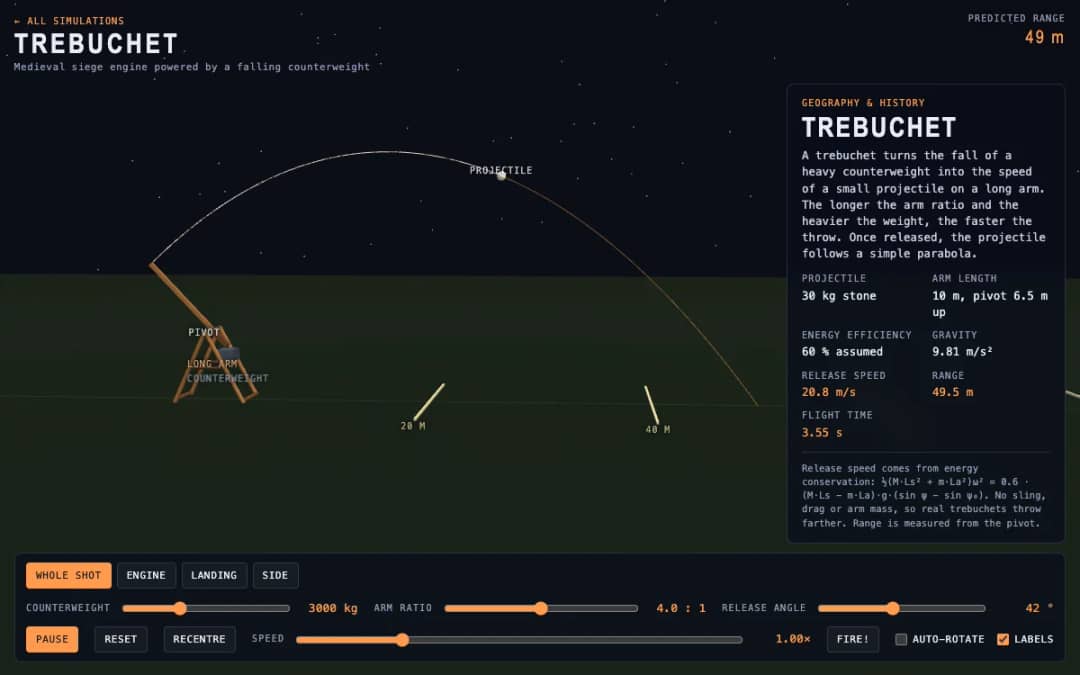
A medieval trebuchet swings its arm in 3D and throws a stone. Students change the counterweight mass, arm ratio and release angle, press Fire, and read the release speed, range and flight time.
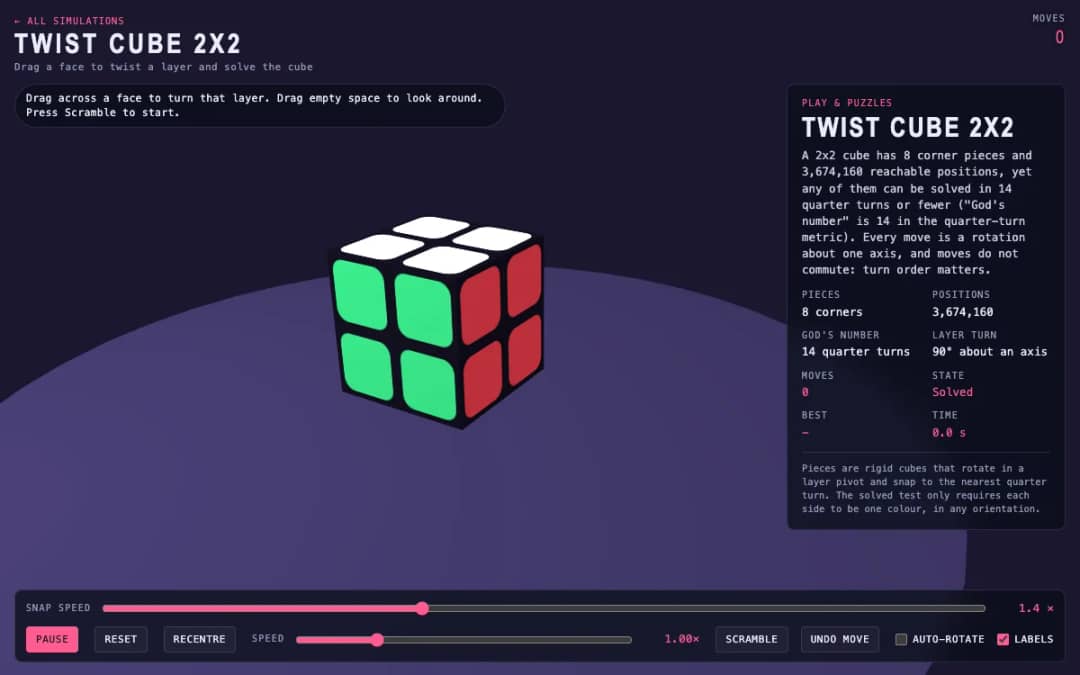
A 3D pocket cube with colored faces sits on screen. Students drag across a face to turn a layer, press Scramble to mix it, and try to solve it while the move counter and timer run.
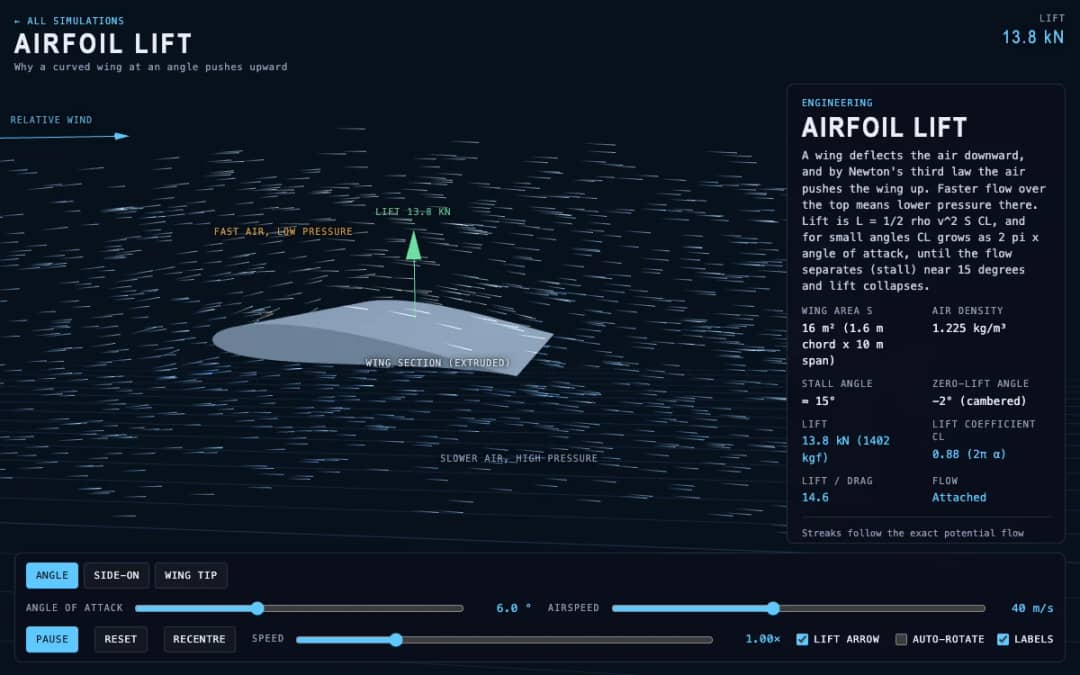
Streaks of air flow around a curved wing in 3D while students change the angle of attack and airspeed. Readouts show lift, the lift coefficient, lift to drag ratio and whether the flow is normal or stalled.
KiwiBee's free teacher workspace brings lesson planning, worksheets, classroom tools, and gradebook together in one place.
Start free and create your first class Home
 All solutions
 Pricing
 About us
 KiwiBee for Non-profits
 Events & webinars
 For big organisations
 For schools
 For centers
 For team leaders
 For teachers
 AI and resources
 Resources
 Printable worksheets
 Lesson Packs
 Interactive simulations
 Teacher tools
 AI studio
 Ideas and research