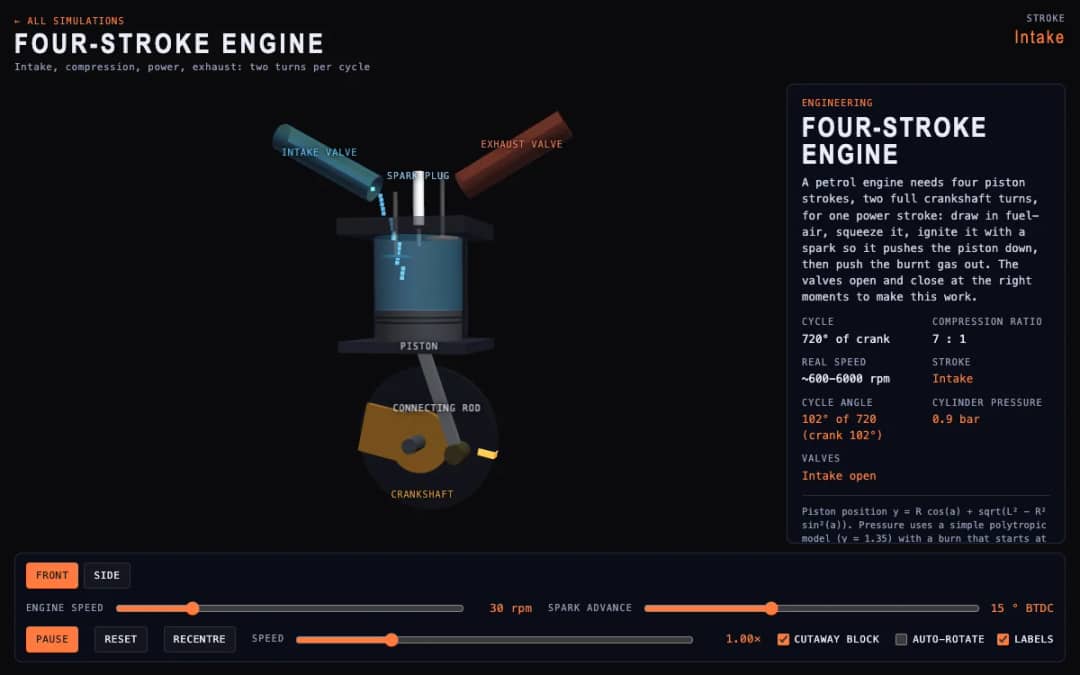
A cutaway engine cylinder shows the piston, valves and spark through the four strokes of the cycle. Students change engine speed and spark advance and watch the stroke, cycle angle, cylinder pressure and valve states update.
—
KiwiBee uses optional Google Analytics, Google Ads, and Meta Pixel cookies to understand adult visitors, measure completed sign-ups, and improve campaigns. Essential cookies always stay on. OpenAI’s ChatGPT Ads Pixel also measures page views and completed enquiries after advertising consent, and may use hashed contact details for matching. Privacy policy
This simulation shows how a medieval trebuchet turns the fall of a heavy counterweight into the speed of a small stone. Students set the counterweight, the arm ratio and the release angle, then press Fire and watch the arm swing and the stone follow a curved path. Readouts give the release speed, the range and the flight time. It brings together energy, projectile motion and levers in a historical setting, so it suits both history and physics lessons and encourages students to tune a design.
Yes. It is free and works in any modern browser, including whiteboards and tablets, with no sign-up.
A heavy counterweight drops on the short end of a long arm. The long end swings fast and releases the stone, so a slow fall of a large mass becomes a fast throw of a small one.
Ignoring air drag and height differences, about 45 degrees gives the longest range. Here the stone is released from above ground level, so the best angle can be slightly lower, which you can test yourself.
Set Counterweight, Arm ratio and Release angle, then press Fire. Read Release speed, Range and Flight time and adjust to throw farther.
Drop it into your LMS, blog, or class site — free.
<iframe src="https://kiwibee.io/en/simulations/trebuchet-3d-simulation/embed" title="Trebuchet | KiwiBee" loading="lazy" allowfullscreen style="width:100%;height:min(70vh,620px);min-height:420px;border:0;border-radius:16px"></iframe>Continue exploring
A cutaway engine cylinder shows the piston, valves and spark through the four strokes of the cycle. Students change engine speed and spark advance and watch the stroke, cycle angle, cylinder pressure and valve states update.
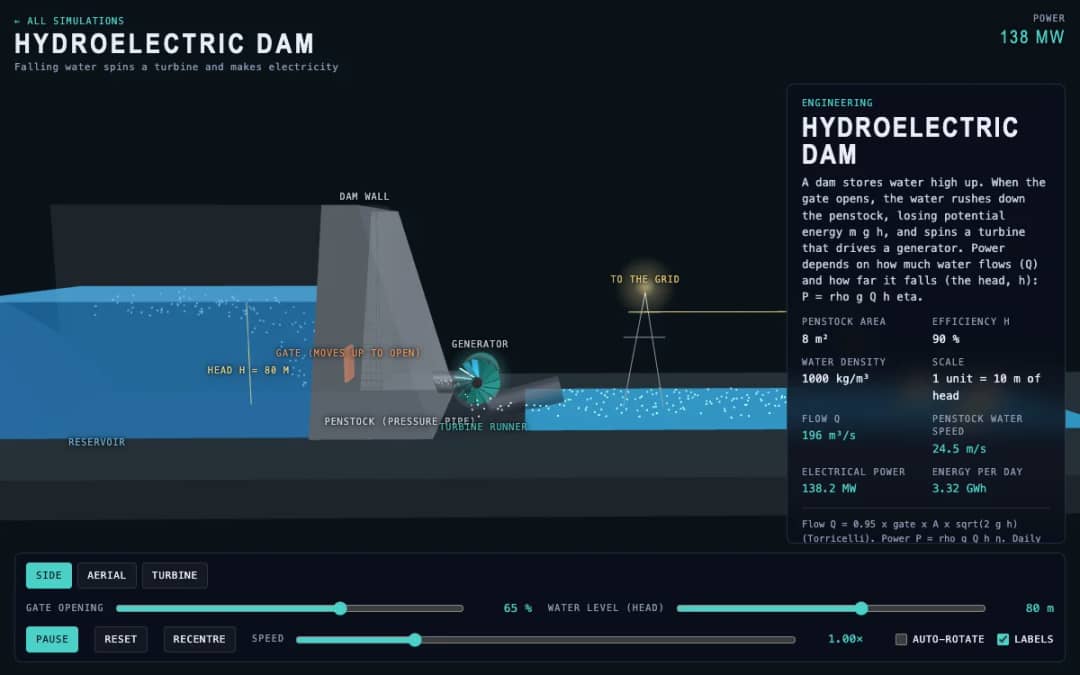
A dam, penstock and turbine are shown in 3D. Students change the gate opening and the water level, called the head, and read the water flow, penstock water speed, electrical power and energy per day.
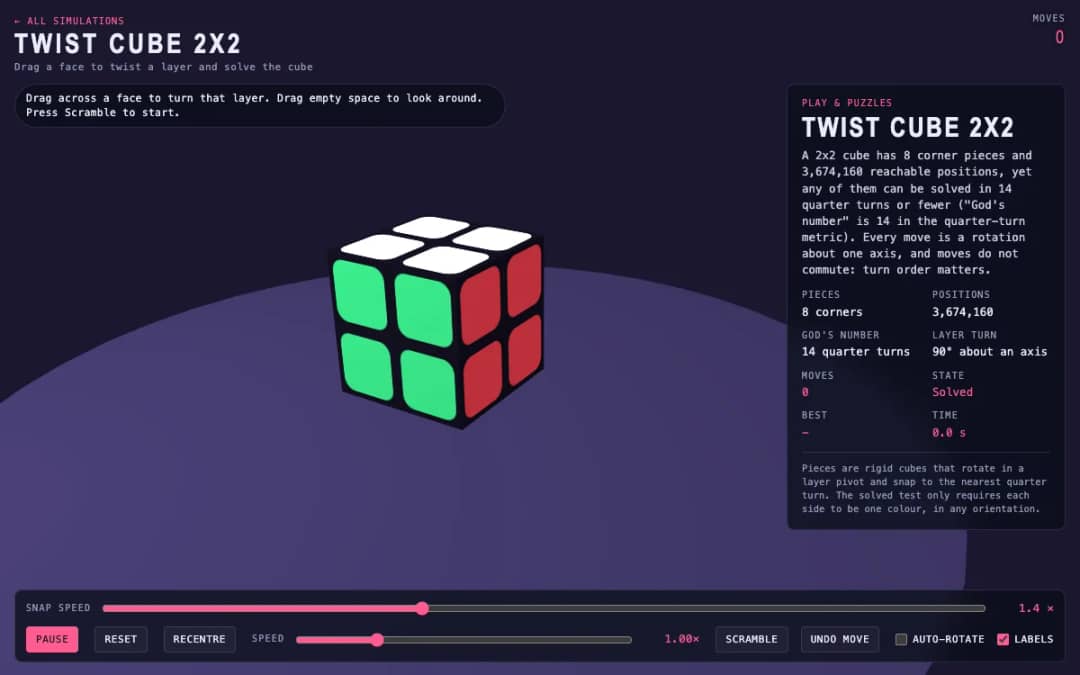
A 3D pocket cube with colored faces sits on screen. Students drag across a face to turn a layer, press Scramble to mix it, and try to solve it while the move counter and timer run.
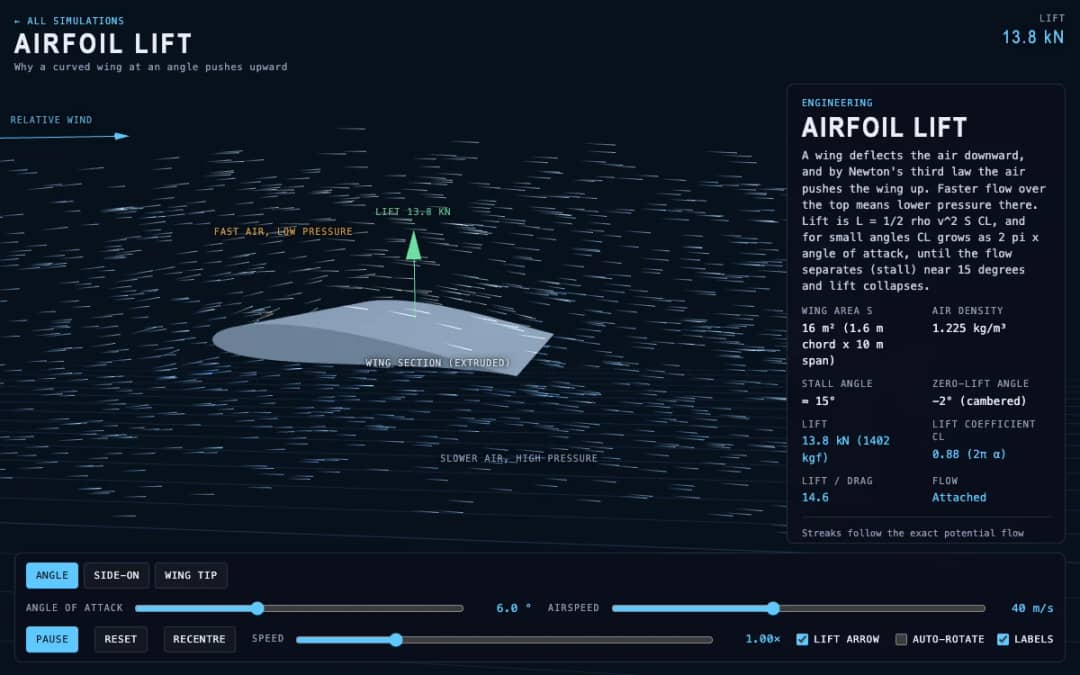
Streaks of air flow around a curved wing in 3D while students change the angle of attack and airspeed. Readouts show lift, the lift coefficient, lift to drag ratio and whether the flow is normal or stalled.
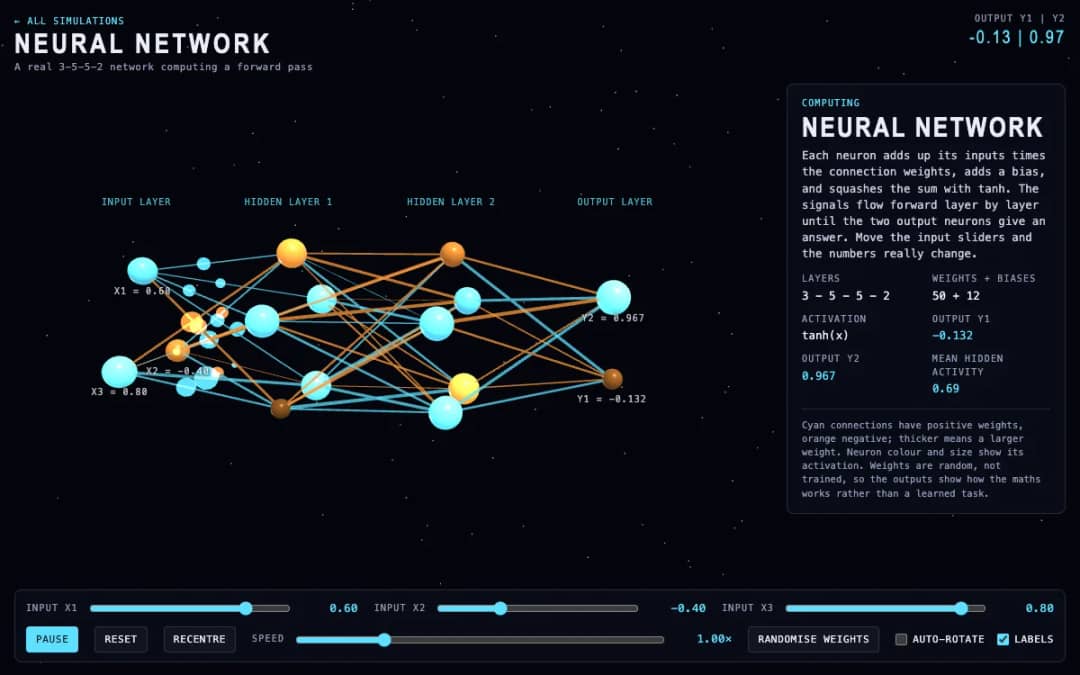
A small neural network with three inputs, two hidden layers of five neurons and two outputs is drawn in 3D. Students move the input sliders and watch neuron colors, connection weights and the two outputs change.
KiwiBee's free teacher workspace brings lesson planning, worksheets, classroom tools, and gradebook together in one place.
Start free and create your first class Home
 All solutions
 Pricing
 About us
 KiwiBee for Non-profits
 Events & webinars
 For big organisations
 For schools
 For centers
 For team leaders
 For teachers
 AI and resources
 Resources
 Printable worksheets
 Lesson Packs
 Interactive simulations
 Teacher tools
 AI studio
 Ideas and research