
Train a small neural network in your browser. Change data, hidden layers and learning rate, then compare its decision boundary, training loss and test loss.
—
KiwiBee uses optional Google Analytics, Google Ads, and Meta Pixel cookies to understand adult visitors, measure completed sign-ups, and improve campaigns. Essential cookies always stay on. OpenAI’s ChatGPT Ads Pixel also measures page views and completed enquiries after advertising consent, and may use hashed contact details for matching. Privacy policy
This simulation shows a real three-five-five-two neural network doing a forward pass. Each neuron adds its weighted inputs and a bias, then squashes the result with the tanh function. Students move three input sliders and see the signals flow through, with cyan connections for positive weights, orange for negative, and neuron color and size showing activation. A button randomizes the weights. The weights are not trained, so the focus is on how the arithmetic works, which makes it an approachable first look at how machine learning models compute.
Yes. It is free and runs in any modern browser, including whiteboards and tablets. There is no sign-up.
No. The weights are random, so the outputs do not mean anything specific. The aim is to show exactly how a network turns inputs into outputs, using the same arithmetic that trained networks use.
Tanh squashes any number into the range from minus 1 to 1. This keeps each neuron output bounded and lets the network represent more than simple straight-line relationships.
Drag the three input sliders and watch the colors and outputs update. Press Randomise weights to create a new network with the same shape.
Drop it into your LMS, blog, or class site — free.
<iframe src="https://kiwibee.io/en/simulations/neural-network-3d-simulation/embed" title="Neural Network | KiwiBee" loading="lazy" allowfullscreen style="width:100%;height:min(70vh,620px);min-height:420px;border:0;border-radius:16px"></iframe>Continue exploring
Train a small neural network in your browser. Change data, hidden layers and learning rate, then compare its decision boundary, training loss and test loss.
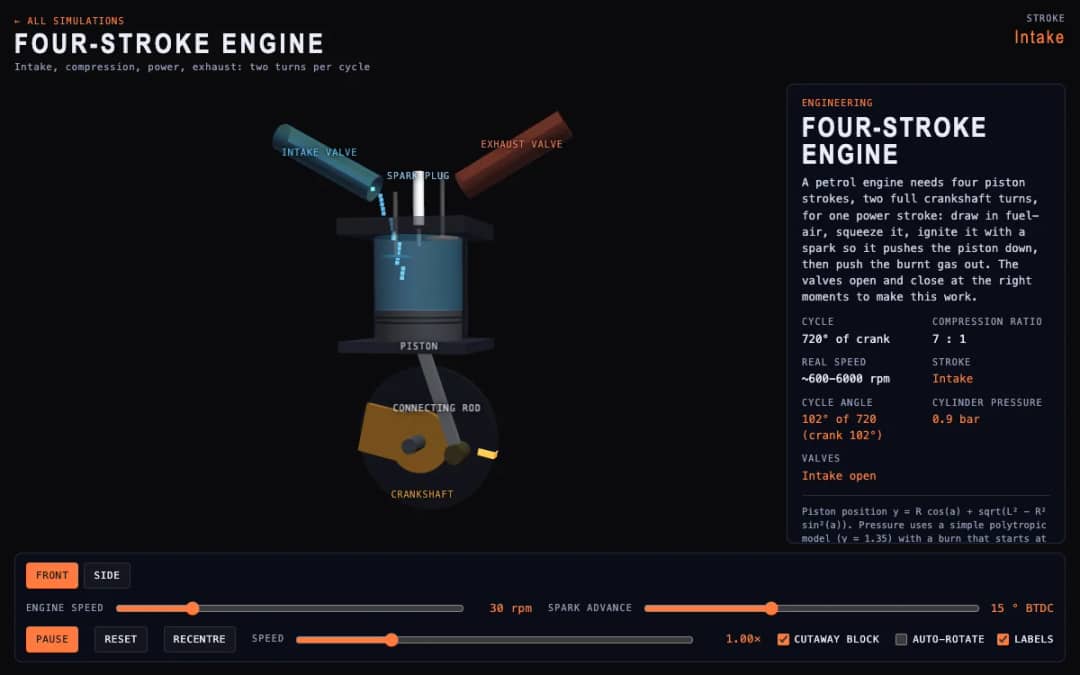
A cutaway engine cylinder shows the piston, valves and spark through the four strokes of the cycle. Students change engine speed and spark advance and watch the stroke, cycle angle, cylinder pressure and valve states update.
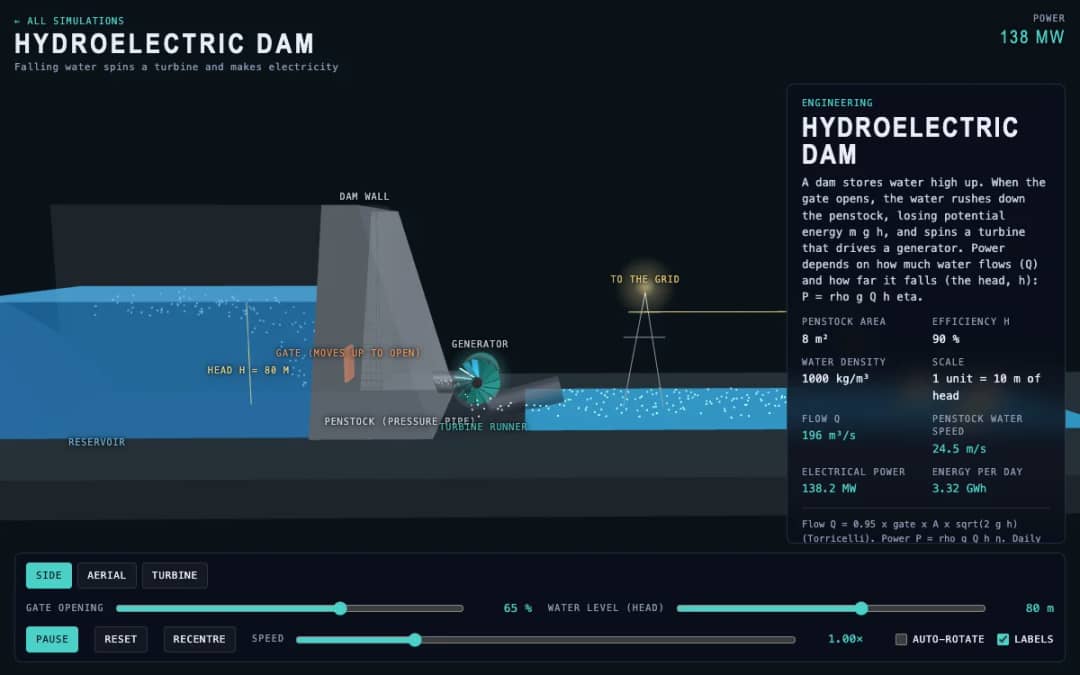
A dam, penstock and turbine are shown in 3D. Students change the gate opening and the water level, called the head, and read the water flow, penstock water speed, electrical power and energy per day.
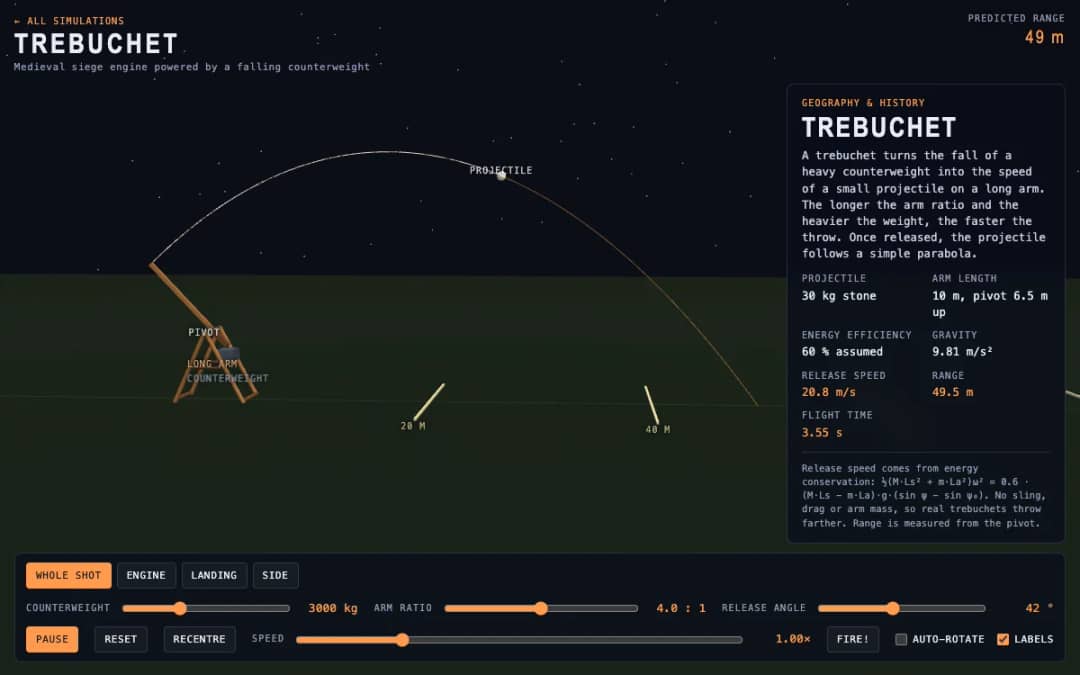
A medieval trebuchet swings its arm in 3D and throws a stone. Students change the counterweight mass, arm ratio and release angle, press Fire, and read the release speed, range and flight time.
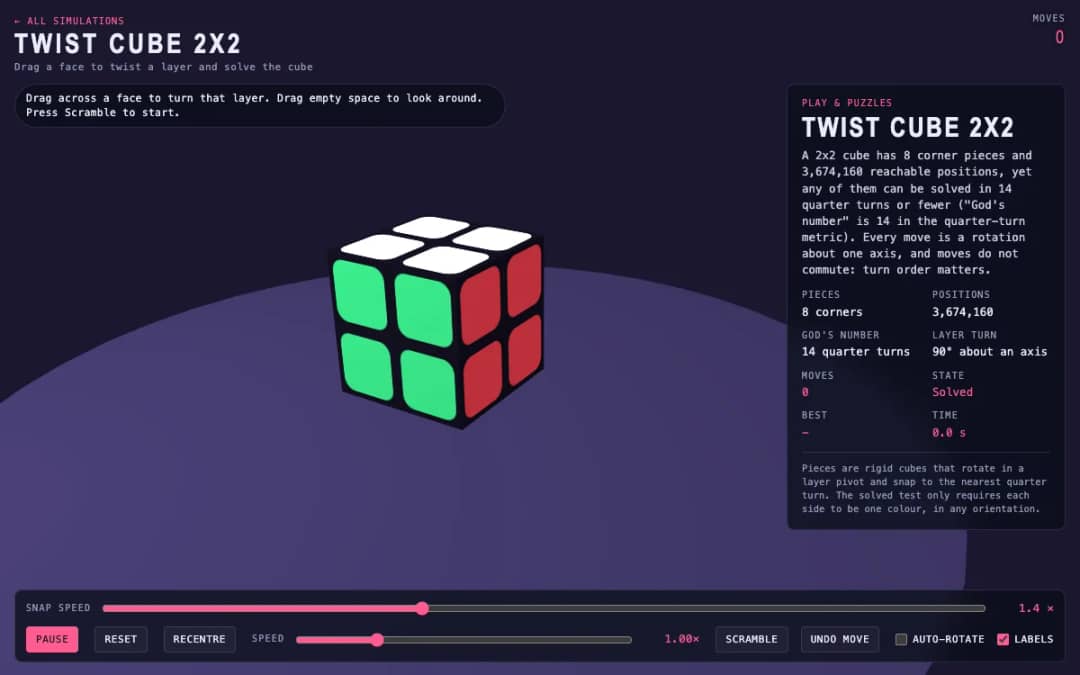
A 3D pocket cube with colored faces sits on screen. Students drag across a face to turn a layer, press Scramble to mix it, and try to solve it while the move counter and timer run.
KiwiBee's free teacher workspace brings lesson planning, worksheets, classroom tools, and gradebook together in one place.
Start free and create your first class Home
 All solutions
 Pricing
 About us
 KiwiBee for Non-profits
 Events & webinars
 For big organisations
 For schools
 For centers
 For team leaders
 For teachers
 AI and resources
 Resources
 Printable worksheets
 Lesson Packs
 Interactive simulations
 Teacher tools
 AI studio
 Ideas and research