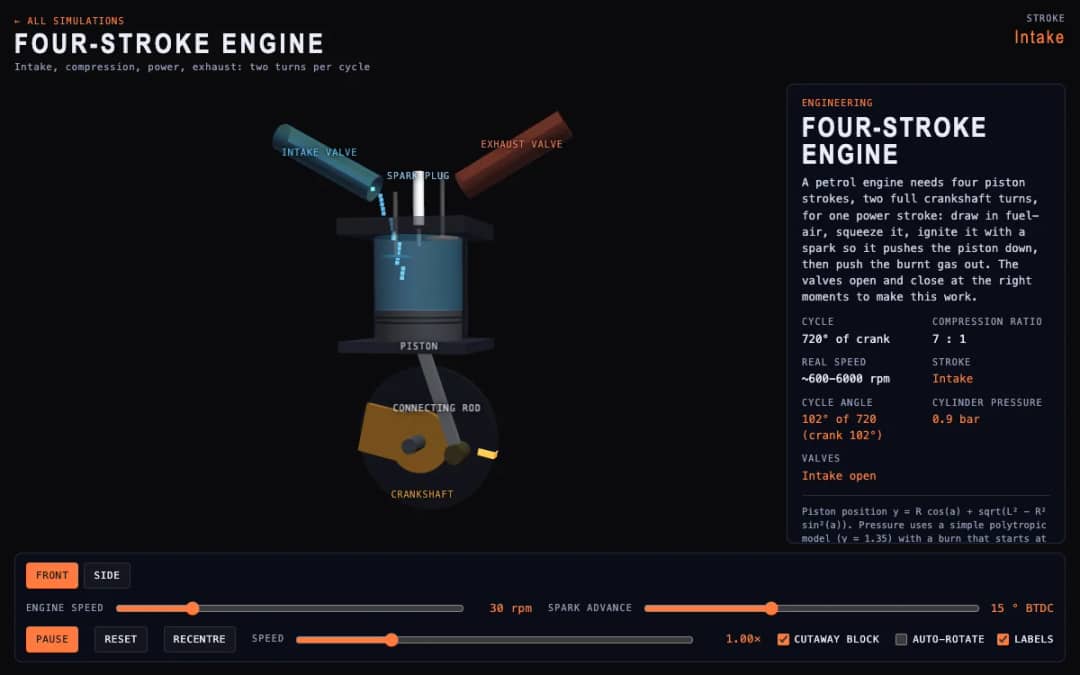
A cutaway engine cylinder shows the piston, valves and spark through the four strokes of the cycle. Students change engine speed and spark advance and watch the stroke, cycle angle, cylinder pressure and valve states update.
—
KiwiBee uses optional Google Analytics, Google Ads, and Meta Pixel cookies to understand adult visitors, measure completed sign-ups, and improve campaigns. Essential cookies always stay on. OpenAI’s ChatGPT Ads Pixel also measures page views and completed enquiries after advertising consent, and may use hashed contact details for matching. Privacy policy
Skyscraper Tuned Mass Damper puts structural dynamics and earthquake engineering side by side on a 3D seismic shake table. On the left stands an unprotected 9-storey reference frame; on the right stands an identical tower equipped with steel X-bracing, optional foundation Base Isolation bearings, and a giant golden Tuned Mass Pendulum Damper (TMD) inspired by Taipei 101's 660-tonne sphere. When the Earthquake frequency slider matches the tower's natural frequency f₀ = 1.20 Hz (Resonance ratio f/f₀ = 1.00), the unprotected tower whips violently into red high-stress sway, while the golden TMD swings out of phase with the roof to absorb kinetic energy and cut sway by nearly half.
A Tuned Mass Damper is a heavy pendulum or spring-mounted mass suspended near the top of a skyscraper and tuned to the building's natural sway frequency f₀. When wind or earthquake waves push the building left, inertia makes the damper lag ~90° behind and pull right, canceling much of the sway.
Every building has a natural sway period determined by its height, mass, and stiffness. When ground waves push at that exact rhythm, each cycle adds energy in phase with the existing sway, amplifying roof displacement several times larger than the ground motion itself.
Taipei 101 in Taiwan houses a famous 660-metric-ton golden steel pendulum sphere suspended between the 87th and 92nd floors. Visible to visitors, it reduces building sway from typhoons and earthquakes by up to 40%.
Instead of absorbing sway at the top, laminated rubber-and-lead Base Isolators sit between the foundation and the ground. They make the support flexible, shifting the building's natural frequency below the earthquake's main energy band so the ground slides underneath while the tower stays nearly still.
Drop it into your LMS, blog, or class site — free.
<iframe src="https://kiwibee.io/en/simulations/earthquake-tuned-mass-damper-3d-simulation/embed" title="Skyscraper Tuned Mass Damper | KiwiBee" loading="lazy" allowfullscreen style="width:100%;height:min(70vh,620px);min-height:420px;border:0;border-radius:16px"></iframe>Continue exploring
A cutaway engine cylinder shows the piston, valves and spark through the four strokes of the cycle. Students change engine speed and spark advance and watch the stroke, cycle angle, cylinder pressure and valve states update.
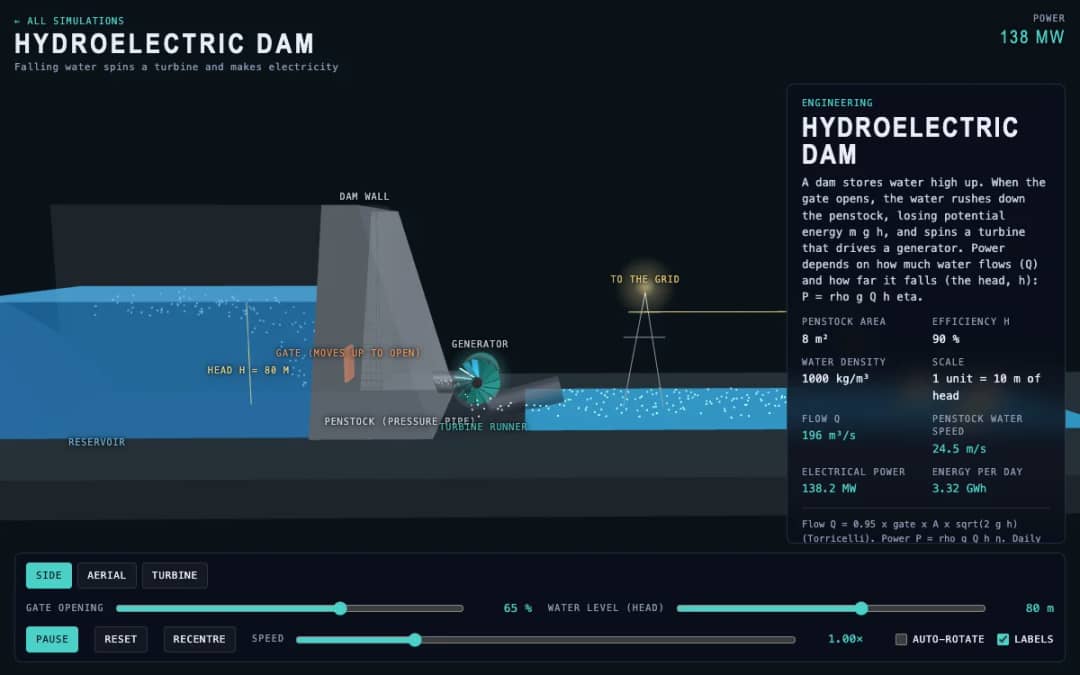
A dam, penstock and turbine are shown in 3D. Students change the gate opening and the water level, called the head, and read the water flow, penstock water speed, electrical power and energy per day.
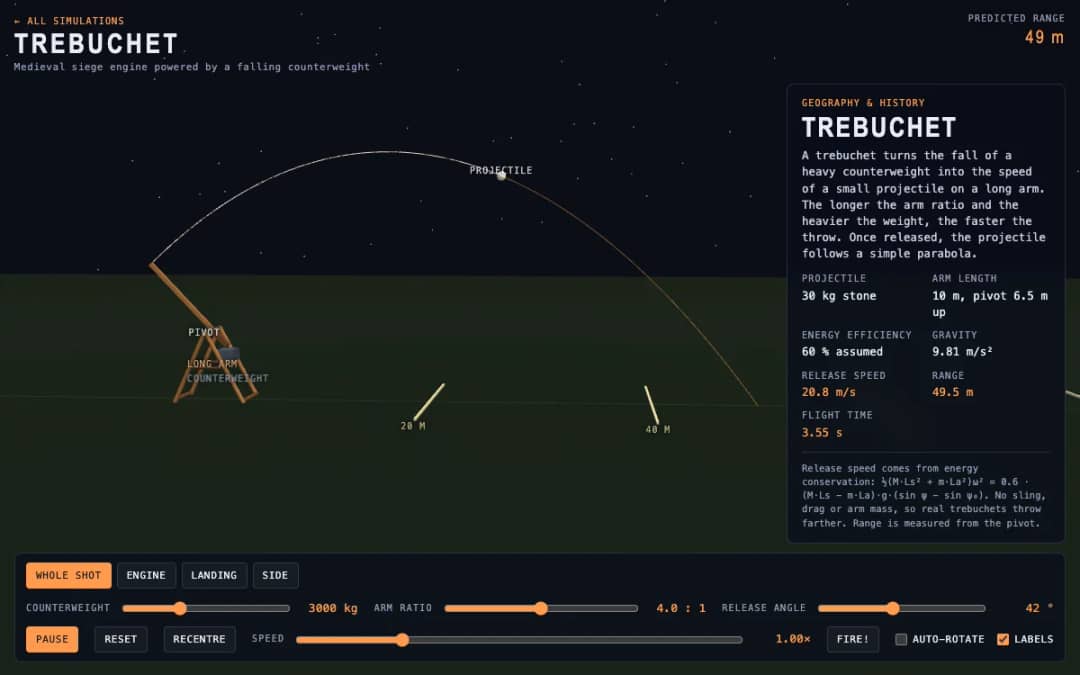
A medieval trebuchet swings its arm in 3D and throws a stone. Students change the counterweight mass, arm ratio and release angle, press Fire, and read the release speed, range and flight time.
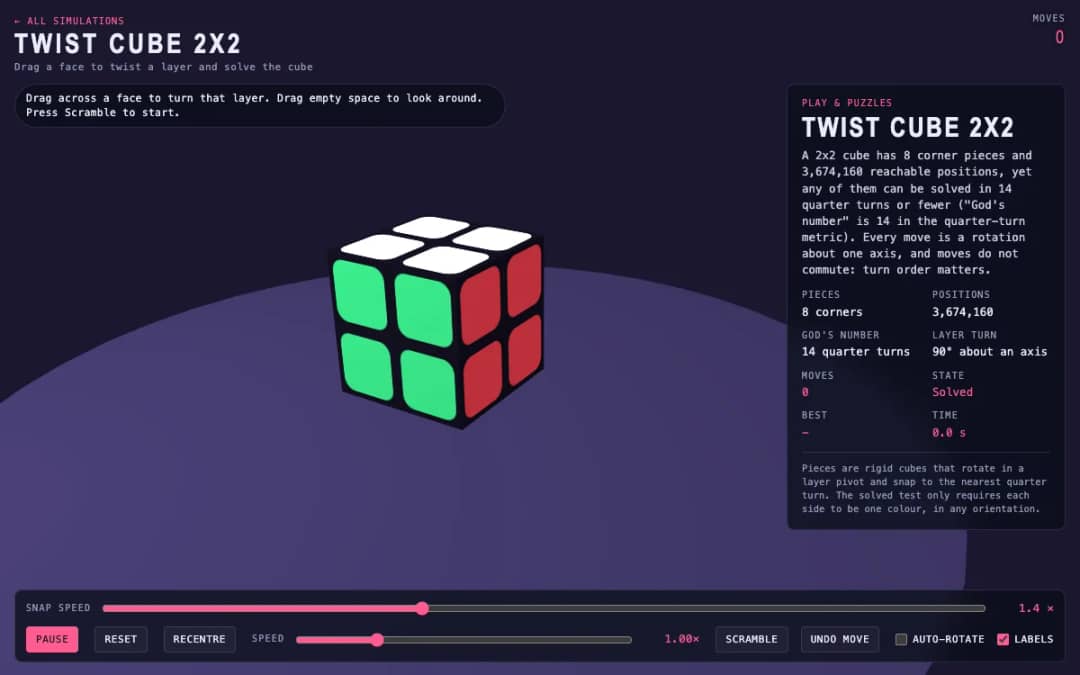
A 3D pocket cube with colored faces sits on screen. Students drag across a face to turn a layer, press Scramble to mix it, and try to solve it while the move counter and timer run.
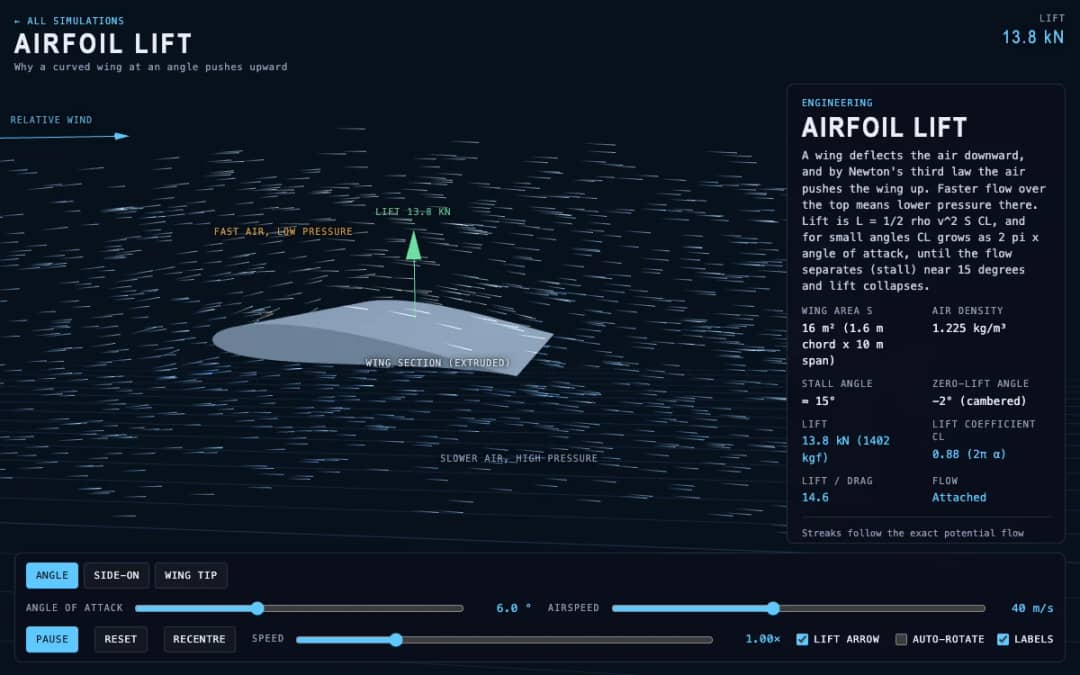
Streaks of air flow around a curved wing in 3D while students change the angle of attack and airspeed. Readouts show lift, the lift coefficient, lift to drag ratio and whether the flow is normal or stalled.
KiwiBee's free teacher workspace brings lesson planning, worksheets, classroom tools, and gradebook together in one place.
Start free and create your first class Home
 All solutions
 Pricing
 About us
 KiwiBee for Non-profits
 Events & webinars
 For big organisations
 For schools
 For centers
 For team leaders
 For teachers
 AI and resources
 Resources
 Printable worksheets
 Lesson Packs
 Interactive simulations
 Teacher tools
 AI studio
 Ideas and research