Printable template
Verb Conjugation Table
Blank pronoun-by-tense grid.
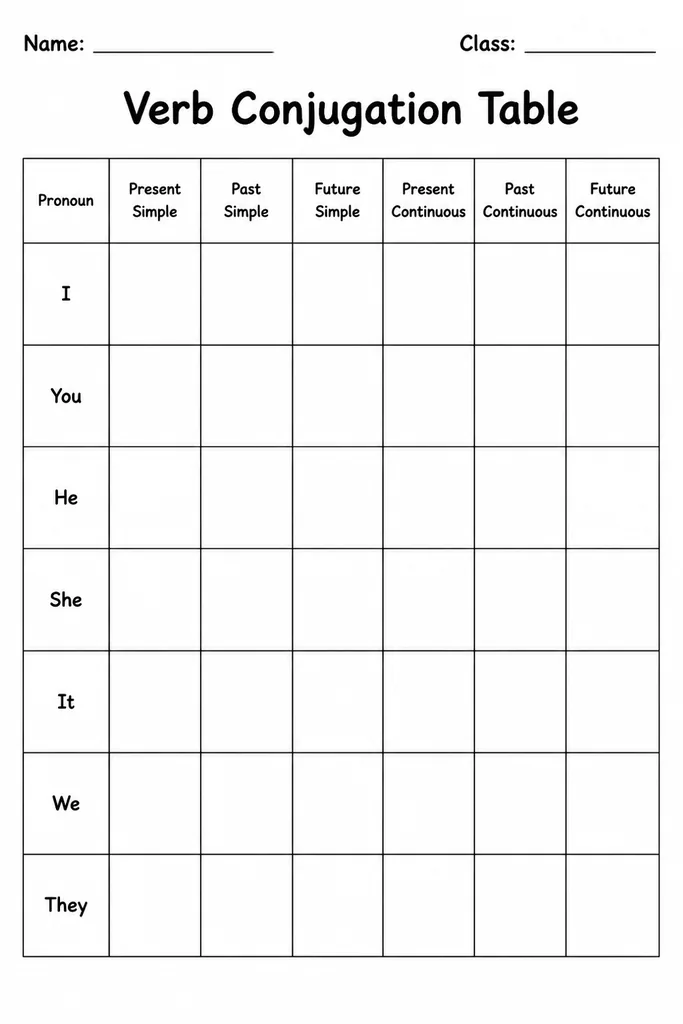
The Verb Conjugation Table is a blank pronoun-by-tense grid designed for Spanish students in Grades 4–8 who are learning to conjugate verbs across multiple tenses and persons. The rows list the six Spanish subject pronouns—yo, tú, él/ella, nosotros, vosotros, ellos/ellas—while the columns span tenses such as present, preterite, imperfect, and future. Students write in the infinitive at the top and then complete every cell by conjugating the verb correctly. This template works equally well for first exposure and for timed review drills. Teachers project the blank grid on a whiteboard while students race to fill in their printed copy, or assign it as homework after introducing a new tense. Because the structure stays identical across uses, students quickly recognise the layout and can navigate a conjugation table in a textbook or exam with confidence.
Learning objectives
- Practise conjugating Spanish verbs across all six persons
- Compare endings across multiple tenses in one view
- Spot patterns in regular and irregular verb conjugations
- Build accuracy and speed for written grammar tasks
- Prepare for standardised Spanish assessments and exams
How to use this template
- Download and print one grid per verb or per study session.
- Write the infinitive form of the target verb in the header field.
- Label each tense column at the top using the tenses your class is currently studying.
- Complete each cell by conjugating the verb for the matching pronoun and tense.
- Review by covering one column at a time and recalling the conjugations from memory.
Classroom & home ideas
- Use as a warm-up: project a blank grid and call on students to fill in one cell each until the table is complete.
- Assign one grid per irregular verb so students build a personal reference binder over the school year.
- Have student pairs quiz each other—one names a pronoun and tense combination, the other writes the conjugation from memory.
- Run a conjugation relay race: each row is assigned to a team member who must write their row correctly before passing to the next.
- Colour-code cells by ending type (e.g., -ar endings in blue, -er/-ir in orange) to highlight grammatical patterns visually.
Skills practised
Frequently asked questions
How many tenses fit on one grid?
The default template accommodates four tense columns comfortably. If you need more, print two sheets side by side or reduce font size and reprint.
Is it suitable for irregular verbs like ser and tener?
Yes—the grid is completely blank, so students simply write the irregular forms as they would for any verb. It is a great way to highlight how irregular forms break expected patterns.
Can this be used as a quiz or assessment?
Teachers commonly pre-fill the infinitive and one or two cells as anchors, then use the rest as a short written quiz. No other modifications are needed.
What grade is it most appropriate for?
Grades 4–5 can use it for present and simple future tenses. Grades 6–8 benefit from adding preterite, imperfect, and conditional columns as their course progresses.
Likes & comments
See what other teachers think and share a helpful note.
Create more worksheets in our Worksheet Studio
Generate fresh worksheets for any grade, topic, and language — free.
Open the Worksheet StudioRelated worksheets
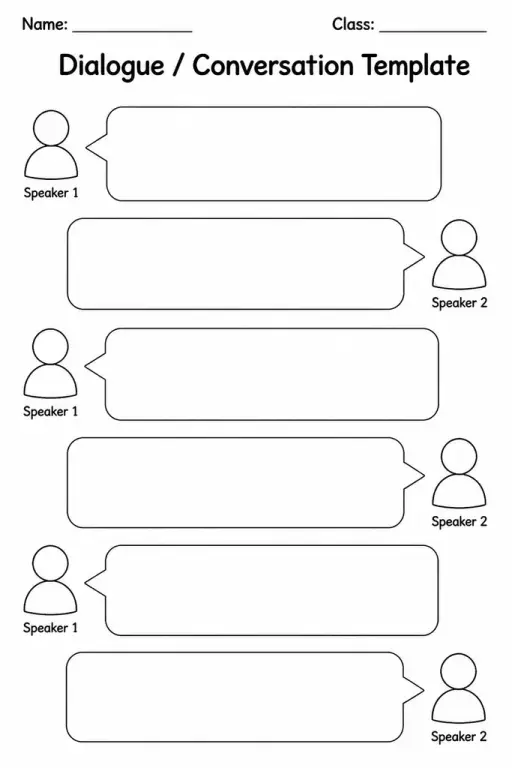
Dialogue / Conversation Template
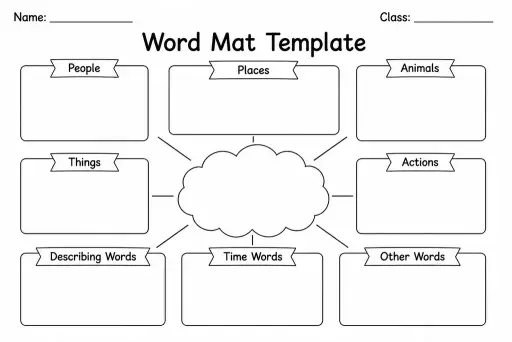
Word Mat Template
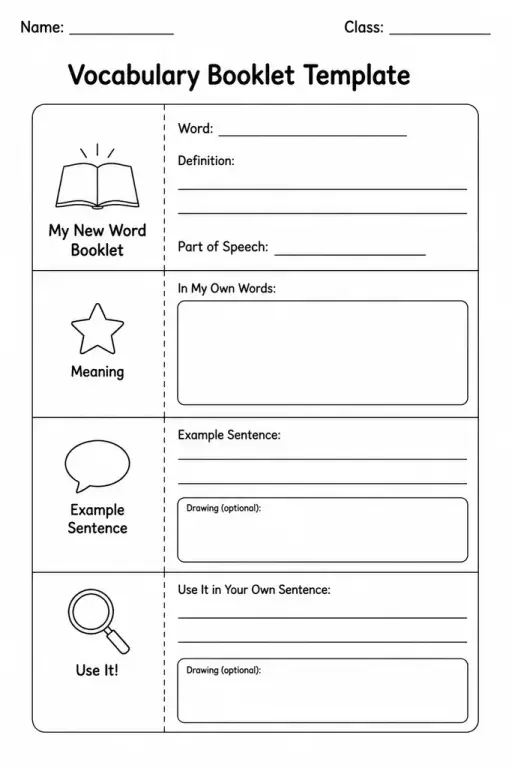
Vocabulary Booklet Template
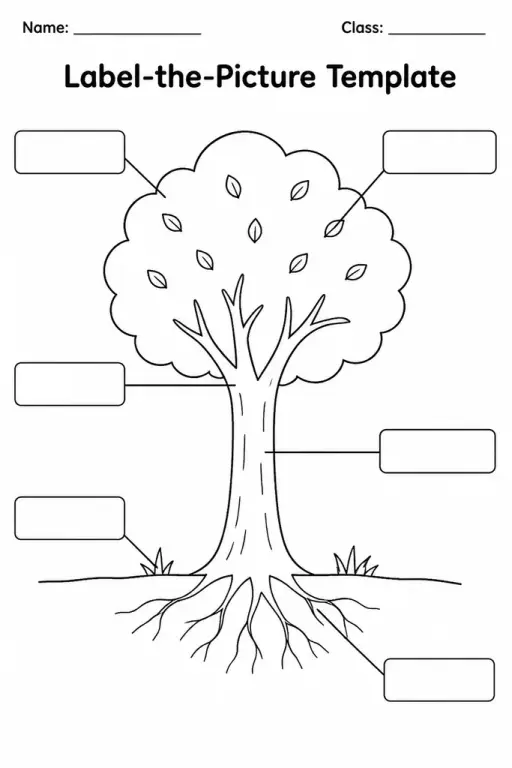
Label-the-Picture Template
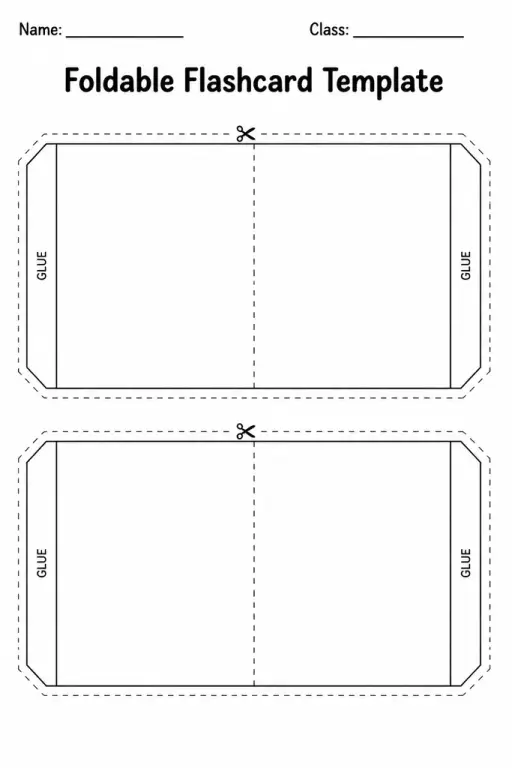
Foldable Flashcard Template
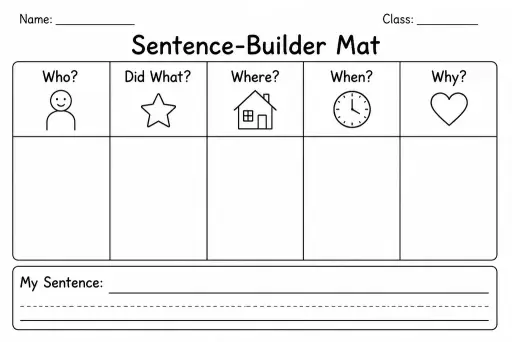
Sentence-Builder Mat
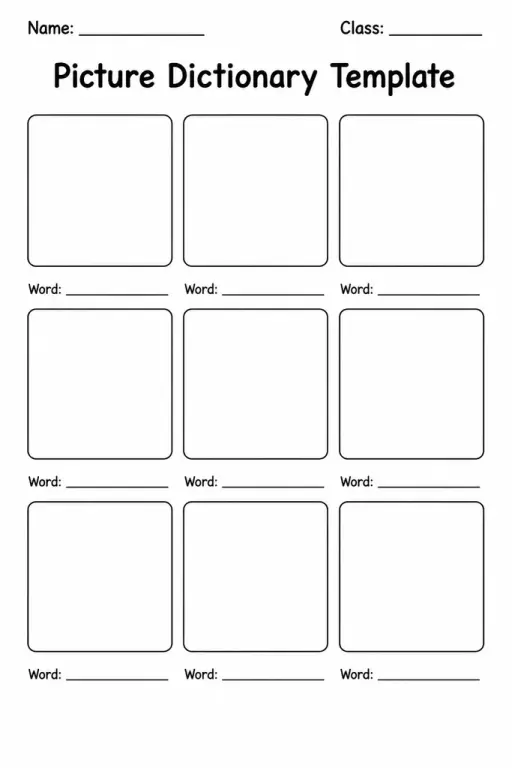
Picture Dictionary Template
 For big organisations
 For schools
 For centers
 For team leaders
 For teachers
 AI and resources
 Printable worksheets
 Interactive simulations
 Teacher tools
 AI studio
 Ideas and research