
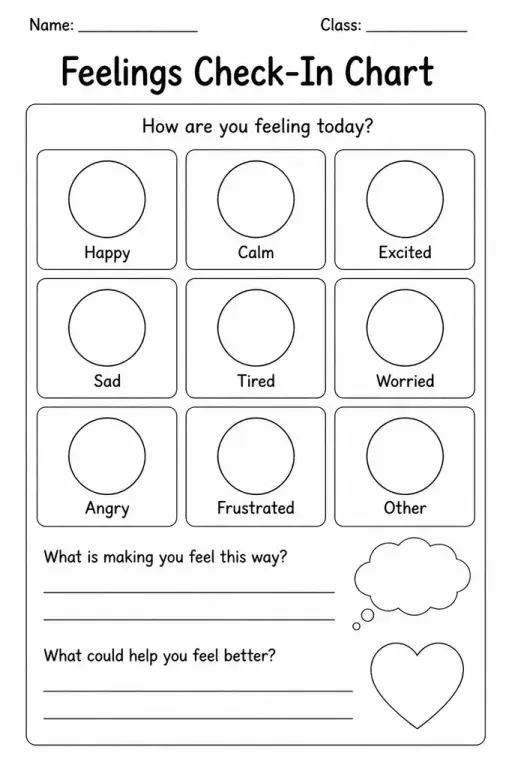
Zones Check-In Template
SEL & Wellbeing Templates
Ages 4–11
——
KiwiBee uses optional Google Analytics, Google Ads, and Meta Pixel cookies to understand adult visitors, measure completed sign-ups, and improve campaigns. Essential cookies always stay on. OpenAI’s ChatGPT Ads Pixel also measures page views and completed enquiries after advertising consent, and may use hashed contact details for matching. Privacy policy

The Mood Tracker Template is a blank weekly or monthly grid where students record their emotional state at a consistent time each day, building a personal data set about their inner life over time. Each cell in the grid is left empty so students can shade, color, number, or symbol-code it in any system that feels meaningful to them—turning self-reflection into a simple, private ritual. Geared toward grades 2–8, the template suits counseling caseloads, advisory periods, morning meetings, and independent journals alike. Older students in middle school find the monthly view especially compelling when they begin to notice correlations between their moods and sleep, exercise, social events, or school stress. The blank format gives each student full ownership of their tracking system, which research consistently links to higher engagement and more honest self-reporting than pre-coded scales.
That depends on the classroom culture. Many teachers make sharing optional, which protects privacy and leads to more honest tracking. Others use a brief partner-share of patterns only, not the specific moods.
End-of-day works well for a full-day summary; morning check-ins work better for setting a mindful tone. The key is consistency—same time every day produces the most useful data.
Weekly grids are better for grades 2–4 because the shorter time frame is more concrete. Monthly layouts suit grades 5–8 who can sustain the habit and benefit from seeing longer patterns.
Yes. A printed monthly tracker on the fridge with a shared family color key makes a gentle, low-pressure tool for children who struggle to express emotions verbally.

See what other teachers think and share a helpful note.
Generate a fresh worksheet for any grade, topic and language. Free.
 Home
Home All solutions
 Pricing
 About us
 KiwiBee for Non-profits
 Events & webinars
 For big organisations
 For schools
 For centers
 For team leaders
 For teachers
 AI and resources
 Resources
 Printable worksheets
 Lesson Packs
 Interactive simulations
 Teacher tools
 AI studio
 Ideas and research