
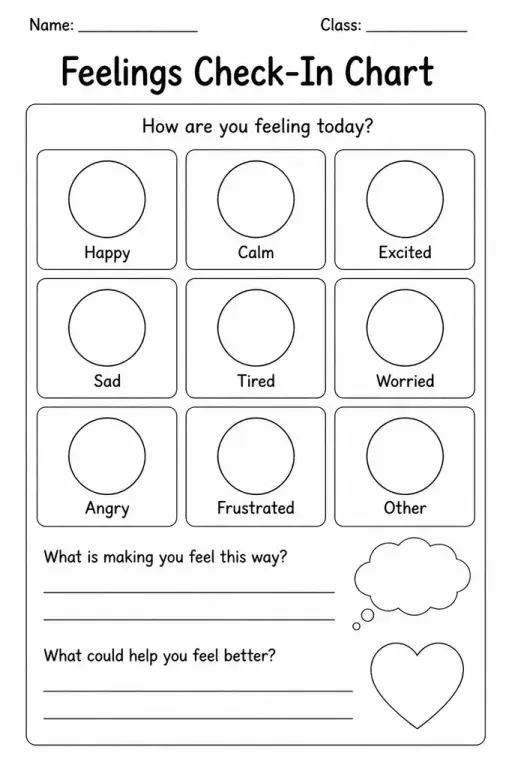
Zones Check-In Template
SEL & Wellbeing Templates
Ages 4–11
——
KiwiBee uses optional Google Analytics, Google Ads, and Meta Pixel cookies to understand adult visitors, measure completed sign-ups, and improve campaigns. Essential cookies always stay on. OpenAI’s ChatGPT Ads Pixel also measures page views and completed enquiries after advertising consent, and may use hashed contact details for matching. Privacy policy

The Mindfulness Colouring Frame is a blank printable page surrounded by a decorative, patterned border that creates a calm, focused colouring space in the centre. The border is designed with enough visual interest — geometric shapes, flowing lines, or nature-inspired elements — to keep hands and eyes occupied, while the open interior can be left blank for quiet free-colouring or used to contain a reflection prompt, a drawing, or a few written words. Suitable for Kindergarten through Grade 8, it crosses age groups because the activity scales naturally from pure colouring for young children to a combined writing-and-colouring mindfulness break for older students. Teachers reach for it as a five-minute transition tool between high-focus lessons, a morning settle-in activity, or a quiet reward at the end of the week. School counselors use it during calm-down sessions. Parents print it for long car trips or screen-free afternoons when a child needs a slow, sensory reset.
The template features a single decorative border with a repeating geometric or nature-inspired pattern that is complex enough to be engaging but not so dense that it is stressful to colour. The open centre can be used freely or left completely blank.
Yes. Colouring is one of the most accessible mindfulness entry points because it gives the hands something to do, which helps students who struggle to sit still during breath-only exercises. The template does not require any prior mindfulness experience.
Absolutely. Open the PDF in a programme that supports annotation and type a word, quote, or question into the centre space before printing. This makes the template versatile for themed units — a gratitude prompt for November, a growth-mindset quote for January, and so on.
Coloured pencils produce the most mindful experience because they require a lighter touch and slower movement. Crayons and thin markers also work well. Avoid heavy marker bleeding by printing on standard 80 g/m² copy paper or slightly heavier cardstock.
See what other teachers think and share a helpful note.
Generate a fresh worksheet for any grade, topic and language. Free.
 Home
Home All solutions
 Pricing
 About us
 KiwiBee for Non-profits
 Events & webinars
 For big organisations
 For schools
 For centers
 For team leaders
 For teachers
 AI and resources
 Resources
 Printable worksheets
 Lesson Packs
 Interactive simulations
 Teacher tools
 AI studio
 Ideas and research