
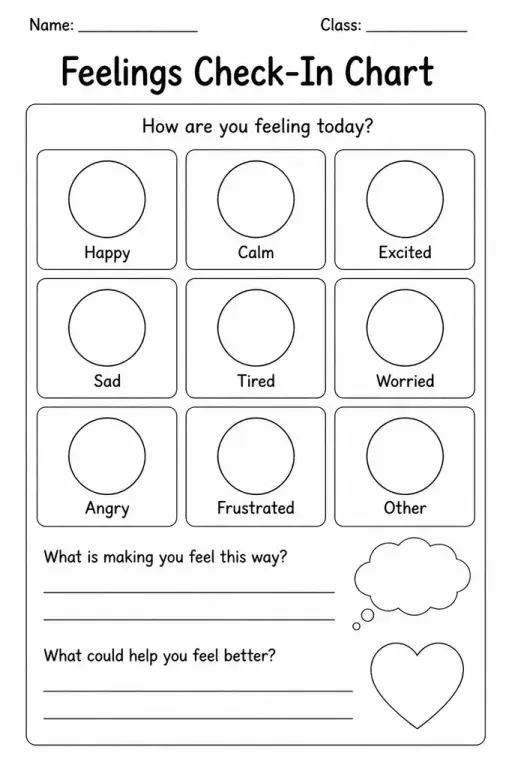
Zones Check-In Template
SEL & Wellbeing Templates
Ages 4–11
——
KiwiBee uses optional Google Analytics, Google Ads, and Meta Pixel cookies to understand adult visitors, measure completed sign-ups, and improve campaigns. Essential cookies always stay on. OpenAI’s ChatGPT Ads Pixel also measures page views and completed enquiries after advertising consent, and may use hashed contact details for matching. Privacy policy

The Food Diary Template is a blank daily log sheet where students in grades 2–8 record every food and drink consumed across breakfast, lunch, dinner, and snacks. Each row provides space to note the item, approximate portion, time of day, and—if the teacher chooses—a brief reflection on hunger or energy levels. Unlike a pre-filled reference chart, this is a personal record that students complete themselves, giving teachers a candid snapshot of real eating habits to anchor health conversations. It fits naturally into nutrition units, wellbeing programmes, and PSHE or science lessons. Used over three to five consecutive days, the diary reveals patterns that spark meaningful class discussions about balance, hydration, and energy.
Sharing should always be opt-in. Many teachers collect diaries anonymously or discuss aggregated class trends rather than individual entries to respect privacy and avoid food-related sensitivities.
Three to five days captures enough variation to identify patterns. A single day can miss weekend or special-occasion differences, so a school-week run is the most informative.
Yes—the blank format accommodates any diet. Students simply log what they actually eat; there is no pre-filled 'expected' food list that might exclude certain dietary needs.
Definitely. Grades 5–8 can use the diary as primary data collection for an inquiry into the relationship between diet and energy, sleep quality, or physical performance.

See what other teachers think and share a helpful note.
Generate a fresh worksheet for any grade, topic and language. Free.
 Home
Home All solutions
 Pricing
 About us
 KiwiBee for Non-profits
 Events & webinars
 For big organisations
 For schools
 For centers
 For team leaders
 For teachers
 AI and resources
 Resources
 Printable worksheets
 Lesson Packs
 Interactive simulations
 Teacher tools
 AI studio
 Ideas and research