
Zones Check-In Template
SEL & Wellbeing Templates
Ages 4–11
——
KiwiBee uses optional Google Analytics, Google Ads, and Meta Pixel cookies to understand adult visitors, measure completed sign-ups, and improve campaigns. Essential cookies always stay on. OpenAI’s ChatGPT Ads Pixel also measures page views and completed enquiries after advertising consent, and may use hashed contact details for matching. Privacy policy

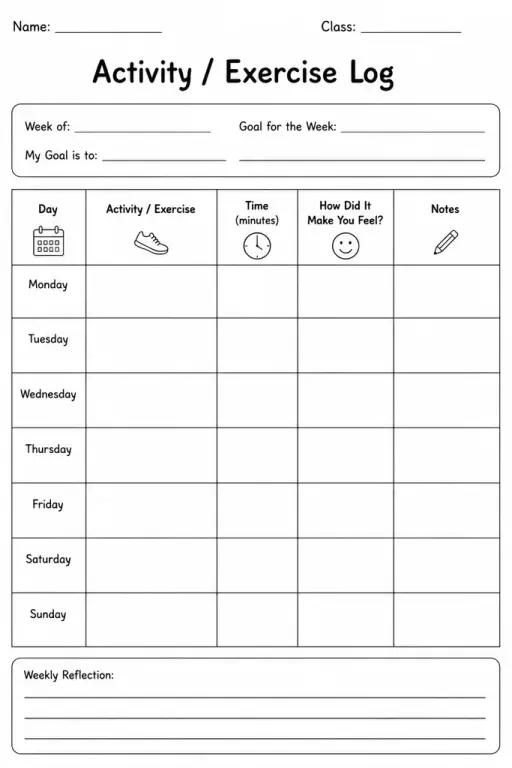
The Fitness Tracker Template is a blank weekly activity log printable that students fill in to record their physical activities, duration, and how their body felt each day. Organized in a simple grid with rows for each day and columns for activity type, minutes, intensity, and a brief reflection, it turns movement into a visible, data-driven habit. Grades 2–8 PE and SEL teachers use it to open conversations about consistency, effort, and personal goal-setting rather than performance comparison. Students see their own week at a glance and notice patterns — rest days, busy-week dips, or the mood boost after a long walk. Parents use the template to track after-school sports alongside screen time. Because every cell is blank, the sheet resets each week with a new print or a laminated wipe-down.
The blank template has rows for all 7 days so students can log weekend activities too, giving a complete picture of their weekly movement.
Any intentional movement — organized sport, bike ride, dance, walking the dog, or playground time. Teachers set the minimum duration that counts, typically 10 minutes.
Yes, with brief teacher modeling. For younger students, simplify by focusing on activity type and a happy/neutral/tired face instead of a written reflection.
The blank columns are unlabeled so teachers can add a steps column or device-data field before printing, depending on what tracking tools the class uses.

See what other teachers think and share a helpful note.
Generate a fresh worksheet for any grade, topic and language. Free.
 Home
Home All solutions
 Pricing
 About us
 KiwiBee for Non-profits
 Events & webinars
 For big organisations
 For schools
 For centers
 For team leaders
 For teachers
 AI and resources
 Resources
 Printable worksheets
 Lesson Packs
 Interactive simulations
 Teacher tools
 AI studio
 Ideas and research