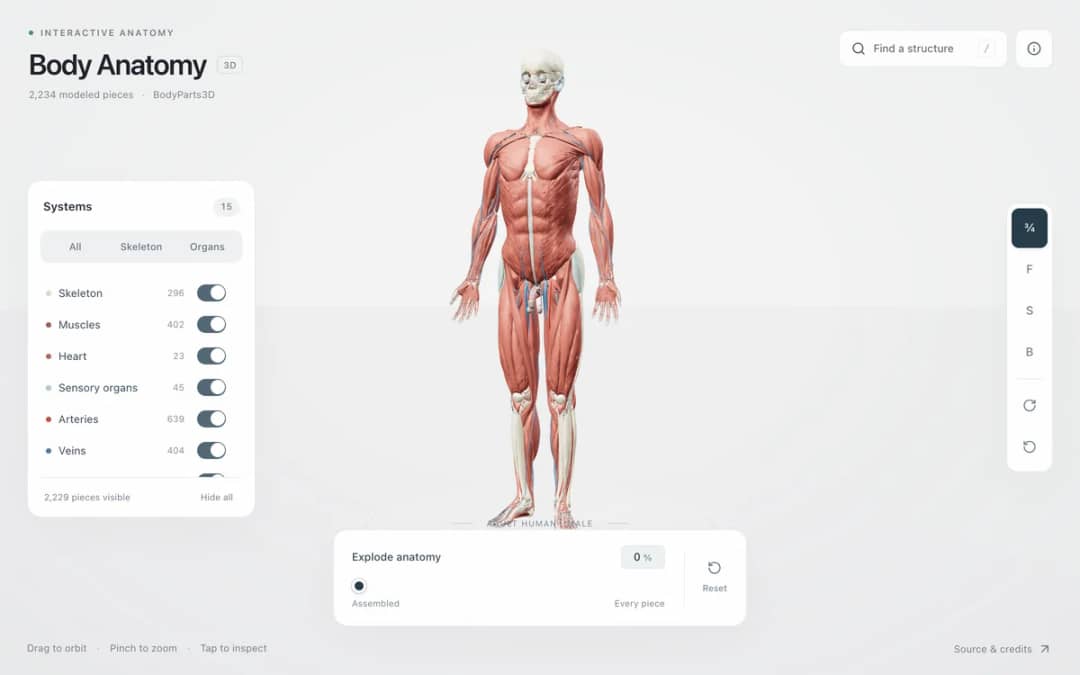
Explore an adult male reference body in 3D. Reveal 14 anatomical systems, search thousands of named structures, isolate organs, and pull 2,209 modeled pieces apart to see how the body is organized.
—
KiwiBee uses optional Google Analytics, Google Ads, and Meta Pixel cookies to understand adult visitors, measure completed sign-ups, and improve campaigns. Essential cookies always stay on. OpenAI’s ChatGPT Ads Pixel also measures page views and completed enquiries after advertising consent, and may use hashed contact details for matching. Privacy policy
Polymerisation & Plastics is an interactive 3D materials-chemistry simulation exploring how monomer structure and inter-chain bonding govern the mechanical properties of plastics and rubbers. Three parallel macromolecular chains are anchored between tensile testing clamps. Students can switch between Addition polymerisation (polyethene chains formed by opening C=C double bonds), Condensation polymerisation (alternating co-monomer Nylon chains that release H2O molecules), and Cross-linked Elastomer networks connected by golden covalent disulfide bridges. Dragging the pull clamp stretches the coiled chains outward; releasing the clamp demonstrates how cross-links pull elastomer chains back to their original length while un-crosslinked thermoplastics can slide and deform.
In addition polymerisation, unsaturated alkene monomers (such as ethene) open their carbon-carbon double bonds to join into a single long chain with 100% atom economy and no by-products. In condensation polymerisation, monomers with two functional groups react and eliminate a small molecule such as water (H2O) or HCl at each linkage.
Thermoplastics consist of separate polymer chains held together only by weak intermolecular forces that are easily overcome when heated, allowing chains to slide past one another. Thermosets have extensive covalent cross-links tying all chains into one giant 3D network that cannot melt without charring covalent bonds.
Natural rubber consists of coiled polyisoprene chains that slide past each other when pulled warm. Heating rubber with sulfur (vulcanisation) forms covalent disulfide (-S-S-) cross-links between adjacent chains so the chains can uncoil when stretched but snap back to their original positions when released.
The degree of polymerisation (n) is the number of repeating monomer units linked together in an average polymer macromolecule, often ranging from hundreds to tens of thousands in commercial plastics.
Drop it into your LMS, blog, or class site — free.
<iframe src="https://kiwibee.io/en/simulations/polymerisation-plastics-3d-3d-simulation/embed" title="Polymerisation & Plastics | KiwiBee" loading="lazy" allowfullscreen style="width:100%;height:min(70vh,620px);min-height:420px;border:0;border-radius:16px"></iframe>Continue exploring
Explore an adult male reference body in 3D. Reveal 14 anatomical systems, search thousands of named structures, isolate organs, and pull 2,209 modeled pieces apart to see how the body is organized.
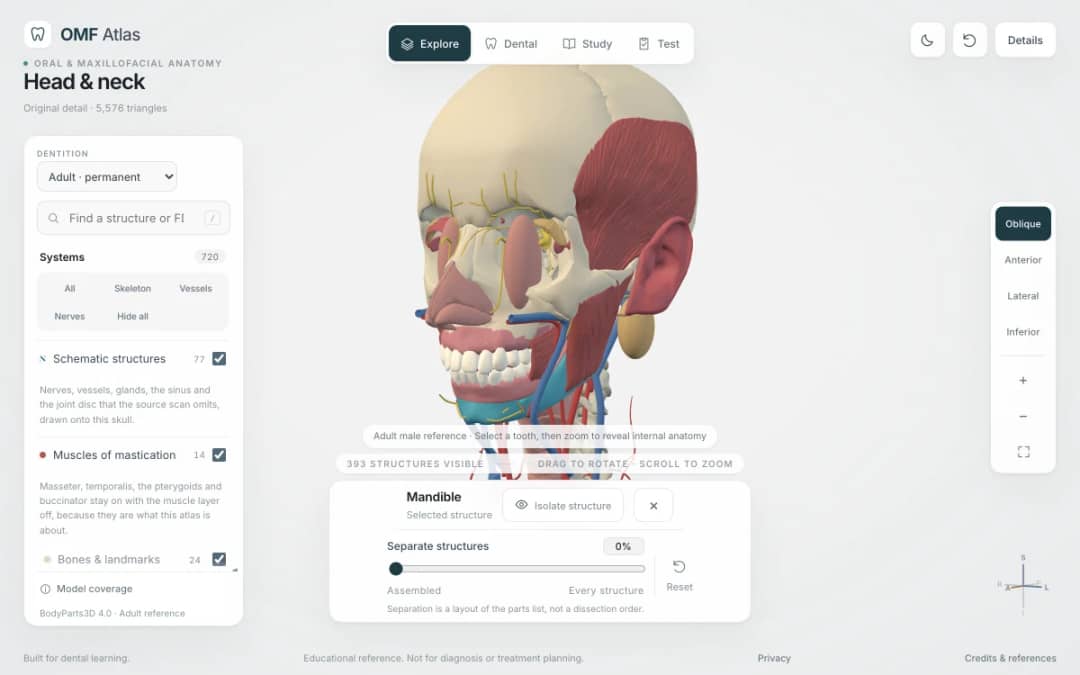
Explore the head and neck in 3D: 643 source meshes across 14 layers, 47 facial and masticatory muscles, and 77 drawn nerves, vessels and glands the source scan omits. Open any tooth onto its own pulp canal, and follow the seven stages of tooth development.

Free interactive photosynthesis simulation. Explore photosynthesis hands-on online — great for whole-class or independent practice.

Free interactive states of matter simulation. Explore states of matter hands-on online — great for whole-class or independent practice.

Free interactive shadows simulation. Explore shadows hands-on online — great for whole-class or independent practice.
From model to evidence
Use a worksheet to capture predictions, observations, and explanations after students explore.
KiwiBee's free teacher workspace brings lesson planning, worksheets, classroom tools, and gradebook together in one place.
Start free and create your first class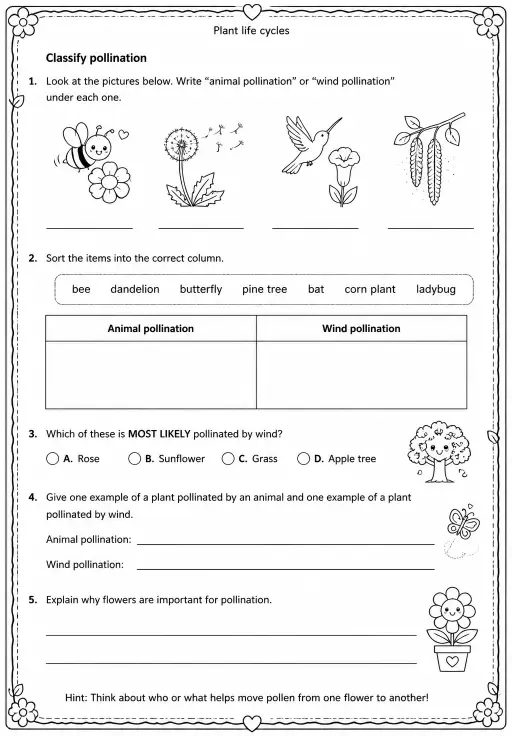
 Home
 All solutions
 Pricing
 About us
 KiwiBee for Non-profits
 Events & webinars
 For big organisations
 For schools
 For centers
 For team leaders
 For teachers
 AI and resources
 Resources
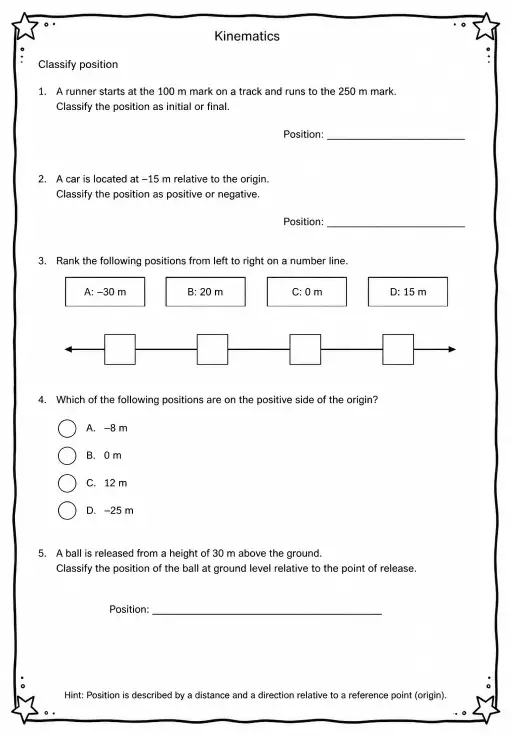
 Printable worksheets
 Lesson Packs
 Interactive simulations
 Teacher tools
 AI studio
 Ideas and research