Your privacy choices

KiwiBee uses optional Google Analytics, Google Ads, and Meta Pixel cookies to understand adult visitors, measure completed sign-ups, and improve campaigns. Essential cookies always stay on. OpenAI’s ChatGPT Ads Pixel also measures page views and completed enquiries after advertising consent, and may use hashed contact details for matching. Privacy policy

Skip to main content

Photosynthesis

About this simulation

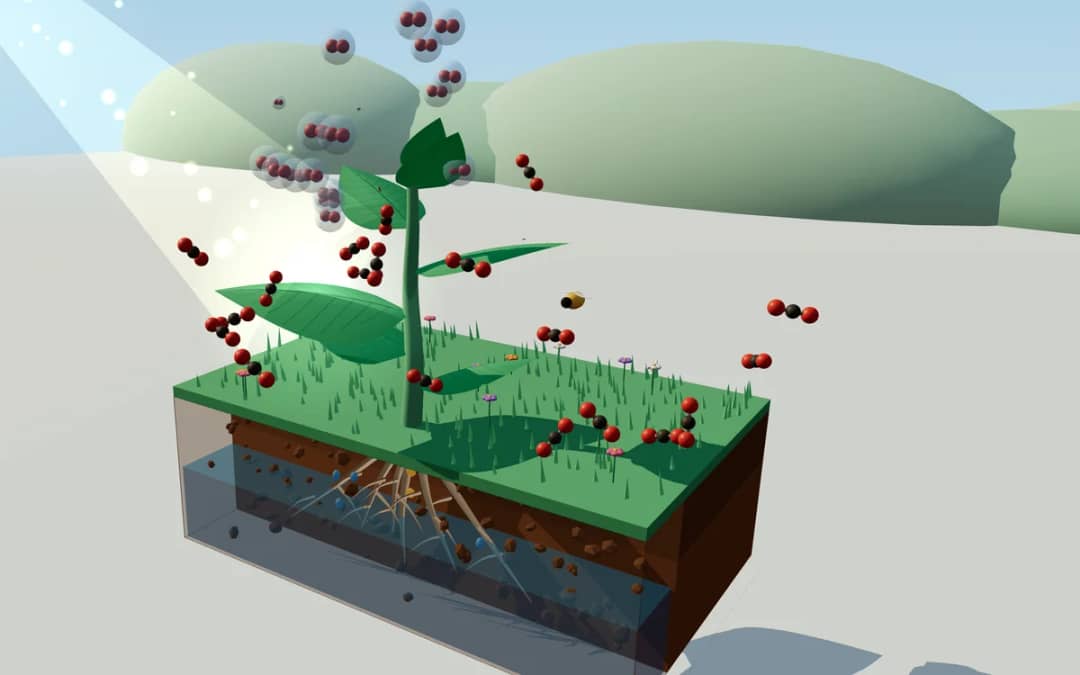
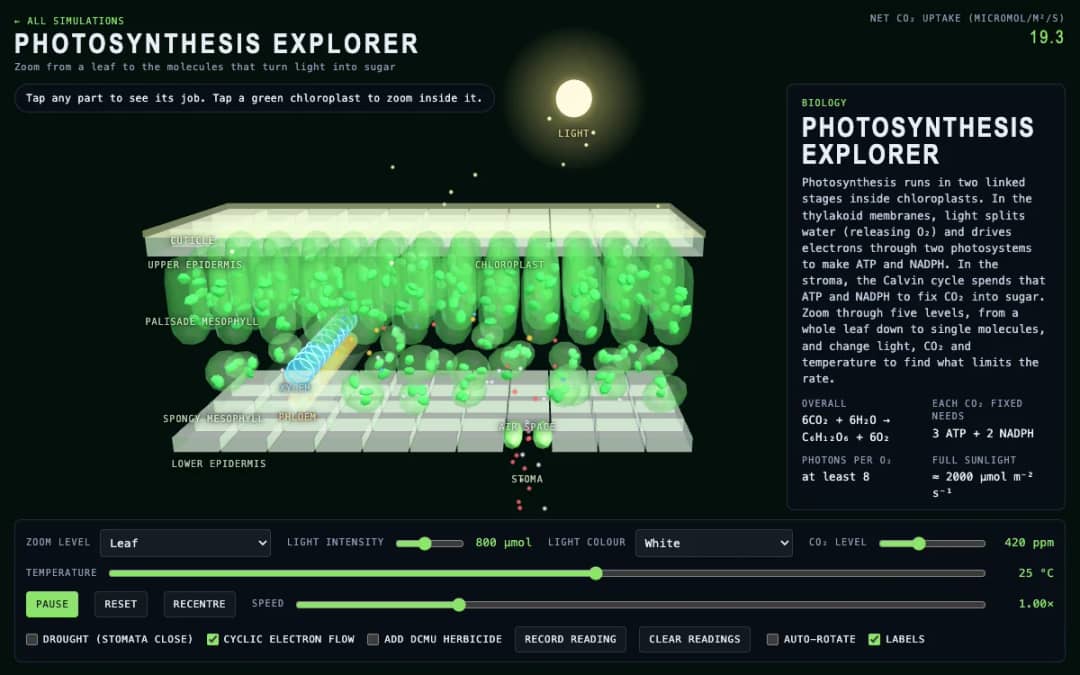
This model places students inside a chloroplast where light reactions in the thylakoid stacks and the Calvin cycle in the stroma turn light, carbon dioxide and water into sugar and oxygen. Two sliders set light intensity and CO2 concentration, and the rate follows whichever input is scarcer, so the readout names the limiting factor. Counters tally molecules used and made, settling at the 6 : 6 : 1 : 6 ratio of the equation. It works well for teaching limiting factors, reading rate graphs and linking the balanced equation to what actually happens.

What students can explore

  • Set Light intensity to 200 and raise it step by step until Sugar made stops rising.
  • Keep light high and drag CO2 concentration down to 100 ppm to see the limiting factor switch.
  • Read the Limiting factor readout each time you change a slider and explain why it changed.
  • Watch the Used and Made counters and compare the ratio with 6CO2 + 6H2O to C6H12O6 + 6O2.
  • Set light to 0 and observe that the rate falls to zero even when CO2 is plentiful.

Learning objectives

  1. 1Write and interpret the balanced equation for photosynthesis.
  2. 2Identify light and carbon dioxide as factors that can limit the rate.
  3. 3Explain why raising one factor stops helping once another becomes scarce.
  4. 4Describe where the light reactions and the Calvin cycle take place in a chloroplast.

Questions teachers ask

Is the photosynthesis simulation free?

Yes. It is free to use in any modern browser, including whiteboards and tablets. No sign-up, no downloads and no plug-ins are needed.

What is a limiting factor?

A limiting factor is the input in shortest supply, which sets the maximum rate. In this model the sugar rate follows the scarcer of light and carbon dioxide until both are plentiful.

How do I find the limiting factor?

Move the Light intensity and CO2 concentration sliders and read the Limiting factor readout. Raise the limiting one and the rate climbs, but raising the other changes nothing.

Does one chloroplast really make sugar this fast?

No. Time and molecule counts are schematic, not per real chloroplast. The ratios are accurate though: six CO2 and six water make one glucose and six oxygen.

Embed this simulation

Drop it into your LMS, blog, or class site — free.

<iframe src="https://kiwibee.io/en/simulations/photosynthesis-chloroplast-3d-simulation/embed" title="Photosynthesis | KiwiBee" loading="lazy" allowfullscreen style="width:100%;height:min(70vh,620px);min-height:420px;border:0;border-radius:16px"></iframe>

Continue exploring

From model to evidence

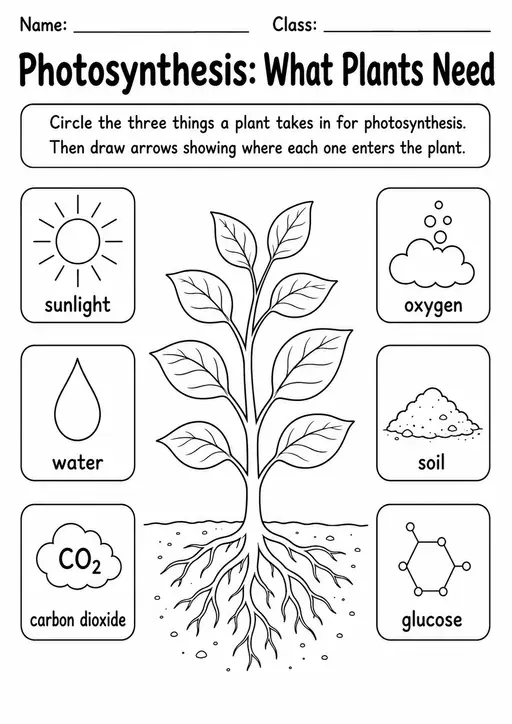
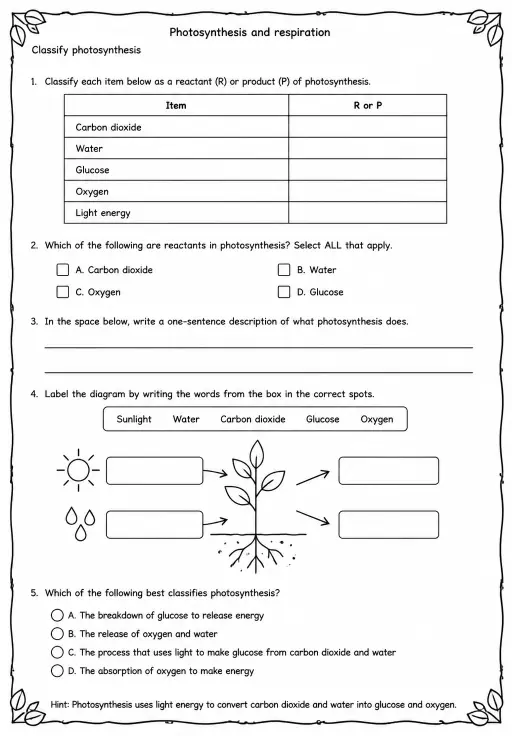
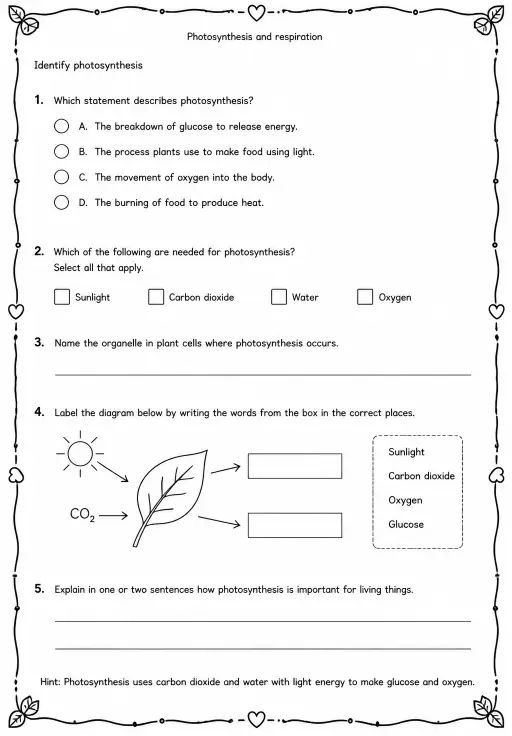
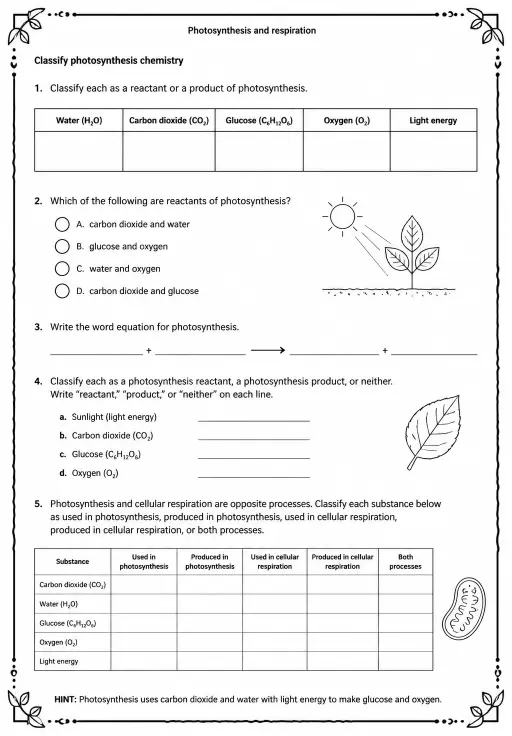
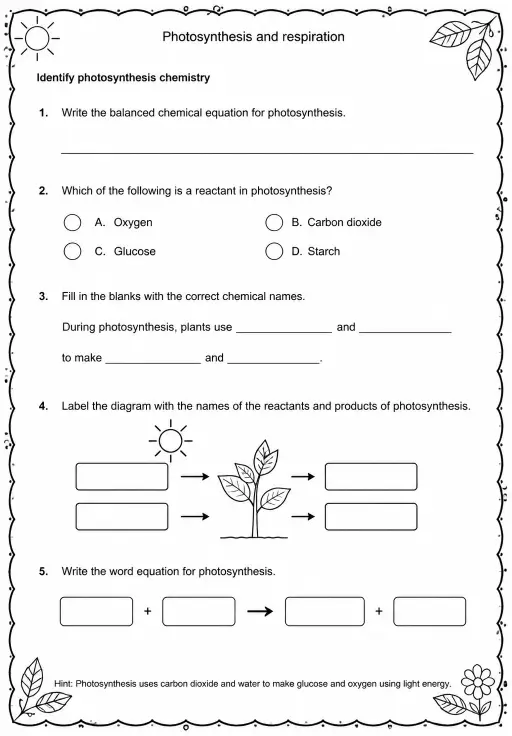
Use a worksheet to capture predictions, observations, and explanations after students explore.

Bring interactive science into your classroom

KiwiBee's free teacher workspace brings lesson planning, worksheets, classroom tools, and gradebook together in one place.

Start free and create your first class

or explore the teacher workspace →