
Explore an adult male reference body in 3D. Reveal 14 anatomical systems, search thousands of named structures, isolate organs, and pull 2,209 modeled pieces apart to see how the body is organized.
—
KiwiBee uses optional Google Analytics, Google Ads, and Meta Pixel cookies to understand adult visitors, measure completed sign-ups, and improve campaigns. Essential cookies always stay on. OpenAI’s ChatGPT Ads Pixel also measures page views and completed enquiries after advertising consent, and may use hashed contact details for matching. Privacy policy
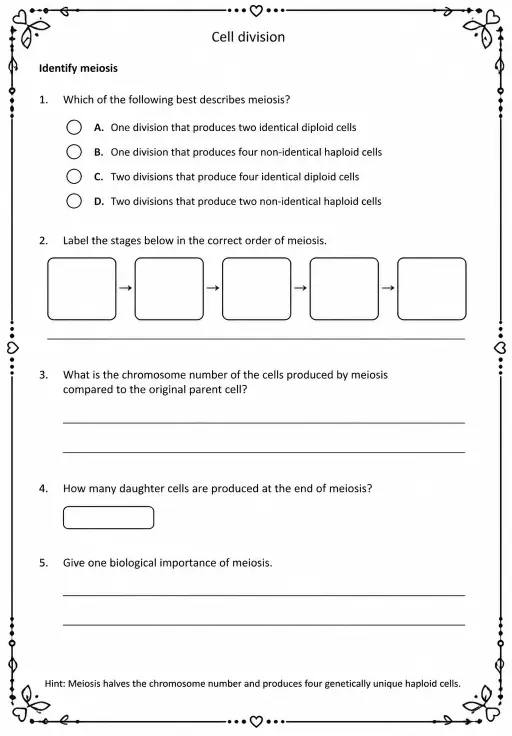
Meiosis & Crossing Over is an interactive 3D cell-division simulation that demonstrates how sexual reproduction generates genetic diversity while halving chromosome number from diploid (2n) to haploid (n). Inside a translucent dividing germ cell with centrosome poles and spindle fibers, two pairs of homologous chromosomes (maternal chromatids in rose-red, paternal chromatids in sky-cyan) progress through Prophase I, Metaphase I, Anaphase I, Telophase I, Metaphase II, Anaphase II, and final Haploid Gametes. Students can adjust Crossing over frequency (or drag inner chromatids together) to swap distal allele segments at glowing chiasmata, toggle Metaphase I chromosome flip for independent assortment, and track the resulting four recombinant and parental gamete genotypes.
Crossing over occurs during Prophase I of meiosis when maternal and paternal homologous chromosomes pair tightly in synapsis to form a four-chromatid tetrad (bivalent). Non-sister chromatids break and exchange corresponding DNA segments at X-shaped junctions called chiasmata, creating recombinant chromosomes.
In Anaphase I, homologous chromosome pairs are pulled apart to opposite poles while each chromosome still consists of two joined sister chromatids. In Anaphase II, the centromeres finally divide and individual sister chromatids separate toward opposite poles.
During Metaphase I, each homologous pair aligns randomly on the equatorial spindle plate independently of every other pair. For n homologous pairs, random orientation alone produces 2^n different combinations of maternal and paternal chromosomes in the gametes (over 8 million in humans with n = 23).
Ploidy counts the number of homologous chromosome sets in a cell, not the number of chromatids. Because homologous pairs separate during Anaphase I, each Telophase I daughter cell contains only one chromosome from each pair (1n), even though each chromosome still has two sister chromatids (2c DNA).
Drop it into your LMS, blog, or class site — free.
<iframe src="https://kiwibee.io/en/simulations/meiosis-crossing-over-3d-3d-simulation/embed" title="Meiosis & Crossing Over | KiwiBee" loading="lazy" allowfullscreen style="width:100%;height:min(70vh,620px);min-height:420px;border:0;border-radius:16px"></iframe>Continue exploring
Explore an adult male reference body in 3D. Reveal 14 anatomical systems, search thousands of named structures, isolate organs, and pull 2,209 modeled pieces apart to see how the body is organized.

Explore the head and neck in 3D: 643 source meshes across 14 layers, 47 facial and masticatory muscles, and 77 drawn nerves, vessels and glands the source scan omits. Open any tooth onto its own pulp canal, and follow the seven stages of tooth development.

Free interactive photosynthesis simulation. Explore photosynthesis hands-on online — great for whole-class or independent practice.

Free interactive states of matter simulation. Explore states of matter hands-on online — great for whole-class or independent practice.

Free interactive shadows simulation. Explore shadows hands-on online — great for whole-class or independent practice.
From model to evidence
Use a worksheet to capture predictions, observations, and explanations after students explore.
KiwiBee's free teacher workspace brings lesson planning, worksheets, classroom tools, and gradebook together in one place.
Start free and create your first class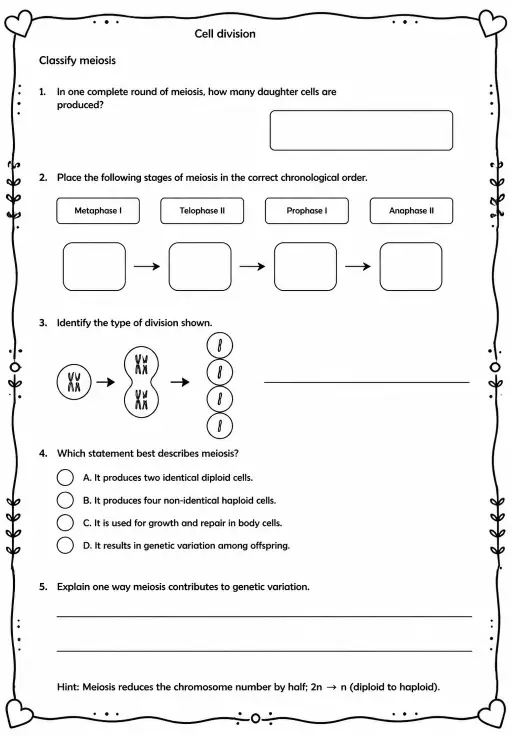
 Home
 All solutions
 Pricing
 About us
 KiwiBee for Non-profits
 Events & webinars
 For big organisations
 For schools
 For centers
 For team leaders
 For teachers
 AI and resources
 Resources
 Printable worksheets
 Lesson Packs
 Interactive simulations
 Teacher tools
 AI studio
 Ideas and research